When you are browsing, how important is cover art to which titles you select and actually buy?
For better or worse, it seems that cover art is the single most important factor for readers when they browse. Reviews, recommendations, and familiarity with the author’s previous work figure prominently in buying but, when a reader is wandering the stacks with no preset ideas in mind, the cover becomes the dominant factor.
When discussing book covers and cover art, it becomes rapidly apparent that, in the minds of most readers, the two things are one and the same. The cover art is not just the picture on the front but expands to include the entire structure of the book’s cover—the font and placement of the title, the layout of the spine, even the back cover blurb and publisher quotes and how they are presented all blend together into a singular entity. This makes the follow up question, ‘what is good cover art?’, doubly difficult to evaluate.
A marketable cover walks a razor’s edge. On the one hand, it must be different enough from the others around it to attract the browser’s attention. On the other, it must be similar enough not to confuse or put off the reader. Horror covers need to be scary, adventure books need exciting covers, the reader needs to be able to ‘categorize’ the book, by its cover, at a glance. Not only must the books cover broadcast its genre but, to a lesser extent, it needs to project a similarity to other in genre books of similar subject or style. Most series try to keep the same cover artist for all the covers in the series. Some go so far as to keep the same artist or at least the same artistic style for all of an author’s works. The selling power of Frazetta covers in fantasy is a good example. Graphic novels provide another insight into the symbiosis between artistic style and internal style by literally wearing their style on their cover.
But, with similarity is the rule of the day, what places one book ahead of another in the browser’s eyes? Obviously the subtle differences but what makes for a successful ‘distinction’ is very much in the eyes of the beholder and seems to be as mystical as any fictional arcana. This is where the cover structure comes into its own. Title placement, fonts, text layout on cover, spine and back—all these provide some of the greatest opportunities to individualize a cover, usually in surprisingly subtle ways. Some works demand a flowing, scripted font for the title. Some readers greatly prefer block lettering on the spine. Press quotes from reviewers hook some browsers and repulse others. Here, knowledge of the nature, style, and preferences of the books target audience is an absolute necessity and everything must be tailored to please the eyes and attract the attention of that audience.
There is no one formula that emerges for cover art. It is, pardon the pun, an artform. Every nuance of the cover has to be tailored to synchronize with the potential desired reader. Salinger’s classic Catcher in the Rye cover of gold lettering on a stark red background seems to defy all conventional wisdom but actually embodies it—the cover speaks of the book, powerfully, and reaches out to the reader from the shelves, distinct in its lack of trappings. On a personal note, I am constantly surprised by how the cover design of my own recent book, Speakers and Kings, has the power to draw readers, piquing their curiosity with the absence of pictorial art on the cover while the simplicity reassures them that the book is ‘classy’.
The cover of a book is possibly its strongest selling point and one of the most often overlooked aspects. It leads one to wonder, how many good books failed to sell because of the cover? And what a terrible disservice to the author that many publishing houses push them aside for this final step in the creative process—the writer’s foremost and final chance to portray his work in a single visual moment to his future readers.
Sunday, July 12, 2009

Tuesday, June 30, 2009
TheoTuesdays: The Animistic and Anthropomorphic Soul
I finally mewed at the Thin Man until he agreed to explain, at least in brief, his philosophy of the soul and why animals do go to heaven. Because it is pedantic and of little interest to the reader (in his opinion) he wants me to spread it out (I’m thinking of instituting ‘TheoTuesdays’ like the current ‘ConspiriThursday’) and he insists on the following disclaimer:
There are public theologies and private thoughts. Likewise, there are core, vital doctrines and then there are those speculations that are not truly relevant in the grand scheme of Salvation. This is a private speculation based largely on two foundations: the fact that it seems intuitively correct and does not contradict anything extant in the Holy Writ; and a reasoned extension of the already-displayed character and consistency of God documented in the Holy Writ. These are one man’s thoughts in the long hours of the night and should not be considered in any way worthwhile doctrine or even subjects of debate (except, perhaps, where the reader may find the Holy Ghost prompting within—and at that point it is an issue between God and the reader).
[This is the last part of the Thin Man's fat essay: "A Brief Discourse on the Animistic and Anthropomorphic Extensions of the Nature of the Soul". Hope you enjoyed the ride.]
Throughout human history, the belief that animals will exist in heaven has been present. They may be present as prey to be hunted, mounts to be ridden, or pets to be coddled but they are there. It seems that to question their presence in the afterlife is a modern invention rather than an age-old question. The sheep of the shepherd and the fish of the fisherman apostles will be present. This is intuitively known; it is only later that men began to ask how. Animals do not possess souls of their own (souls seem to be the province of humans alone) and so, we are taught, only souls pass from the mortal to the immortal world. Does that mean there are, in fact, no animals in heaven? How grotesquely we underestimate God.
If the influence of the soul can be extended to other humans, why can the same not be true of animals? Indeed, since animals do not possess souls of their own, would it not stand to reason that, for a time, they borrow a portion of a person’s soul to use as their own? And if the spirit arises from the interaction of body and soul, then would this not explain why certain animals seem to have very human personalities while others, more distant to humans, remain ‘simply’ animals? (In fact, I would extend this beyond animals and out to include things such as trees and the land itself.)
Let me specifically address animals on three different levels: pets, livestock (and prey), and incidental contact.
It is with pets that this theory needs the least explanation except to clarify that, as with people, a pet may be influenced by more than one human being. It is not about the animal’s owner, but about the people who invest themselves in the animal.
Livestock (animals raised for food) and prey (animals hunted for food) are more difficult to explain. The reason is because many people (including many farmers and hunters) do not understand the love that exists between the herdsman, the hunter, and the beasts of field and forest. To an animal, the human is their god. It is man who sets the time of their coming and going, the days of their lives and the tasks they perform in between. And with that power comes a terrible duty—a duty that, without a deep and abiding love, is impossible to perform properly. That the animal must, in the end, die is inconsequential to the greater truth that, first, the animal must live and live well. But man is not God and he cannot change what must be. He cannot cure all of the disease, cannot ease all the suffering, and, in the end, man’s duty to his family and his clan requires that the animal he loves so much must fulfill one final role. Many a farmer grieves the slaughter; many hunters weep for the fallen. This relationship is one of those matters that, I fear, cannot be fully explained, only understood or not depending on the experiences of the person involved.
I cite incidental contact as an example of the natural empathy that exists between man and animal. A pet or herd animal is well known, but the great stag seen in passing or the hawk that alights once in the yard and is never seen again may still have a profound effect on the viewer. It seems logical, then, to believe that in these small contacts some transference and investment occurs just as it does when two humans meet as strangers. There is still contact, there is still significance.
Do animals go to heaven? Yes; they ride along with us, as part of our souls, parts that we loaned to them while we shared this life together and that they give back to us increased a hundredfold.
I honestly don’t feel that this is a sufficient explanation and by no means complete but it is the best I can express in the time at hand. In no way do I believe this fragile theory of mine should be used as a basis for any doctrine nor is it an excuse to somehow worship the creation instead of the Creator. I state all these things only that you, the reader, may think about it and, perhaps, find in the contemplation a portion of the wonder and mystery, the glimpse of God’s glory in nature that I have found.
There are public theologies and private thoughts. Likewise, there are core, vital doctrines and then there are those speculations that are not truly relevant in the grand scheme of Salvation. This is a private speculation based largely on two foundations: the fact that it seems intuitively correct and does not contradict anything extant in the Holy Writ; and a reasoned extension of the already-displayed character and consistency of God documented in the Holy Writ. These are one man’s thoughts in the long hours of the night and should not be considered in any way worthwhile doctrine or even subjects of debate (except, perhaps, where the reader may find the Holy Ghost prompting within—and at that point it is an issue between God and the reader).
[This is the last part of the Thin Man's fat essay: "A Brief Discourse on the Animistic and Anthropomorphic Extensions of the Nature of the Soul". Hope you enjoyed the ride.]
Throughout human history, the belief that animals will exist in heaven has been present. They may be present as prey to be hunted, mounts to be ridden, or pets to be coddled but they are there. It seems that to question their presence in the afterlife is a modern invention rather than an age-old question. The sheep of the shepherd and the fish of the fisherman apostles will be present. This is intuitively known; it is only later that men began to ask how. Animals do not possess souls of their own (souls seem to be the province of humans alone) and so, we are taught, only souls pass from the mortal to the immortal world. Does that mean there are, in fact, no animals in heaven? How grotesquely we underestimate God.
If the influence of the soul can be extended to other humans, why can the same not be true of animals? Indeed, since animals do not possess souls of their own, would it not stand to reason that, for a time, they borrow a portion of a person’s soul to use as their own? And if the spirit arises from the interaction of body and soul, then would this not explain why certain animals seem to have very human personalities while others, more distant to humans, remain ‘simply’ animals? (In fact, I would extend this beyond animals and out to include things such as trees and the land itself.)
Let me specifically address animals on three different levels: pets, livestock (and prey), and incidental contact.
It is with pets that this theory needs the least explanation except to clarify that, as with people, a pet may be influenced by more than one human being. It is not about the animal’s owner, but about the people who invest themselves in the animal.
Livestock (animals raised for food) and prey (animals hunted for food) are more difficult to explain. The reason is because many people (including many farmers and hunters) do not understand the love that exists between the herdsman, the hunter, and the beasts of field and forest. To an animal, the human is their god. It is man who sets the time of their coming and going, the days of their lives and the tasks they perform in between. And with that power comes a terrible duty—a duty that, without a deep and abiding love, is impossible to perform properly. That the animal must, in the end, die is inconsequential to the greater truth that, first, the animal must live and live well. But man is not God and he cannot change what must be. He cannot cure all of the disease, cannot ease all the suffering, and, in the end, man’s duty to his family and his clan requires that the animal he loves so much must fulfill one final role. Many a farmer grieves the slaughter; many hunters weep for the fallen. This relationship is one of those matters that, I fear, cannot be fully explained, only understood or not depending on the experiences of the person involved.
I cite incidental contact as an example of the natural empathy that exists between man and animal. A pet or herd animal is well known, but the great stag seen in passing or the hawk that alights once in the yard and is never seen again may still have a profound effect on the viewer. It seems logical, then, to believe that in these small contacts some transference and investment occurs just as it does when two humans meet as strangers. There is still contact, there is still significance.
Do animals go to heaven? Yes; they ride along with us, as part of our souls, parts that we loaned to them while we shared this life together and that they give back to us increased a hundredfold.
I honestly don’t feel that this is a sufficient explanation and by no means complete but it is the best I can express in the time at hand. In no way do I believe this fragile theory of mine should be used as a basis for any doctrine nor is it an excuse to somehow worship the creation instead of the Creator. I state all these things only that you, the reader, may think about it and, perhaps, find in the contemplation a portion of the wonder and mystery, the glimpse of God’s glory in nature that I have found.
Tuesday, June 23, 2009
TheoTuesdays: The Regenerative Nature of the Soul
I finally mewed at the Thin Man until he agreed to explain, at least in brief, his philosophy of the soul and why animals do go to heaven. Because it is pedantic and of little interest to the reader (in his opinion) he wants me to spread it out (I’m thinking of instituting ‘TheoTuesdays’ like the current ‘ConspiriThursday’) and he insists on the following disclaimer:
There are public theologies and private thoughts. Likewise, there are core, vital doctrines and then there are those speculations that are not truly relevant in the grand scheme of Salvation. This is a private speculation based largely on two foundations: the fact that it seems intuitively correct and does not contradict anything extant in the Holy Writ; and a reasoned extension of the already-displayed character and consistency of God documented in the Holy Writ. These are one man’s thoughts in the long hours of the night and should not be considered in any way worthwhile doctrine or even subjects of debate (except, perhaps, where the reader may find the Holy Ghost prompting within—and at that point it is an issue between God and the reader).
The materialist paradigm long ago infested religious thought. Nowhere is this more obvious than in the prevailing view of the soul. We take for granted a kind of ‘assembly line soul’ on a lease-to-own plan—one per customer, standard size, one size fits all, no alterations, return it when you’re done and pay for any damages. This is not a view based on nature, experience, or Holy Scripture; it is a view rooted in an industrial worldview.
We are never told the limits of the soul and I believe that is for a reason: there are no limits of the soul. There is no maximum or minimum amount of ‘soul’ and no limits of breadth or width or height. The soul is unquantifiable. It has quality but not quantity. If the soul could be summed up into a set of dimensions, definitions, and limits, if it could be bound up in a trap of words, then it would not be a soul. The soul must be more than mundane. It must exceed measurement for, if it did not, then it would not be worth the terrible cost that has been paid to redeem it. And because of this, there is no reason not to assume (and every experiential reason to accept) that the soul can be hurt, can be (at least temporarily) diminished and oppressed (though never extinguished, for it is sustained by an indefatigable spark of divine grace), and that the soul can, in turn, heal, grow, and expand without limits.
I have previously discussed that the soul can be taken, given, and distributed across vast distances of space and time. The logical question is: Why? Why allow something as precious as the soul to be spread outside the physical body into the entire sphere of influence of the individual? I contend it is exactly that: so that the influence of an individual’s soul can be spread across the entirety of that person’s reach. It would diminish the value and usefulness of the soul if it were to be tied only to the physical body. If I could not reach out and lend encouragement, comfort, ennoblement, and all the other virtues of the soul across time and space, then my usefulness to the overall plan of God would be pointlessly diminished. God is not wasteful or shortsighted and I would therefore argue that, if it is gainful, there is no reason to doubt at least the possibility of the extension and transference of the soul from and to other people.
There is a term for this in business: investiture. Modern Christianity has an even more incomplete term: discipleship. I prefer the simpler terms. I call it friendship and, beyond that, compassion. We give of ourselves to other people, close friends or strangers, of our time, caring, labor—in a word, we choose to love them. And some, in turn, do the same for us. This is an example of the sharing of the soul. We may be hurt because we make ourselves vulnerable. To a zero-sum believer, this is a terrifying prospect. Surely to give of your soul diminishes the grace you retain within; to love is to become less than you were before. To a transcendent believer, this ability to give is a cause for great joy. We do not run out—there is no empty tank of soul—and, though we may and will be hurt, we may also increase someone else. In turn, when we are weak and tired, others will do the same for us. It is a strange, confusing, frightening process that we can never fully understand but that, on a spiritual level, we are impelled instinctively to do; the whole of the human experience—ours, those around us, and total strangers possibly even generation removed (for remember, the soul is extemporal, it cares nothing for time)—is made better and made to see more of God’s grace channeled through us.
Now, if memory serves, I set out to explain how all of this was relevant to animals.
There are public theologies and private thoughts. Likewise, there are core, vital doctrines and then there are those speculations that are not truly relevant in the grand scheme of Salvation. This is a private speculation based largely on two foundations: the fact that it seems intuitively correct and does not contradict anything extant in the Holy Writ; and a reasoned extension of the already-displayed character and consistency of God documented in the Holy Writ. These are one man’s thoughts in the long hours of the night and should not be considered in any way worthwhile doctrine or even subjects of debate (except, perhaps, where the reader may find the Holy Ghost prompting within—and at that point it is an issue between God and the reader).
The materialist paradigm long ago infested religious thought. Nowhere is this more obvious than in the prevailing view of the soul. We take for granted a kind of ‘assembly line soul’ on a lease-to-own plan—one per customer, standard size, one size fits all, no alterations, return it when you’re done and pay for any damages. This is not a view based on nature, experience, or Holy Scripture; it is a view rooted in an industrial worldview.
We are never told the limits of the soul and I believe that is for a reason: there are no limits of the soul. There is no maximum or minimum amount of ‘soul’ and no limits of breadth or width or height. The soul is unquantifiable. It has quality but not quantity. If the soul could be summed up into a set of dimensions, definitions, and limits, if it could be bound up in a trap of words, then it would not be a soul. The soul must be more than mundane. It must exceed measurement for, if it did not, then it would not be worth the terrible cost that has been paid to redeem it. And because of this, there is no reason not to assume (and every experiential reason to accept) that the soul can be hurt, can be (at least temporarily) diminished and oppressed (though never extinguished, for it is sustained by an indefatigable spark of divine grace), and that the soul can, in turn, heal, grow, and expand without limits.
I have previously discussed that the soul can be taken, given, and distributed across vast distances of space and time. The logical question is: Why? Why allow something as precious as the soul to be spread outside the physical body into the entire sphere of influence of the individual? I contend it is exactly that: so that the influence of an individual’s soul can be spread across the entirety of that person’s reach. It would diminish the value and usefulness of the soul if it were to be tied only to the physical body. If I could not reach out and lend encouragement, comfort, ennoblement, and all the other virtues of the soul across time and space, then my usefulness to the overall plan of God would be pointlessly diminished. God is not wasteful or shortsighted and I would therefore argue that, if it is gainful, there is no reason to doubt at least the possibility of the extension and transference of the soul from and to other people.
There is a term for this in business: investiture. Modern Christianity has an even more incomplete term: discipleship. I prefer the simpler terms. I call it friendship and, beyond that, compassion. We give of ourselves to other people, close friends or strangers, of our time, caring, labor—in a word, we choose to love them. And some, in turn, do the same for us. This is an example of the sharing of the soul. We may be hurt because we make ourselves vulnerable. To a zero-sum believer, this is a terrifying prospect. Surely to give of your soul diminishes the grace you retain within; to love is to become less than you were before. To a transcendent believer, this ability to give is a cause for great joy. We do not run out—there is no empty tank of soul—and, though we may and will be hurt, we may also increase someone else. In turn, when we are weak and tired, others will do the same for us. It is a strange, confusing, frightening process that we can never fully understand but that, on a spiritual level, we are impelled instinctively to do; the whole of the human experience—ours, those around us, and total strangers possibly even generation removed (for remember, the soul is extemporal, it cares nothing for time)—is made better and made to see more of God’s grace channeled through us.
Now, if memory serves, I set out to explain how all of this was relevant to animals.
Tuesday, June 16, 2009
TheoTuesdays: Theft of the Soul
I finally mewed at the Thin Man until he agreed to explain, at least in brief, his philosophy of the soul and why animals do go to heaven. Because it is pedantic and of little interest to the reader (in his opinion) he wants me to spread it out (I’m thinking of instituting ‘TheoTuesdays’ like the current ‘ConspiriThursday’) and he insists on the following disclaimer:
There are public theologies and private thoughts. Likewise, there are core, vital doctrines and then there are those speculations that are not truly relevant in the grand scheme of Salvation. This is a private speculation based largely on two foundations: the fact that it seems intuitively correct and does not contradict anything extant in the Holy Writ; and a reasoned extension of the already-displayed character and consistency of God documented in the Holy Writ. These are one man’s thoughts in the long hours of the night and should not be considered in any way worthwhile doctrine or even subjects of debate (except, perhaps, where the reader may find the Holy Ghost prompting within—and at that point it is an issue between God and the reader).
Photographs steal part of your soul. You know it, I know it, tribal groups throughout history have known it. You want to pretend that you’re sophisticated and modern and that it’s all just primitive superstition but, deep down, we all know better. Still, I’ll spell it out just to drive home the point.
When I speak of a photograph, I am actually referring to a much larger body of work and art—photographs, portraits, letters, books, sculpture—in essence, I am referring to any work from or depiction of an individual that calls to the mind of another that individual, and any emotion or knowledge of that individual. Put more simply, I’m talking about symbols, any symbol that represents an individual. When you read a letter from a relative, it is symbolic of that relative, calling them to your mind. When you see a picture of someone, you are seeing a symbol of that individual. Obviously, there is more to a person than a simple picture or letter can present but, through the symbol, the entirety of that person and what you know of them is summoned up within the mind of the viewer. Further still, even viewing a picture or reading a letter from a person you’ve never met will still bring to your mind an impression of that person. It may be an incorrect impression but, strangely enough, humans seem highly adept at discerning the nature and character of an individual even from something as distant and impersonal as a photograph. How can this be? We take it for granted as if it were a simple thing rather than the great wonder that it is.
It has been said that language is what separates man from the animals, the greatest of his gifts and tools. And what is language but the use of symbols to represent larger concepts from mind to mind? Words carry connotations as well as definitions and, in context, carry even more meaning. Words are only part of language. Indeed, the entirety of what most people define as language barely scratches the surface. Language is the sum total of communication from one individual, isolated within his own mind, to another individual, isolated within their own mind. All of the arts are language, from paintings to novels to sculptures and the buildings designed and built by the hands of men and the plowed fields of the farmer waving with grain. Every stamp, every mark, every temporary change upon the physical world is communication, language from one lonely soul to another through the only medium available—physical reality. Photographs, then, are languages, sentences and speeches made with actions rather than words.
Again we return to the basic question: How? How can language carry such power? It is true magic and a mystery. More to the point, though, it works because, within this language, be it words or pictures, lies trapped a portion of the subject’s soul. There is no other reasonable explanation (although this is only part of the explanation, not the totality of it).
The query that logically follows is why we allow the practice and why we willingly engage in it. The answer is deceptively simple. Why would we assume that having a portion of your soul captured and shared by someone else is a bad thing? Certainly it can be and, as an author, I certainly understand the risks and fears of laying heart and soul bare for the inspection of strangers through my writing; but, perhaps, it is not always bad.
Why?
Reality is not a zero-sum game.
There are public theologies and private thoughts. Likewise, there are core, vital doctrines and then there are those speculations that are not truly relevant in the grand scheme of Salvation. This is a private speculation based largely on two foundations: the fact that it seems intuitively correct and does not contradict anything extant in the Holy Writ; and a reasoned extension of the already-displayed character and consistency of God documented in the Holy Writ. These are one man’s thoughts in the long hours of the night and should not be considered in any way worthwhile doctrine or even subjects of debate (except, perhaps, where the reader may find the Holy Ghost prompting within—and at that point it is an issue between God and the reader).
Photographs steal part of your soul. You know it, I know it, tribal groups throughout history have known it. You want to pretend that you’re sophisticated and modern and that it’s all just primitive superstition but, deep down, we all know better. Still, I’ll spell it out just to drive home the point.
When I speak of a photograph, I am actually referring to a much larger body of work and art—photographs, portraits, letters, books, sculpture—in essence, I am referring to any work from or depiction of an individual that calls to the mind of another that individual, and any emotion or knowledge of that individual. Put more simply, I’m talking about symbols, any symbol that represents an individual. When you read a letter from a relative, it is symbolic of that relative, calling them to your mind. When you see a picture of someone, you are seeing a symbol of that individual. Obviously, there is more to a person than a simple picture or letter can present but, through the symbol, the entirety of that person and what you know of them is summoned up within the mind of the viewer. Further still, even viewing a picture or reading a letter from a person you’ve never met will still bring to your mind an impression of that person. It may be an incorrect impression but, strangely enough, humans seem highly adept at discerning the nature and character of an individual even from something as distant and impersonal as a photograph. How can this be? We take it for granted as if it were a simple thing rather than the great wonder that it is.
It has been said that language is what separates man from the animals, the greatest of his gifts and tools. And what is language but the use of symbols to represent larger concepts from mind to mind? Words carry connotations as well as definitions and, in context, carry even more meaning. Words are only part of language. Indeed, the entirety of what most people define as language barely scratches the surface. Language is the sum total of communication from one individual, isolated within his own mind, to another individual, isolated within their own mind. All of the arts are language, from paintings to novels to sculptures and the buildings designed and built by the hands of men and the plowed fields of the farmer waving with grain. Every stamp, every mark, every temporary change upon the physical world is communication, language from one lonely soul to another through the only medium available—physical reality. Photographs, then, are languages, sentences and speeches made with actions rather than words.
Again we return to the basic question: How? How can language carry such power? It is true magic and a mystery. More to the point, though, it works because, within this language, be it words or pictures, lies trapped a portion of the subject’s soul. There is no other reasonable explanation (although this is only part of the explanation, not the totality of it).
The query that logically follows is why we allow the practice and why we willingly engage in it. The answer is deceptively simple. Why would we assume that having a portion of your soul captured and shared by someone else is a bad thing? Certainly it can be and, as an author, I certainly understand the risks and fears of laying heart and soul bare for the inspection of strangers through my writing; but, perhaps, it is not always bad.
Why?
Reality is not a zero-sum game.
Tuesday, June 9, 2009
TheoTuesday: Universal Sums
There are public theologies and private thoughts. Likewise, there are core, vital doctrines and then there are those speculations that are not truly relevant in the grand scheme of Salvation. This is a private speculation based largely on two foundations: the fact that it seems intuitively correct and does not contradict anything extant in the Holy Writ; and a reasoned extension of the already-displayed character and consistency of God documented in the Holy Writ. These are one man’s thoughts in the long hours of the night and should not be considered in any way worthwhile doctrine or even subjects of debate (except, perhaps, where the reader may find the Holy Ghost prompting within—and at that point it is an issue between God and the reader).
3: Universal Sums
Reality is not a zero-sum game.
There are two schools of thought on the various aspects of existence. One holds that there is only a given amount of anything and that, in order for one person to gain, another must lose, that what there is minus what is had, what can be had, and what has been had equals zero. The other school holds that man is transcendent and that, through the application of work, the full force of human will and creativity with, perhaps, a touch of miracle, there is no limit to what may be done, had, made, and created. The applications may be different, but almost all of human philosophy and behavior come down to actions and assumptions based on the belief in one of these two schools of thought. Either we live in a materialistic world run by invisible accountants summing up the tallies to zero; or we have free will and self-direction, and though we may not have the answer to the problems at hand, we believe as a matter of faith that there is a better way. These two theories are, in fact, a matter of religion and metaphysics. Either we believe or we do not; either only the mundane, tangible material that we see and touch is real, or there are mysteries beyond and we are more than the sum of our chemical composition.
We see the outgrowth of these conflicting beliefs in every aspect of our lives. At work we see the zero-sum man fight and scratch, stabbing his fellow worker in the back and trying to climb to the top of the heap on the backs of other men. Beside him we see the transcendent man laboring diligently to lift himself and all of those around him through merit and work. We see the Senator who insists on taxing the rich out of existence under the pretext of giving to the poor (and all the while plying the tactics of race and class warfare and jealousy) while we see another arguing the virtues of creating opportunity for all, free of penalty, firm in the belief that ‘a rising tide lifts all boats.’ We see hoarders and, in contrast, we see the generous. The universe of reductionists and accountants is a petty, mean place, lending itself to selfishness. The transcendent universe casts its bread upon the waters and waits, generous for its own sake, and generous for its own gain. This extends beyond the personal and spiritual, it reaches even into the physical. Can the crowd be fed, or are there only five loaves and two fish? How long will the oil suffice to light the menorah?
On this point I am adamant. Reality is not a zero-sum game. Reality is a theophany.
3: Universal Sums
Reality is not a zero-sum game.
There are two schools of thought on the various aspects of existence. One holds that there is only a given amount of anything and that, in order for one person to gain, another must lose, that what there is minus what is had, what can be had, and what has been had equals zero. The other school holds that man is transcendent and that, through the application of work, the full force of human will and creativity with, perhaps, a touch of miracle, there is no limit to what may be done, had, made, and created. The applications may be different, but almost all of human philosophy and behavior come down to actions and assumptions based on the belief in one of these two schools of thought. Either we live in a materialistic world run by invisible accountants summing up the tallies to zero; or we have free will and self-direction, and though we may not have the answer to the problems at hand, we believe as a matter of faith that there is a better way. These two theories are, in fact, a matter of religion and metaphysics. Either we believe or we do not; either only the mundane, tangible material that we see and touch is real, or there are mysteries beyond and we are more than the sum of our chemical composition.
We see the outgrowth of these conflicting beliefs in every aspect of our lives. At work we see the zero-sum man fight and scratch, stabbing his fellow worker in the back and trying to climb to the top of the heap on the backs of other men. Beside him we see the transcendent man laboring diligently to lift himself and all of those around him through merit and work. We see the Senator who insists on taxing the rich out of existence under the pretext of giving to the poor (and all the while plying the tactics of race and class warfare and jealousy) while we see another arguing the virtues of creating opportunity for all, free of penalty, firm in the belief that ‘a rising tide lifts all boats.’ We see hoarders and, in contrast, we see the generous. The universe of reductionists and accountants is a petty, mean place, lending itself to selfishness. The transcendent universe casts its bread upon the waters and waits, generous for its own sake, and generous for its own gain. This extends beyond the personal and spiritual, it reaches even into the physical. Can the crowd be fed, or are there only five loaves and two fish? How long will the oil suffice to light the menorah?
On this point I am adamant. Reality is not a zero-sum game. Reality is a theophany.
Monday, June 8, 2009
The King is Dead; He Has No Heirs
Behold that I write to you with mine own hand that you may know my verity. The King is dead; he has no heirs.
Sunday morning, Chaos suffered what appeared to be a stroke (or series of small strokes) and, by that evening, was gone.
It is impossible for me to explain the significance or devistation of this loss. For 17 years, he had been my constant companion, sleeping next to me in bed and sitting in my lap as I wrote. He was with me before, during, and after my physical collapse and, in the process, became the perfectly trained companion animal. Now he is gone.
He outlived the two proteges he trained and leaves me with an empty office. I must admit, I frankly don't know what I'll do now. Without the cat (pet, friend, confidant, side-kick, and partner) to manage it, maybe I'll stop. (Unlike my optimistic feline, I doubt it's read on a regular basis and I don't really think I have anything worth saying anyhow.) I'll have to think it through. Right now, I just don't know.
He already scheduled the rest of the discussion of the soul to automatically post itself and I'll let that run while I think. He'd have wanted it that way.
MKeaton
Sunday morning, Chaos suffered what appeared to be a stroke (or series of small strokes) and, by that evening, was gone.
It is impossible for me to explain the significance or devistation of this loss. For 17 years, he had been my constant companion, sleeping next to me in bed and sitting in my lap as I wrote. He was with me before, during, and after my physical collapse and, in the process, became the perfectly trained companion animal. Now he is gone.
He outlived the two proteges he trained and leaves me with an empty office. I must admit, I frankly don't know what I'll do now. Without the cat (pet, friend, confidant, side-kick, and partner) to manage it, maybe I'll stop. (Unlike my optimistic feline, I doubt it's read on a regular basis and I don't really think I have anything worth saying anyhow.) I'll have to think it through. Right now, I just don't know.
He already scheduled the rest of the discussion of the soul to automatically post itself and I'll let that run while I think. He'd have wanted it that way.
MKeaton
Tuesday, June 2, 2009
TheoTuesday: Patrick's Theophany
There are public theologies and private thoughts. Likewise, there are core, vital doctrines and then there are those speculations that are not truly relevant in the grand scheme of Salvation. This is a private speculation based largely on two foundations: the fact that it seems intuitively correct and does not contradict anything extant in the Holy Writ; and a reasoned extension of the already-displayed character and consistency of God documented in the Holy Writ. These are one man’s thoughts in the long hours of the night and should not be considered in any way worthwhile doctrine or even subjects of debate (except, perhaps, where the reader may find the Holy Ghost prompting within—and at that point it is an issue between God and the reader).
2: Patrick’s Theophany
“In the beginning Elohim created the heaven and the earth.” So begins the Holy Scriptures of three religions; so begins history. From the beginning, God and His creation are inseparable. I reference this because this base assumption influences the way I think about everything that proceeds from it, including animals and the soul.
The concept that an omnipresent God was represented within every aspect of his creation was accepted as intuitively obvious until it was obscured by the over-legalization of the Jews. Early Christians, following the rigid Roman mindset of rationalization and materialism, also failed to recognize this greatest of testaments. It was not until St. Patrick that the early Church began to again recognize that creation itself was the greatest theophany—the ever visible physical presence of God among men. The wonders of creation—its complexities, its beauties, and its mysteries—are a Holy Scripture themselves speaking to man, on the most basic level, of the nature and constancy of God. It is a reaffirmation of natural (Noahchim) law and the law of conscience. (Let me pause to address a specific point of doctrine. Many schools of modern Christian thought believe that the law of conscience became obsolete with the advent of the Christ. This is patently untrue. Neither the law of conscience nor Judaic law passed away. The Christ Himself took pains to state that He had come to fulfill the law, not to do away with it.)
Although this entire discussion seems a digression, I feel the point needed to be made in order to establish the reasons that I believe physical reality, as well as the worlds of spirit and soul, is first and foremost governed by spiritual laws rather than physical laws. I say this as a scientist. Within the history of science it can be found that, when science and God appear to disagree, in the end, God proves to be correct. I do not mean God in the sense of whatever the prevailing human dogma is but, rather, God as He has demonstrated Himself throughout history both in Scripture and the constancy of His nature. Physics and metaphysics are two separate, complimentary studies; placing one above the other is an act of human hubris. God instituted physics and created the ‘laws’ of science; there is no contradiction because there is only one truth. Nevertheless, if there appears to be a conflict between the two, the spiritual presumptions are, in my experience, the more reliable ones (and, might I add, these areas of seeming conflict are the most gainful areas of study both for the theologian and the scientist).
This is how I view the underlying nature and prioritization of reality, and it colors all my further assumptions and deductions. St. Patrick understood; Augustine did not. The God of nature is the God of man. This is not an appeal to the worship of nature as a god nor the endorsement of obeahism, but it is an acknowledgement of one of the greatest, permanently available theophanies—a clear and omnipresent insight into the mind of God.
I realize that, in this regard, I run the risk of sounding like some odd form of Unitarian/Druid/Kabbalist/ Christian. This is not the case. My theology (and more importantly, my core belief) is effectively that of a traditional Anabaptist. More to the point, I believe that God dictated the Holy Scriptures and that He meant exactly what He said. In this, I place no man’s opinion over what is written in the Word. For the most part, I can be comfortably pigeonholed as one of those ‘hatemongering, legalistic, holiness-movement-throwback evangelicals.” But I also am, in some regard, a mystic (albeit a Christian mystic—the good St. Patrick and I have much in common). An acceptance of the mystic, of the unknown and unknowable mysteries that are not explained to man because it is not necessary for man to know, is part of an honest belief. The modern Church has come to accept the materialistic reductionist paradigm as though it were part of the Holy Writ rather than a secular human conceit. Again, I am a scientist but I am not a worshiper of science as the be all, end all ultimate answer of all things. There are things beyond our understanding; there are mysteries and things beyond our ken. That is not heresy; it is honesty.
[Note: Theophany is classically defined as a manifestation of God to man by actual appearance such as the giving of the Ten Commandments to Moses on Mt. Sinai or the Burning Bush. Materialism is a philosophy holding that matter is the only reality and that everything, even thought and will, can be explained only in terms of matter. As a consequence, it lends itself to the belief that comfort, pleasure, and wealth are the only and highest goals and values. When combined with the dehumanizing effects of industrialism, it is a philosophy of scant value and severe danger.]
2: Patrick’s Theophany
“In the beginning Elohim created the heaven and the earth.” So begins the Holy Scriptures of three religions; so begins history. From the beginning, God and His creation are inseparable. I reference this because this base assumption influences the way I think about everything that proceeds from it, including animals and the soul.
The concept that an omnipresent God was represented within every aspect of his creation was accepted as intuitively obvious until it was obscured by the over-legalization of the Jews. Early Christians, following the rigid Roman mindset of rationalization and materialism, also failed to recognize this greatest of testaments. It was not until St. Patrick that the early Church began to again recognize that creation itself was the greatest theophany—the ever visible physical presence of God among men. The wonders of creation—its complexities, its beauties, and its mysteries—are a Holy Scripture themselves speaking to man, on the most basic level, of the nature and constancy of God. It is a reaffirmation of natural (Noahchim) law and the law of conscience. (Let me pause to address a specific point of doctrine. Many schools of modern Christian thought believe that the law of conscience became obsolete with the advent of the Christ. This is patently untrue. Neither the law of conscience nor Judaic law passed away. The Christ Himself took pains to state that He had come to fulfill the law, not to do away with it.)
Although this entire discussion seems a digression, I feel the point needed to be made in order to establish the reasons that I believe physical reality, as well as the worlds of spirit and soul, is first and foremost governed by spiritual laws rather than physical laws. I say this as a scientist. Within the history of science it can be found that, when science and God appear to disagree, in the end, God proves to be correct. I do not mean God in the sense of whatever the prevailing human dogma is but, rather, God as He has demonstrated Himself throughout history both in Scripture and the constancy of His nature. Physics and metaphysics are two separate, complimentary studies; placing one above the other is an act of human hubris. God instituted physics and created the ‘laws’ of science; there is no contradiction because there is only one truth. Nevertheless, if there appears to be a conflict between the two, the spiritual presumptions are, in my experience, the more reliable ones (and, might I add, these areas of seeming conflict are the most gainful areas of study both for the theologian and the scientist).
This is how I view the underlying nature and prioritization of reality, and it colors all my further assumptions and deductions. St. Patrick understood; Augustine did not. The God of nature is the God of man. This is not an appeal to the worship of nature as a god nor the endorsement of obeahism, but it is an acknowledgement of one of the greatest, permanently available theophanies—a clear and omnipresent insight into the mind of God.
I realize that, in this regard, I run the risk of sounding like some odd form of Unitarian/Druid/Kabbalist/ Christian. This is not the case. My theology (and more importantly, my core belief) is effectively that of a traditional Anabaptist. More to the point, I believe that God dictated the Holy Scriptures and that He meant exactly what He said. In this, I place no man’s opinion over what is written in the Word. For the most part, I can be comfortably pigeonholed as one of those ‘hatemongering, legalistic, holiness-movement-throwback evangelicals.” But I also am, in some regard, a mystic (albeit a Christian mystic—the good St. Patrick and I have much in common). An acceptance of the mystic, of the unknown and unknowable mysteries that are not explained to man because it is not necessary for man to know, is part of an honest belief. The modern Church has come to accept the materialistic reductionist paradigm as though it were part of the Holy Writ rather than a secular human conceit. Again, I am a scientist but I am not a worshiper of science as the be all, end all ultimate answer of all things. There are things beyond our understanding; there are mysteries and things beyond our ken. That is not heresy; it is honesty.
[Note: Theophany is classically defined as a manifestation of God to man by actual appearance such as the giving of the Ten Commandments to Moses on Mt. Sinai or the Burning Bush. Materialism is a philosophy holding that matter is the only reality and that everything, even thought and will, can be explained only in terms of matter. As a consequence, it lends itself to the belief that comfort, pleasure, and wealth are the only and highest goals and values. When combined with the dehumanizing effects of industrialism, it is a philosophy of scant value and severe danger.]
Friday, May 29, 2009
Reading, Writing, and Cover Art
This is a question we've been tossing around for a while and I think there is a general consensus that we can safely post on the blog. Feel free to add your own opinions.
When you are browsing, how important is cover art to which titles you select and actually buy?
For better or worse, it seems that cover art is the single most important factor for readers when they browse. Reviews, recommendations, and familiarity with the author’s previous work figure prominently in buying but, when a reader is wandering the stacks with no preset ideas in mind, the cover becomes the dominant factor.
When discussing book covers and cover art, it becomes rapidly apparent that, in the minds of most readers, the two things are one and the same. The cover art is not just the picture on the front but expands to include the entire structure of the book’s cover—the font and placement of the title, the layout of the spine, even the back cover blurb and publisher quotes and how they are presented all blend together into a singular entity. This makes the follow up question, ‘what is good cover art?’, doubly difficult to evaluate.
A marketable cover walks a razor’s edge. On the one hand, it must be different enough from the others around it to attract the browser’s attention. On the other, it must be similar enough not to confuse or put off the reader. Horror covers need to be scary, adventure books need exciting covers, the reader needs to be able to ‘categorize’ the book, by its cover, at a glance. Not only must the books cover broadcast its genre but, to a lesser extent, it needs to project a similarity to other in genre books of similar subject or style. Most series try to keep the same cover artist for all the covers in the series. Some go so far as to keep the same artist or at least the same artistic style for all of an author’s works. The selling power of Frazetta covers in fantasy is a good example. Graphic novels provide another insight into the symbiosis between artistic style and internal style by literally wearing their style on their cover.
But, with similarity is the rule of the day, what places one book ahead of another in the browser’s eyes? Obviously the subtle differences but what makes for a successful ‘distinction’ is very much in the eyes of the beholder and seems to be as mystical as any fictional arcana. This is where the cover structure comes into its own. Title placement, fonts, text layout on cover, spine and back—all these provide some of the greatest opportunities to individualize a cover, usually in surprisingly subtle ways. Some works demand a flowing, scripted font for the title. Some readers greatly prefer block lettering on the spine. Press quotes from reviewers hook some browsers and repulse others. Here, knowledge of the nature, style, and preferences of the books target audience is an absolute necessity and everything must be tailored to please the eyes and attract the attention of that audience.
There is no one formula that emerges for cover art. It is, pardon the pun, an artform. Every nuance of the cover has to be tailored to synchronize with the potential desired reader. Salinger’s classic Catcher in the Rye cover of gold lettering on a stark red background seems to defy all conventional wisdom but actually embodies it—the cover speaks of the book, powerfully, and reaches out to the reader from the shelves, distinct in its lack of trappings. On a personal note, I am constantly surprised by how the cover design of my own recent book, Speakers and Kings, has the power to draw readers, piquing their curiosity with the absence of pictorial art on the cover while the simplicity reassures them that the book is ‘classy’.
The cover of a book is possibly its strongest selling point and one of the most often overlooked aspects. It leads one to wonder, how many good books failed to sell because of the cover? And what a terrible disservice to the author that many publishing houses push them aside for this final step in the creative process—the writer’s foremost and final chance to portray his work in a single visual moment to his future readers.
When you are browsing, how important is cover art to which titles you select and actually buy?
For better or worse, it seems that cover art is the single most important factor for readers when they browse. Reviews, recommendations, and familiarity with the author’s previous work figure prominently in buying but, when a reader is wandering the stacks with no preset ideas in mind, the cover becomes the dominant factor.
When discussing book covers and cover art, it becomes rapidly apparent that, in the minds of most readers, the two things are one and the same. The cover art is not just the picture on the front but expands to include the entire structure of the book’s cover—the font and placement of the title, the layout of the spine, even the back cover blurb and publisher quotes and how they are presented all blend together into a singular entity. This makes the follow up question, ‘what is good cover art?’, doubly difficult to evaluate.
A marketable cover walks a razor’s edge. On the one hand, it must be different enough from the others around it to attract the browser’s attention. On the other, it must be similar enough not to confuse or put off the reader. Horror covers need to be scary, adventure books need exciting covers, the reader needs to be able to ‘categorize’ the book, by its cover, at a glance. Not only must the books cover broadcast its genre but, to a lesser extent, it needs to project a similarity to other in genre books of similar subject or style. Most series try to keep the same cover artist for all the covers in the series. Some go so far as to keep the same artist or at least the same artistic style for all of an author’s works. The selling power of Frazetta covers in fantasy is a good example. Graphic novels provide another insight into the symbiosis between artistic style and internal style by literally wearing their style on their cover.
But, with similarity is the rule of the day, what places one book ahead of another in the browser’s eyes? Obviously the subtle differences but what makes for a successful ‘distinction’ is very much in the eyes of the beholder and seems to be as mystical as any fictional arcana. This is where the cover structure comes into its own. Title placement, fonts, text layout on cover, spine and back—all these provide some of the greatest opportunities to individualize a cover, usually in surprisingly subtle ways. Some works demand a flowing, scripted font for the title. Some readers greatly prefer block lettering on the spine. Press quotes from reviewers hook some browsers and repulse others. Here, knowledge of the nature, style, and preferences of the books target audience is an absolute necessity and everything must be tailored to please the eyes and attract the attention of that audience.
There is no one formula that emerges for cover art. It is, pardon the pun, an artform. Every nuance of the cover has to be tailored to synchronize with the potential desired reader. Salinger’s classic Catcher in the Rye cover of gold lettering on a stark red background seems to defy all conventional wisdom but actually embodies it—the cover speaks of the book, powerfully, and reaches out to the reader from the shelves, distinct in its lack of trappings. On a personal note, I am constantly surprised by how the cover design of my own recent book, Speakers and Kings, has the power to draw readers, piquing their curiosity with the absence of pictorial art on the cover while the simplicity reassures them that the book is ‘classy’.
The cover of a book is possibly its strongest selling point and one of the most often overlooked aspects. It leads one to wonder, how many good books failed to sell because of the cover? And what a terrible disservice to the author that many publishing houses push them aside for this final step in the creative process—the writer’s foremost and final chance to portray his work in a single visual moment to his future readers.
Tuesday, May 26, 2009
TheoTuesday (An Experiment in Heresy)--The Debate of Body and Soul
I finally mewed at the Thin Man until he agreed to explain, at least in brief, his philosophy of the soul and why animals do go to heaven. Because it is pedantic and of little interest to the reader (in his opinion) he wants me to spread it out (I’m thinking of instituting ‘TheoTuesdays’ like the current ‘ConspiriThursday’) and he insists on the following disclaimer:
There are public theologies and private thoughts. Likewise, there are core, vital doctrines and then there are those speculations that are not truly relevant in the grand scheme of Salvation. This is a private speculation based largely on two foundations: the fact that it seems intuitively correct and does not contradict anything extant in the Holy Writ; and a reasoned extension of the already-displayed character and consistency of God documented in the Holy Writ. These are one man’s thoughts in the long hours of the night and should not be considered in any way worthwhile doctrine or even subjects of debate (except, perhaps, where the reader may find the Holy Ghost prompting within—and at that point it is an issue between God and the reader).
A Brief Discourse on the Animistic and Anthropomorphic Extensions of the Nature of the Soul
1: The Debate of Body and Soul
The question of what, exactly, is the soul and how it relates to the other aspects which make up the totality of this mortal clay called ‘man’ is a subject of debate as old as mankind himself. The modern cliché describes man as body, spirit, and soul (sometimes substituting mind for spirit) without clearly defining the terms. Most of us accept this without question or understanding. Medieval scholars debated extensively the conflict between the body and soul with the mind or spirit absent completely from the discussion. Indeed, the concept of the spirit existing separate from the soul is a relatively new (or alternatively very old) idea. There is little question that man has a body and that he has a soul—some part of his existence that is both immortal and inextricably connected to man’s relationship with the Divine—but whether or not he also possesses a separate component of spirit or conscious mind separate from one of these two is a matter still unsettled. The apostle Paul writes about the two ‘natures’ within man, one base and human, one divine and acquired through divine grace, that exist within the believer in a constant state of dynamic struggle. This has been interpreted by scholars to show either as two spirits within man seeking influence over bodily actions and the direction of the soul or as two souls, each attempting to control the body.
The Holy Writ makes no attempt to define the soul. “And the Lord God formed man the dust of the ground and breathed into his nostrils the breath of life; and man became a living soul.” Thus is implied that the soul exists beyond death and that the body is separate from the soul but that the body, lacking the soul, is dead.
All of this goes simply to point out that, when asking the question, “What is the soul and where does it begin and end?” there is no empirical answer. The question is, I believe, something that each person must ultimately answer for themselves. St. Aquinas spent volumes discussing it and, in the end, even he did not arrive at a simple or comprehensive answer. It is most likely that the actual answer is an intuitive truth—that we know what the soul is even if we cannot succinctly articulate it. I believe that, since words have power and much of that power is the power to bind and limit, this inability to capture the soul with words, to put the divine spark of the self into a simple box, is a necessary mystery. It is right and fitting that the soul should be beyond mere words.
For our purposes, let me state what I hold as true, remembering that I am most likely wrong, definitely incomplete in my understanding, and quite possibly different from the reader. I contend that man is comprised of three elements—body, spirit, and soul—but that these distinctions are themselves misleading and that the three elements, in the mortal coil, are inextricably linked and interwoven within each other. The color of man is a plaid. The spirit and soul influence the body. Does not a man gripped by fear and despair carry himself differently from one free of cares? And over time, do not these aspects originating not of the body, in time, mold and form the body into unchanging physical forms? Likewise the body exerts its influence in turn. A man living in constant physical pain will see his spirit affected, for good or ill. The body is the aspect that the physical world and other humans interact with and this interaction, in turn, cannot fail to influence the less physical aspects of man. Let me also state that, in the course of this discussion, I shall often use the terms soul and spirit interchangeably and possibly even incorrectly. This is because of the unique mixture of the part of the human condition that make precise distinctions impossible.
Accepting then that anything I say is, at best, sophiclism, I further contend that the seat of consciousness is most likely the spirit. That is to say, the spirit and the mind occupy the same role in the human amalgama. The body—the implacable, omnipresent clay that is the seat of human existence—is an absolute, standing to the one side of the spirit. The soul—that part of man that is immortal, moral, and uniquely tuned to the divine—stands on the other. The spirit, influenced by both, is a kind of metaphysical skid brake between the two. Our concept of our selves is that worn, malleable, ever-flexing cushion between the two extremes, influenced by and filtering the effects of each, though in muted form, to the other allowing us to exist as one unified being made up of incompatible extremes.
And what, you ask, does any of this have to do with animals and heaven? I might get to that eventually; but aren’t you sorry you asked?
There are public theologies and private thoughts. Likewise, there are core, vital doctrines and then there are those speculations that are not truly relevant in the grand scheme of Salvation. This is a private speculation based largely on two foundations: the fact that it seems intuitively correct and does not contradict anything extant in the Holy Writ; and a reasoned extension of the already-displayed character and consistency of God documented in the Holy Writ. These are one man’s thoughts in the long hours of the night and should not be considered in any way worthwhile doctrine or even subjects of debate (except, perhaps, where the reader may find the Holy Ghost prompting within—and at that point it is an issue between God and the reader).
A Brief Discourse on the Animistic and Anthropomorphic Extensions of the Nature of the Soul
1: The Debate of Body and Soul
The question of what, exactly, is the soul and how it relates to the other aspects which make up the totality of this mortal clay called ‘man’ is a subject of debate as old as mankind himself. The modern cliché describes man as body, spirit, and soul (sometimes substituting mind for spirit) without clearly defining the terms. Most of us accept this without question or understanding. Medieval scholars debated extensively the conflict between the body and soul with the mind or spirit absent completely from the discussion. Indeed, the concept of the spirit existing separate from the soul is a relatively new (or alternatively very old) idea. There is little question that man has a body and that he has a soul—some part of his existence that is both immortal and inextricably connected to man’s relationship with the Divine—but whether or not he also possesses a separate component of spirit or conscious mind separate from one of these two is a matter still unsettled. The apostle Paul writes about the two ‘natures’ within man, one base and human, one divine and acquired through divine grace, that exist within the believer in a constant state of dynamic struggle. This has been interpreted by scholars to show either as two spirits within man seeking influence over bodily actions and the direction of the soul or as two souls, each attempting to control the body.
The Holy Writ makes no attempt to define the soul. “And the Lord God formed man the dust of the ground and breathed into his nostrils the breath of life; and man became a living soul.” Thus is implied that the soul exists beyond death and that the body is separate from the soul but that the body, lacking the soul, is dead.
All of this goes simply to point out that, when asking the question, “What is the soul and where does it begin and end?” there is no empirical answer. The question is, I believe, something that each person must ultimately answer for themselves. St. Aquinas spent volumes discussing it and, in the end, even he did not arrive at a simple or comprehensive answer. It is most likely that the actual answer is an intuitive truth—that we know what the soul is even if we cannot succinctly articulate it. I believe that, since words have power and much of that power is the power to bind and limit, this inability to capture the soul with words, to put the divine spark of the self into a simple box, is a necessary mystery. It is right and fitting that the soul should be beyond mere words.
For our purposes, let me state what I hold as true, remembering that I am most likely wrong, definitely incomplete in my understanding, and quite possibly different from the reader. I contend that man is comprised of three elements—body, spirit, and soul—but that these distinctions are themselves misleading and that the three elements, in the mortal coil, are inextricably linked and interwoven within each other. The color of man is a plaid. The spirit and soul influence the body. Does not a man gripped by fear and despair carry himself differently from one free of cares? And over time, do not these aspects originating not of the body, in time, mold and form the body into unchanging physical forms? Likewise the body exerts its influence in turn. A man living in constant physical pain will see his spirit affected, for good or ill. The body is the aspect that the physical world and other humans interact with and this interaction, in turn, cannot fail to influence the less physical aspects of man. Let me also state that, in the course of this discussion, I shall often use the terms soul and spirit interchangeably and possibly even incorrectly. This is because of the unique mixture of the part of the human condition that make precise distinctions impossible.
Accepting then that anything I say is, at best, sophiclism, I further contend that the seat of consciousness is most likely the spirit. That is to say, the spirit and the mind occupy the same role in the human amalgama. The body—the implacable, omnipresent clay that is the seat of human existence—is an absolute, standing to the one side of the spirit. The soul—that part of man that is immortal, moral, and uniquely tuned to the divine—stands on the other. The spirit, influenced by both, is a kind of metaphysical skid brake between the two. Our concept of our selves is that worn, malleable, ever-flexing cushion between the two extremes, influenced by and filtering the effects of each, though in muted form, to the other allowing us to exist as one unified being made up of incompatible extremes.
And what, you ask, does any of this have to do with animals and heaven? I might get to that eventually; but aren’t you sorry you asked?
Saturday, May 23, 2009
Guy Even Watch French Movies (but rarely)
Le Pacte des Loups (The Brotherhood of the Wolf) from Umvd Studios
One of the more amusing descriptions of this movie was “Crouching Tiger; Hidden Werewolf”. It is not a bad synopsis. The movie is, at its core, a werewolf movie with token gestures towards detective work and period piece. It is also a foreign film (subtitled into English) and, worse yet, it is French. With all of this weighing in against it, why would anyone watch? The answer is surprisingly simple: it’s well-done, and it’s pretty to watch.
The movie is not high art but it is artistic. The plot, though simple, is nuanced in places and well-executed. The straightforward nature of the characters clears the way for the viewer to enjoy the visuals and action. A minimum of complicated dialogue negates much of the distraction caused by subtitling a movie. In short, the movie is just plain fun to watch.
The settings are gorgeous, eccentric, and colorful. The cinematography is occasionally a bit too artsy but overall above average and, at times, brilliantly experimental. The fight choreography is on par with the Hong Kong cinema. The acting is solid and does not get in the way of the film. The use of sound effects and music accentuates the on screen action quite nicely. Though easily overlooked, the placement and timing of the subtitles on screen are a masterful technical stroke which makes the foreign film accessible. The viewer is never presented with the decision between reading dialoged and missing a key element on screen and the subtitles do not distract from the natural flow of the viewing experience.
Le Pacte des Loups is not high cinema but it is one of the most enjoyable werewolf movies since the Howling. Even if werewolves do not appeal to you, the fight scenes are a visual blast worth watching as well.
One of the more amusing descriptions of this movie was “Crouching Tiger; Hidden Werewolf”. It is not a bad synopsis. The movie is, at its core, a werewolf movie with token gestures towards detective work and period piece. It is also a foreign film (subtitled into English) and, worse yet, it is French. With all of this weighing in against it, why would anyone watch? The answer is surprisingly simple: it’s well-done, and it’s pretty to watch.
The movie is not high art but it is artistic. The plot, though simple, is nuanced in places and well-executed. The straightforward nature of the characters clears the way for the viewer to enjoy the visuals and action. A minimum of complicated dialogue negates much of the distraction caused by subtitling a movie. In short, the movie is just plain fun to watch.
The settings are gorgeous, eccentric, and colorful. The cinematography is occasionally a bit too artsy but overall above average and, at times, brilliantly experimental. The fight choreography is on par with the Hong Kong cinema. The acting is solid and does not get in the way of the film. The use of sound effects and music accentuates the on screen action quite nicely. Though easily overlooked, the placement and timing of the subtitles on screen are a masterful technical stroke which makes the foreign film accessible. The viewer is never presented with the decision between reading dialoged and missing a key element on screen and the subtitles do not distract from the natural flow of the viewing experience.
Le Pacte des Loups is not high cinema but it is one of the most enjoyable werewolf movies since the Howling. Even if werewolves do not appeal to you, the fight scenes are a visual blast worth watching as well.
Wednesday, May 20, 2009
Guys Read About Imperialism
British Imperialism (Gold, God, Glory) edited by Robin W. Winks
In an age when imperialism and hegemony are considered to somehow be intrinsically evil, it is extremely beneficial to examine the actual track record of these institutions. In addition, for a reader of genre literature, especially period adventures, an understanding of the political context of the time can add considerably to the enjoyment of the work.
British Imperialism is not a singular work by one author or with one perspective. It is a collection of essays addressing the issue from a variety of perspectives, differing emphases, and even written at different points in history from essays written within the British Imperial period to modern critics. It is with this widely variety of approaches that the book achieves a fair and unbiased viewpoint of this issue through a balance of extremes. Economic, moral, and societal pressures are each examined as driving forces in the establishment of the imperial colonial mindset. The end result is far from the modern posturing of academic historians who present the matter with a kind of moralistic proselytizing. The book instead leaves the reader with objective information and historical context from which it is the reader rather than the history professor who is left to assess the Empire upon which the sun never set.
Related Reading:
The Fall of Rome edited by Mortimer Chambers
Napoleon III (Man of Destiny) edited by Brison D. Gooch
In an age when imperialism and hegemony are considered to somehow be intrinsically evil, it is extremely beneficial to examine the actual track record of these institutions. In addition, for a reader of genre literature, especially period adventures, an understanding of the political context of the time can add considerably to the enjoyment of the work.
British Imperialism is not a singular work by one author or with one perspective. It is a collection of essays addressing the issue from a variety of perspectives, differing emphases, and even written at different points in history from essays written within the British Imperial period to modern critics. It is with this widely variety of approaches that the book achieves a fair and unbiased viewpoint of this issue through a balance of extremes. Economic, moral, and societal pressures are each examined as driving forces in the establishment of the imperial colonial mindset. The end result is far from the modern posturing of academic historians who present the matter with a kind of moralistic proselytizing. The book instead leaves the reader with objective information and historical context from which it is the reader rather than the history professor who is left to assess the Empire upon which the sun never set.
Related Reading:
The Fall of Rome edited by Mortimer Chambers
Napoleon III (Man of Destiny) edited by Brison D. Gooch
Sunday, May 17, 2009
Updating, at last
Once again, I update what I've seen the Thin Man reading. (It's not a complete list because I miss a lot of stuff and we live in and out of boxes but it does give you some insight into his total lack of focus.)
Wild Seed by Octavia Butler
Destroyer #44: Balance of Power by Warren Murphy
Predators edited by Gorman and Greenberg
Angel by Garry D. Kilworth
Stars in My Pocket Like Grains of Sand by Sam Delany
Good Neighbors by Holly Black
Stony Man #70: Ramrod Intercept presented by Don Pendleton
How the Irish Saved Civilization by Thomas Cahill
Worlds in Collision by Immanuel Velikovsky
Real Men Don’t Apologize by Jim Belushi
Falcon by Emma Bull
Brave New World and Brave New World Revisited by Aldous Huxley
Wee Free Men by Terry Pratchett
Doomstalker by Glen Cook
Heir Apparent by Vivian Vande Velde
Short Story Masterpieces edited by Warren and Erskine
Wild Seed by Octavia Butler
Destroyer #44: Balance of Power by Warren Murphy
Predators edited by Gorman and Greenberg
Angel by Garry D. Kilworth
Stars in My Pocket Like Grains of Sand by Sam Delany
Good Neighbors by Holly Black
Stony Man #70: Ramrod Intercept presented by Don Pendleton
How the Irish Saved Civilization by Thomas Cahill
Worlds in Collision by Immanuel Velikovsky
Real Men Don’t Apologize by Jim Belushi
Falcon by Emma Bull
Brave New World and Brave New World Revisited by Aldous Huxley
Wee Free Men by Terry Pratchett
Doomstalker by Glen Cook
Heir Apparent by Vivian Vande Velde
Short Story Masterpieces edited by Warren and Erskine
Saturday, May 2, 2009
Midsouth Convention Report (Part the Final of a half-dozen or so)
Let me point you toward one final person from the convention and that’s my favorite Nordic heretic, Jeremy Lewis (aka J. F. Lewis). Jeremy writes the Void City books but, in my opinion, his real claim to fame is that he’s a heck of a dad. It’s hard to be a writer and have a family and keep it all in perspective. Jeremy’s one of the few that does and for no other reason than that, I’d tell you to go buy his books. But that’s not all. He’s also a great guy all around but, more important, he’s a really good writer—tight, fast, visceral—vampires, werewolves, violence. What’s not to love? Okay, not happy yet? How about he throws in solid plots and well-developed characters? Still not convinced? Well, that’s all I’ve got so I guess I’ll let his fan base sell you on the rest. Let me close with this: Harry Dresden with attitude.
Okay, cat, con report done until ‘Clave.
Okay, cat, con report done until ‘Clave.
Wednesday, April 29, 2009
Midsouth Convention Report (Part 6 of a half-dozen or so)
As long as I’m wandering around hyping people, let me talk about the Gambers. It’s hard for me to say nice things about them without being accused of kissing up to a publisher but, oh well. (The Gambers run Meadowhawk Press.) Now, I like the entire family but I think Jackie’s writing specifically should get more attention. She’s got tons of short stuff coming out and, surprisingly, a good portion of it is horror. It’s surprising because she’s one of the sweetest, least menacing people I know. We first met on a panel last year about killing characters where she explained that she was opposed to it. For a writer that gets so attached to her characters that she doesn’t want to kill them to end up selling horror short stories is amusing to me but it’s also a good example of her flexibility as a writer. I mention the horror but, at heart, she’s a fantasy author and a darn good one (a little mushy for my taste but then, you know me). If that confuses you, go over to www.hads.us and see what I mean by mushy—I like my dragons more aggressive, not less. Joking aside, if you like fantasy, and especially if you like dragon fantasy, she’s your go-to person. But if you want to see her horror (and mine), pick up the next few issues of Shroud magazine (I ain’t sayin’ no more because I don’t know whose ink is dry on which contracts and what we’re allowed to talk about.)
While I’m talking about generally sweet people, let me also point you toward Joy Ward and her genre of ‘dog lit.’ (dogblog.dogster.com) as well as her book Haint. I haven’t read Haint yet but I like Joy and she knows what she’s talking about with writing so I’m looking forward to the book. She sent me home with a copy to read and then send on overseas. Joy and Jackie are a couple of people who understand what I’m talking about when I say I kill people in my books all the time but killing the horse, now that’s serious business.
I’d hype Bill Snodgrass, Double Edged Publishing, and Ray Gun Revival magazine but, people, that’s who put out Calamity’s Child. If you haven’t figured that out yet, I can’t help much other than to say that DEP puts out a wide range of magazines and books and that the magazines are free on-line so why not go read?
While I’m talking about generally sweet people, let me also point you toward Joy Ward and her genre of ‘dog lit.’ (dogblog.dogster.com) as well as her book Haint. I haven’t read Haint yet but I like Joy and she knows what she’s talking about with writing so I’m looking forward to the book. She sent me home with a copy to read and then send on overseas. Joy and Jackie are a couple of people who understand what I’m talking about when I say I kill people in my books all the time but killing the horse, now that’s serious business.
I’d hype Bill Snodgrass, Double Edged Publishing, and Ray Gun Revival magazine but, people, that’s who put out Calamity’s Child. If you haven’t figured that out yet, I can’t help much other than to say that DEP puts out a wide range of magazines and books and that the magazines are free on-line so why not go read?
Sunday, April 26, 2009
Midsouth Convention Report (Part 5 of a half-dozen or so)
The author GoH at Midsouthcon was Mike Resnick. We got along about like you’d expect (assuming you know both of us). I didn’t see much of the other GoHs but I do wish to point out that, in the limited time I had to talk with Stanton Friedman, though he and I don’t agree on some subjects, I was struck with the openness of his personality and his dedication to finding truth as opposed to merely promoting the scientific orthodoxy. If that leads him down the path of UFO investigation, so be it. I certainly respect his willingness to look and his willingness to come to the convention and defend his positions.
The Filk GoH was Wild Mercy. Let me state up front that I love their music. I never get to hear them live because I tend to be busy elsewhere but it was really nice to get to talk to them this trip. Mostly, I want to put a plug in for their new CD and send you looking for more of their stuff. I’ve almost worn the grooves off Summer Storm (and tend to wake up with their songs stuck in my head). If you want an explanation of the style of their music, well, good luck with that. I’ll point you to the harp, the strong Celtic influence, the general folk styling, and the very well executed percussion elements but that’s just the tip of the iceberg.
I didn’t really get to spend anywhere near the time I’d have liked with Glen Cook but the wandering panel we did was like candy, sheer storytelling pleasure. Likewise, it was nice to share a bit of horror-market gossip with Linda Donahue but we barely managed more than a pass in the hall.
Andrew Fox I met first on Friday through his boys and we talked on and off through the weekend. As with Wild Mercy, I want to point you over toward his stuff. Andrew lives in New Orleans and after the ugly hurricane, lost his web presence so you might have to do a bit more work than just pop over to a website but I’m sure he’ll be back on line soon enough. His latest book, The Good Humor Man, just came out from Tachyon Publications. What does he write? Well, think of it as a mix of supernatural horror with a strong dose of sardonic humor. Do a search, read some reviews of his earlier books, and consider picking it up. It’s not my personal cup of tea but it is well executed and entertaining.
The Filk GoH was Wild Mercy. Let me state up front that I love their music. I never get to hear them live because I tend to be busy elsewhere but it was really nice to get to talk to them this trip. Mostly, I want to put a plug in for their new CD and send you looking for more of their stuff. I’ve almost worn the grooves off Summer Storm (and tend to wake up with their songs stuck in my head). If you want an explanation of the style of their music, well, good luck with that. I’ll point you to the harp, the strong Celtic influence, the general folk styling, and the very well executed percussion elements but that’s just the tip of the iceberg.
I didn’t really get to spend anywhere near the time I’d have liked with Glen Cook but the wandering panel we did was like candy, sheer storytelling pleasure. Likewise, it was nice to share a bit of horror-market gossip with Linda Donahue but we barely managed more than a pass in the hall.
Andrew Fox I met first on Friday through his boys and we talked on and off through the weekend. As with Wild Mercy, I want to point you over toward his stuff. Andrew lives in New Orleans and after the ugly hurricane, lost his web presence so you might have to do a bit more work than just pop over to a website but I’m sure he’ll be back on line soon enough. His latest book, The Good Humor Man, just came out from Tachyon Publications. What does he write? Well, think of it as a mix of supernatural horror with a strong dose of sardonic humor. Do a search, read some reviews of his earlier books, and consider picking it up. It’s not my personal cup of tea but it is well executed and entertaining.
Thursday, April 23, 2009
ConspiriThursday
(Con report or not, I'm not missing a ConspiriThursday! I love the way the Thin Man's brain works--or doesn't.)
Conspiracy Notes:
Disclaimer: The following information is presented for consideration only. The author assumes no exclusive responsibility for the accuracy of the information (although the attempt has been made to be wholly factual). Unless expressly stated, the author does not necessarily agree with the conclusions implied by the data presented. In other words, this stuff is for you to look at and start researching yourself if it strikes a cord. Don't blame us for what you find, don't assume we mean everything we bring up for consideration, and don't take our word as a final authority. We're talking about conspiracies here; we just might lie.
Welcome to the world of Jude St. James...
AIDS/HIV
1984---Gallo and Montagnier separately isolate AIDS virus. Disagree on origin. Montagnier states origin of virus a mystery. Gallo states virus stems from monkeys, claiming freelance journalist Fettner told him in 1983 that AIDS came from green monkeys in central Africa. Despite the fact that Fettner (in her book The Truth About AIDS) does not refer to green monkeys and states that AIDS began as an American disease, Gallo's explanation becomes the official explanation until a separate group of American scientists claim origin of virus to be chimpanzees (late 1990s).
1978---Government sponsored experimental hepatitis B vaccine distributed in Manhattan. Experimental vaccine was cultured using chimpanzee-based media
1979---First reported incidents AIDS: "immunodeficiency disease" in Manhattan
1979-1980--- Government sponsored experimental hepatitis B vaccine distributed in San Francisco, Los Angeles, Denver, St. Louis, and Chicago
1980---Reports spread to San Francisco, Los Angeles, Denver, St. Louis, and Chicago
1981---Official AIDS epidemic declared in the US
1982---AIDS epidemic declared in Africa
Conspiracy Notes:
Disclaimer: The following information is presented for consideration only. The author assumes no exclusive responsibility for the accuracy of the information (although the attempt has been made to be wholly factual). Unless expressly stated, the author does not necessarily agree with the conclusions implied by the data presented. In other words, this stuff is for you to look at and start researching yourself if it strikes a cord. Don't blame us for what you find, don't assume we mean everything we bring up for consideration, and don't take our word as a final authority. We're talking about conspiracies here; we just might lie.
Welcome to the world of Jude St. James...
AIDS/HIV
1984---Gallo and Montagnier separately isolate AIDS virus. Disagree on origin. Montagnier states origin of virus a mystery. Gallo states virus stems from monkeys, claiming freelance journalist Fettner told him in 1983 that AIDS came from green monkeys in central Africa. Despite the fact that Fettner (in her book The Truth About AIDS) does not refer to green monkeys and states that AIDS began as an American disease, Gallo's explanation becomes the official explanation until a separate group of American scientists claim origin of virus to be chimpanzees (late 1990s).
1978---Government sponsored experimental hepatitis B vaccine distributed in Manhattan. Experimental vaccine was cultured using chimpanzee-based media
1979---First reported incidents AIDS: "immunodeficiency disease" in Manhattan
1979-1980--- Government sponsored experimental hepatitis B vaccine distributed in San Francisco, Los Angeles, Denver, St. Louis, and Chicago
1980---Reports spread to San Francisco, Los Angeles, Denver, St. Louis, and Chicago
1981---Official AIDS epidemic declared in the US
1982---AIDS epidemic declared in Africa
Monday, April 20, 2009
Midsouth Convention Report (Part 4 of a half-dozen or so)
Sunday started with a panel on writing for children. This was probably the least attended panel I was on (I think the audience was about three people) but it was nice—lively, open, and more of a roundtable format that a formal panel. From there, I was off to lunch with the other guests and the volunteers. I ended up with John Hudgens and Stanton Friedman discussing the graying, not just of science fiction, but the graying of science in general and, perhaps a good deal of ‘thinking’ society in general.
After a very stimulating conversation, I was off to discuss the death of the short story. Of course, it’s not dead; just starving its practitioners so the discussion moved along the usual streambeds of how to write and sell short stories and the changing nature of the market with the emergent on-line movement. That brought us up to closing ceremonies, dinner, a short night’s sleep, and back on the road back to the mountain.
As with most conventions, the people were wonderful and appreciative, the organizers and volunteers indefatigable and generous, and the convention was an overall success. The attendees are, on average, a bit younger than in the north and, consequently, not as overwhelmingly versed in their knowledge of the early writers (although very conversant in the later writers). Other than this slight difference, sci-fi people are sci-fi people.
I then return from the comfortable confines of my peers to the ‘real’ world where I get to fight with the car rental company over a chip in the car’s paint and mundane who think I took a three day weekend instead of a tiring but necessary journey that is part of the work I do.
Okay, next to hype some specific people.
After a very stimulating conversation, I was off to discuss the death of the short story. Of course, it’s not dead; just starving its practitioners so the discussion moved along the usual streambeds of how to write and sell short stories and the changing nature of the market with the emergent on-line movement. That brought us up to closing ceremonies, dinner, a short night’s sleep, and back on the road back to the mountain.
As with most conventions, the people were wonderful and appreciative, the organizers and volunteers indefatigable and generous, and the convention was an overall success. The attendees are, on average, a bit younger than in the north and, consequently, not as overwhelmingly versed in their knowledge of the early writers (although very conversant in the later writers). Other than this slight difference, sci-fi people are sci-fi people.
I then return from the comfortable confines of my peers to the ‘real’ world where I get to fight with the car rental company over a chip in the car’s paint and mundane who think I took a three day weekend instead of a tiring but necessary journey that is part of the work I do.
Okay, next to hype some specific people.
Friday, April 17, 2009
Midsouth Convention Report (Part 3 of a half-dozen or so)
Since I wasn’t scheduled for anything until late Saturday, I didn’t even show up to the convention until after noon. I talked with Bill, Allan, and the Gambers then wandered over to chat with Glen Cook and finally Tyree Campbell from Samsdot. Better still, Lynn Abbey had snuck into the convention unannounced and I got to talk with her about Robert and several other folks we have in common. This was the first time we’ve met face-to-face but, because of the people we share, I felt like I already knew her. Let me just say, she is one classy lady. She had come up to see C. J. Cherryh whom I also got to meet. I also pestered Jeremy and Joy at their signing then talked to Dr. Les Johnson about dark matter and some other non-fiction physics coolness. (In case I forget to mention it later, I think ConClave and especially Penguicon should consider inviting Les as a science guest.)
After this, I wandered upstairs to do a panel with Mr. Resnick, Mr. Ostrander, Ruth Souther, and another really nice person whose name I forgot. (I’m sorry, truly. It’s not a matter of being disrespectful or anything like that; it’s just that I don’t remember names well and I lost my program so I can’t cheat and look it up.) The panel was on how to kill character’s you love. Mostly we use bullets or blunt objects although Mr. Ostrander (who writes for comics) cheats because he gets to bring them back in a few issues. Once that was settled, we wandered over a dozen different topics related to the industry (as usually happens at conventions) and I argued with Mike. Not violently, we just disagree on certain subjects. For example, I consider the short story a loss-leader and therefore part of my marketing presence instead of a for-profit act. Mike thinks if you sell your words cheap, that means you don’t value your work and therefore aren’t professional. It’s a business decision that we disagree on so we argue, politely. It was a lot like when I argue with Scalzi. We just have different business models but we still get along personally.
I went to Jeremy and Allan’s panel (yes, there were other people but they were the two I knew and went for) on horror from Lovecraft to King. Once it was over, since we both had panels coming up on the same floor, Jeremy and I stood around and talked about writing and projects we had stashed away in our idea boxes that we were trying to get to when we found the time. (Inside baseball—I think maybe Jeremy and I should talk about doing the fairy realm detective/justice outside of time series together. You know, in our spare time.)
Before we headed to our separate panels, Dan Gamber grabbed me and introduced me to Anne VanderMeer. Again, the first time to meet face-to-face but we’ve exchanged emails (and mss. and rejection slips) for some time. Jeremy’s panel started but I still had an hour open so I wandered over to talk to Wild Mercy. While they were being interviewed, Andrew was gracious enough to talk to me about an idol of mine, George Alec Effinger (Andrew was in his writers group and knew him for several years before he died. It was an enriching conversation and I’m in his debt for his kindness). I did get to talk to Wild Mercy and thank them for Summer Storm. Both regular readers of this weblog know that I listened to that CD while writing Calamity’s Child and I wanted to say thanks. They thought it was pretty neat that I wrote to their music and I thought it was incredibly exciting that Barry (that’s the giraffe) has finished his song cycle and the CD is out! Steve Lapata joined us and we talked about absent friends, especially Cat’s Laughing, Emma Bull, and Will Shetterly before Steve and I had to go to our panel.
Steve and I were together on the same panel and joined by Glen Cook to discuss high tech weaponry. Pretty much, the best weapon around at any tech level is a rock (especially if you can heave it down a planetary gravity well) so we broadened our discussion to military things in general. It was a great panel that began with cutting edge military tech, progressed back through history as we discussed the timelessness of certain basic tactics and each of us talked about an area of history we were currently reading and the interesting things we were learning. By the end of the panel, we were with Hannibal, sans elephants, harassing Rome. I enjoyed it and I think the audience and the other panelists did too. Steve and I continued our conversation for about another hour before She Who Must Not Be Named arrived to claim me and drag me off to eat and sleep.
After this, I wandered upstairs to do a panel with Mr. Resnick, Mr. Ostrander, Ruth Souther, and another really nice person whose name I forgot. (I’m sorry, truly. It’s not a matter of being disrespectful or anything like that; it’s just that I don’t remember names well and I lost my program so I can’t cheat and look it up.) The panel was on how to kill character’s you love. Mostly we use bullets or blunt objects although Mr. Ostrander (who writes for comics) cheats because he gets to bring them back in a few issues. Once that was settled, we wandered over a dozen different topics related to the industry (as usually happens at conventions) and I argued with Mike. Not violently, we just disagree on certain subjects. For example, I consider the short story a loss-leader and therefore part of my marketing presence instead of a for-profit act. Mike thinks if you sell your words cheap, that means you don’t value your work and therefore aren’t professional. It’s a business decision that we disagree on so we argue, politely. It was a lot like when I argue with Scalzi. We just have different business models but we still get along personally.
I went to Jeremy and Allan’s panel (yes, there were other people but they were the two I knew and went for) on horror from Lovecraft to King. Once it was over, since we both had panels coming up on the same floor, Jeremy and I stood around and talked about writing and projects we had stashed away in our idea boxes that we were trying to get to when we found the time. (Inside baseball—I think maybe Jeremy and I should talk about doing the fairy realm detective/justice outside of time series together. You know, in our spare time.)
Before we headed to our separate panels, Dan Gamber grabbed me and introduced me to Anne VanderMeer. Again, the first time to meet face-to-face but we’ve exchanged emails (and mss. and rejection slips) for some time. Jeremy’s panel started but I still had an hour open so I wandered over to talk to Wild Mercy. While they were being interviewed, Andrew was gracious enough to talk to me about an idol of mine, George Alec Effinger (Andrew was in his writers group and knew him for several years before he died. It was an enriching conversation and I’m in his debt for his kindness). I did get to talk to Wild Mercy and thank them for Summer Storm. Both regular readers of this weblog know that I listened to that CD while writing Calamity’s Child and I wanted to say thanks. They thought it was pretty neat that I wrote to their music and I thought it was incredibly exciting that Barry (that’s the giraffe) has finished his song cycle and the CD is out! Steve Lapata joined us and we talked about absent friends, especially Cat’s Laughing, Emma Bull, and Will Shetterly before Steve and I had to go to our panel.
Steve and I were together on the same panel and joined by Glen Cook to discuss high tech weaponry. Pretty much, the best weapon around at any tech level is a rock (especially if you can heave it down a planetary gravity well) so we broadened our discussion to military things in general. It was a great panel that began with cutting edge military tech, progressed back through history as we discussed the timelessness of certain basic tactics and each of us talked about an area of history we were currently reading and the interesting things we were learning. By the end of the panel, we were with Hannibal, sans elephants, harassing Rome. I enjoyed it and I think the audience and the other panelists did too. Steve and I continued our conversation for about another hour before She Who Must Not Be Named arrived to claim me and drag me off to eat and sleep.
Tuesday, April 14, 2009
Midsouth Convention Report (Part 2 of a half-dozen or so)
My first programming assignment, and the only one I had on Friday, was a reading for the children’s track. (I am not a children’s author! Does anyone even believe me anymore when I say that?) Since it was Friday, I didn’t expect anyone to show and figured I’d have a quiet hour to get organized. Ha! To my pleasant surprise, I had both children and adults and so “Purple Wings and Troll Snot” put in yet another live performance. (Really need to find a publisher for that thing—it makes too many people too happy to not be in print.) It was here that I got to meet Andrew Fox and, more importantly, his three wonderful sons, Levi, Asher, and Judah. (See! I remember their names. Adults I forget and have to look up in the programming book but anyone shorter than four feet I remember. But I am not a children’s author!) It was a good reading but an interesting way to start the convention. I was panting and trying to catch my breath for the rest of the evening. A kid’s reading is not a reading. It’s throwing yourself down a flight of stairs while reciting a story from memory.
I tagged back in with Bill and Jeremy and was ready to call it a night and head back to the Super 8 when Gary Babb caught me and told me there was a “meet and greet” where the folks could meet the guests. Being one of the guests, I figured I’d best attend and there was free food. I’m already in trouble with my publicist for turning down dinner with an editor so I wasn’t going to turn down free food. Andrew introduced me to Marty Halpern (his editor) and I ended up sitting next to Mr. Resnick talking Africa. When the gathering broke up, Mr. Resnick invited me to come up to the movie room and watch a pair of his short stories with him but, due to the lateness of the hour, I declined and called it a night. It was a good first day, I’d been up since about 6 a. m., and Mike was going to be watching movies until at least 1 in the morning. (I almost forgot to mention, I also met Glen Cook in the dealer room and didn’t recognize him. Somewhere between funny and awkward that.)
Before I managed to make good on my escape, I did an interview (really nice pair of guys) but then I was on my way. Half-an-hour later I found the rental car in the now-packed parking lot and eventually made it back to She Who Must Not Be Named.
I tagged back in with Bill and Jeremy and was ready to call it a night and head back to the Super 8 when Gary Babb caught me and told me there was a “meet and greet” where the folks could meet the guests. Being one of the guests, I figured I’d best attend and there was free food. I’m already in trouble with my publicist for turning down dinner with an editor so I wasn’t going to turn down free food. Andrew introduced me to Marty Halpern (his editor) and I ended up sitting next to Mr. Resnick talking Africa. When the gathering broke up, Mr. Resnick invited me to come up to the movie room and watch a pair of his short stories with him but, due to the lateness of the hour, I declined and called it a night. It was a good first day, I’d been up since about 6 a. m., and Mike was going to be watching movies until at least 1 in the morning. (I almost forgot to mention, I also met Glen Cook in the dealer room and didn’t recognize him. Somewhere between funny and awkward that.)
Before I managed to make good on my escape, I did an interview (really nice pair of guys) but then I was on my way. Half-an-hour later I found the rental car in the now-packed parking lot and eventually made it back to She Who Must Not Be Named.
Saturday, April 11, 2009
Midsouth Convention Report (Part 1 of a half-dozen or so)
Faithful readers, I, your helpful feline host, have managed to convince the Thin Man that, since he has to fill blog space anyhow (i.e. non-billable words) to give an extended convention report and spread it over several days. He’s still not 100% after the trip (he still has the painful stress/medication reaction rash) but he’s close and so, without further delay, we present an extended discussion of Midsouthcon 27.
Stupid cat, acts like everything should be announced with trumpets. Let me set down a few rules first. I met several folks that I want to talk about separately so I’m going to give you the chronological story and then go back after and talk about the individual people. I also want to make clear that the reason I say so much about things and people is because I have all this space to fill so I can go into it in depth. In no way should this be considered a slight on my long-time home convention ConClave—a people I consider family and love dearly. And I fully intend to discuss this year’s ‘Clave as well.
Anyhow, She Who Must Not Be Named and I left Friday early. She drove, I slept, and we reached Memphis (actually, Olive Branch Mississippi but basically still Memphis) just after mid-day. I settled her into a hotel room and set off up the road to the convention. (Miserable bugger to try to find. Here’s a tip: if you build a convention center, put up a blasted sign—and not one that says ‘Private Drive’; that confused me even worse.) The sight was good although seriously shy on parking.
Going into this, I was stressed like I haven’t been in years. I’d never been to this convention and I didn’t have any ‘inside people’ to look after me (and I only have 5 total hours of programming) so I was scared to death. She Who Must Not Be Named was afraid I was going to be sick before the con; apparently I looked that bad. Gray, to use her term. Needless to say, I was walking soft and timid but, there are certain commonalities to all conventions and I was quickly and efficiently checked in, issued a badge and schedule, and released to my own recognizance. That, of course, was the root of my problem—I don’t know what to do ‘on my own recognizance’ other than leave. I like structure and the familiar. Lacking any clue what was proper social protocol, I opted to swing by the dealer room and talk to my publisher.
It was at this point that my weekend went from scary to very good. Not only was Bill Snodgrass (my publisher) there and happy to see me but so was my favorite Nordic heretic and brother in Christ Jeremy Lewis. I love Jeremy (even if he does eat sushi) and I humbly think he’s fairly fond of me. We get along swimmingly and could talk life and writing for hours on end. Plus, he’s just as non-neurotypical as me.
But it got even better. I discovered Bill’s booth was in the middle of what I jokingly called ‘incest row’ because everyone there was a familiar face from the ill-fated Omegacon. Meadowhawk Publishing was on one side and that means Dan and Jackie Gamber (wonderful people with the ability to make you feel at home in moments) along with their very talented children. (Bill’s two sons were there too but I didn’t get to see much of them.) On the other side was Kerlack Publishing (whose website I can’t get to open up—frustrating since Allan wants to see manuscripts). Not only was Allan Gillsbreath there but his entire rouge’s gallery including such caring and gentle people as Joy Ward. Now I had a place to retreat to and people who knew me.
Stupid cat, acts like everything should be announced with trumpets. Let me set down a few rules first. I met several folks that I want to talk about separately so I’m going to give you the chronological story and then go back after and talk about the individual people. I also want to make clear that the reason I say so much about things and people is because I have all this space to fill so I can go into it in depth. In no way should this be considered a slight on my long-time home convention ConClave—a people I consider family and love dearly. And I fully intend to discuss this year’s ‘Clave as well.
Anyhow, She Who Must Not Be Named and I left Friday early. She drove, I slept, and we reached Memphis (actually, Olive Branch Mississippi but basically still Memphis) just after mid-day. I settled her into a hotel room and set off up the road to the convention. (Miserable bugger to try to find. Here’s a tip: if you build a convention center, put up a blasted sign—and not one that says ‘Private Drive’; that confused me even worse.) The sight was good although seriously shy on parking.
Going into this, I was stressed like I haven’t been in years. I’d never been to this convention and I didn’t have any ‘inside people’ to look after me (and I only have 5 total hours of programming) so I was scared to death. She Who Must Not Be Named was afraid I was going to be sick before the con; apparently I looked that bad. Gray, to use her term. Needless to say, I was walking soft and timid but, there are certain commonalities to all conventions and I was quickly and efficiently checked in, issued a badge and schedule, and released to my own recognizance. That, of course, was the root of my problem—I don’t know what to do ‘on my own recognizance’ other than leave. I like structure and the familiar. Lacking any clue what was proper social protocol, I opted to swing by the dealer room and talk to my publisher.
It was at this point that my weekend went from scary to very good. Not only was Bill Snodgrass (my publisher) there and happy to see me but so was my favorite Nordic heretic and brother in Christ Jeremy Lewis. I love Jeremy (even if he does eat sushi) and I humbly think he’s fairly fond of me. We get along swimmingly and could talk life and writing for hours on end. Plus, he’s just as non-neurotypical as me.
But it got even better. I discovered Bill’s booth was in the middle of what I jokingly called ‘incest row’ because everyone there was a familiar face from the ill-fated Omegacon. Meadowhawk Publishing was on one side and that means Dan and Jackie Gamber (wonderful people with the ability to make you feel at home in moments) along with their very talented children. (Bill’s two sons were there too but I didn’t get to see much of them.) On the other side was Kerlack Publishing (whose website I can’t get to open up—frustrating since Allan wants to see manuscripts). Not only was Allan Gillsbreath there but his entire rouge’s gallery including such caring and gentle people as Joy Ward. Now I had a place to retreat to and people who knew me.
Tuesday, April 7, 2009
Guys Read Short Stories
We rarely talk about specific short stories but there’s one that deserves a special mention. Originally copywritten in 1928 and published in The Eternal Moment and Other Stories, The Machine Stops by E. M. Forster is worthy of designation as a masterwork. It’s prescient sight of modern society, it’s delicate treatment of a subject that could, in a lesser work, degenerate into a sermon instead of a story, and the author’s ability to strike that all-to-rare balance between dystopia and hope all combine for a truly powerful effect. It is also a layered piece, on of the few stories that benefit from immediate rereading. The Thin Man read it twice, once to himself and then again to SHE WHO MUST NOT BE NAMED aloud. Each reading was a different experience, the difference in cadences and retracing of steps with fresh eyes revealed nuances and truly artistic touches that are the mark of a truly great piece. We strongly recommend you seek out a copy of this work and read it, at least once. It is, after all, quite fitting for the “spirit of the age”.
Saturday, April 4, 2009
Requiem
We gather here today to pay tribute to one of our fallen, a mighty warrior who has passed on into the Dream of a Thousand Cats and whose clay has returned once more to the earth. The great Xenocrates is gone. He, whose kittenish face looks down from the tree boughs, whose visage watches over all who enter the website. Xenocrates, son of Lola and a wandering bobcat, brother of Chuckie and of the changeling Euisgue (now returned to the glamor) has left us.
It falls to me, as is my right as eldest, to tell you of him and I alone among you am qualified to tell. I, Chaos, the Mighty Kos, Lord of the Guild, am older than you all. I was there when Xeno, fourth of the litter of four plus one, was born. He was never timid, as kitten or cat, and in the end I fear the very boldness which endeared him to us all may have led to his undoing. As we look at his body, massed with scar tissue, misshapen from poorly healed bones, we must remember that his tattered clay is a monument to his life and a testment that he surely lived more than nine lives.
I remember well his first great injury, the breaking of the tail. It entered into his young mind that he need not pause at the top of the slat fence but that he could leap it in a single bound. He did. His tail did not. And so he hung, tail caught between the slats, bones broken, tail twisted at an angle, waiting patiently until the Thin Man arrived with thumbs to extract him. And once free, did Xeno tend his wounds and sulk to the house? No. He immediately rose and attempted to leap the fence again—and hence the 'z' in his tail. But he did learn to clear the fence and once across he discovered upon the bordering property a live trap, baited with food laced with poison. And after the Thin Man freed him from the trap, he returned again while our thumbed guardian was still trying to hoist himself back over the fence. Twice freed and well cursed, he returned home. Of the poison, he never showed any ill effect. For Xenocrates was a cat of strong constitution if, perhaps, low wisdom.
His battles with the Thin Man over bathing are the thing of viking legend. What other creature has ever fought so hard and done so much damage to the Thumbed One and lived? Who else has the courage to strike the human in the eye and, piercing his lower eyelid, hang on with all his weight to insure the point is made? And did the Thin Man begrudge him this? Well, yes. But such was the loving, jovial nature of Xeno that eventually he was forgiven. A greater accomplishment, I cannot think of.
Throughout his troubled, violent life, sporting a broken nose and torn ear, Xeno was always a friend to dogs. To his last day, he was a friend to the collies of the farm and a willing playmate of any canine who came to visit. I believe he even felt kindly toward the savage beast that, years ago, crushed his ribcage, broke his shoulderblade, and left him for dead. Four long days, our Xed was missing before he turned up on the doorstep bloodied and battered, dried dog saliva matting his fur, but I doubt he held emnity for the perpetrator. Such was not his way. Though the injuries would leave him permanently twisted and lacking one lung, Xee-brick persevered, loving dogs and believing "A cat must do what a cat must do while being who he is." And Xeno was a forgiving cat, filled with love and optimism—and loyalty.
The dedication of Xenocrates to She Who Must Not Be Named is the stuff of legend. Being a cat, he was incapable of resisting any tempting female with a handful of treats and his attention span was, to put it kindly, shorter than most, but his heart belonged to his human. He was her jester, her battered baby boy, friend and playmate, clumsy fool and discerning wise man. We are shamed by the depths of her grief but we are but cats and we know that, though the clay rests, the spirit of Xeno has returned to the Dream and waits for the humans to carry his soul to heaven. Perhaps the Thin Man will explain, perhaps he will not, but we are secure in the knowledge that, in a way, animals do go to heaven, returning with their owners just as, in the end, the humans return to theirs.
Lift high your glasses and toast the fallen hero. Xenocrates has sailed upon the black barge; fire your flaming arrows true. This day a new hero runs headfirst into the table legs in the feasthall of Valhalla. This day, the broken hero returns to the Dream. Give grief for the living and glory for the fallen.
It falls to me, as is my right as eldest, to tell you of him and I alone among you am qualified to tell. I, Chaos, the Mighty Kos, Lord of the Guild, am older than you all. I was there when Xeno, fourth of the litter of four plus one, was born. He was never timid, as kitten or cat, and in the end I fear the very boldness which endeared him to us all may have led to his undoing. As we look at his body, massed with scar tissue, misshapen from poorly healed bones, we must remember that his tattered clay is a monument to his life and a testment that he surely lived more than nine lives.
I remember well his first great injury, the breaking of the tail. It entered into his young mind that he need not pause at the top of the slat fence but that he could leap it in a single bound. He did. His tail did not. And so he hung, tail caught between the slats, bones broken, tail twisted at an angle, waiting patiently until the Thin Man arrived with thumbs to extract him. And once free, did Xeno tend his wounds and sulk to the house? No. He immediately rose and attempted to leap the fence again—and hence the 'z' in his tail. But he did learn to clear the fence and once across he discovered upon the bordering property a live trap, baited with food laced with poison. And after the Thin Man freed him from the trap, he returned again while our thumbed guardian was still trying to hoist himself back over the fence. Twice freed and well cursed, he returned home. Of the poison, he never showed any ill effect. For Xenocrates was a cat of strong constitution if, perhaps, low wisdom.
His battles with the Thin Man over bathing are the thing of viking legend. What other creature has ever fought so hard and done so much damage to the Thumbed One and lived? Who else has the courage to strike the human in the eye and, piercing his lower eyelid, hang on with all his weight to insure the point is made? And did the Thin Man begrudge him this? Well, yes. But such was the loving, jovial nature of Xeno that eventually he was forgiven. A greater accomplishment, I cannot think of.
Throughout his troubled, violent life, sporting a broken nose and torn ear, Xeno was always a friend to dogs. To his last day, he was a friend to the collies of the farm and a willing playmate of any canine who came to visit. I believe he even felt kindly toward the savage beast that, years ago, crushed his ribcage, broke his shoulderblade, and left him for dead. Four long days, our Xed was missing before he turned up on the doorstep bloodied and battered, dried dog saliva matting his fur, but I doubt he held emnity for the perpetrator. Such was not his way. Though the injuries would leave him permanently twisted and lacking one lung, Xee-brick persevered, loving dogs and believing "A cat must do what a cat must do while being who he is." And Xeno was a forgiving cat, filled with love and optimism—and loyalty.
The dedication of Xenocrates to She Who Must Not Be Named is the stuff of legend. Being a cat, he was incapable of resisting any tempting female with a handful of treats and his attention span was, to put it kindly, shorter than most, but his heart belonged to his human. He was her jester, her battered baby boy, friend and playmate, clumsy fool and discerning wise man. We are shamed by the depths of her grief but we are but cats and we know that, though the clay rests, the spirit of Xeno has returned to the Dream and waits for the humans to carry his soul to heaven. Perhaps the Thin Man will explain, perhaps he will not, but we are secure in the knowledge that, in a way, animals do go to heaven, returning with their owners just as, in the end, the humans return to theirs.
Lift high your glasses and toast the fallen hero. Xenocrates has sailed upon the black barge; fire your flaming arrows true. This day a new hero runs headfirst into the table legs in the feasthall of Valhalla. This day, the broken hero returns to the Dream. Give grief for the living and glory for the fallen.
Saturday, March 28, 2009
Post-Con
It's been several days so I tip-toed in on little cat feet to see how the Thin Man was doing. He was still in bed, watching me with one baleful, blood-shot eye.
"What do you want, cat?"
"Time to update the blog."
He groaned. "Fine. Make something up." I waited and finally he continued in a sepulchuric voice. "You know, I go to conventions and take more medicine than I ought to but I feel like I do pretty good. By the time I come home, I'm starting to think that I'm not that crazy after all and that maybe I could go out more often if I wanted to...then I get home. Once I go back down on the meds and the manic phase passes..." He groaned again and pulled the blankets over his head.
"DTs?" I asked.
"Not too bad. My stomach's torn all to pieces though. The shaking is mostly exhaustion. The worst is the way that my head feels full of cotton. What day is it?"
"Saturday. You've been down all week."
"Five days? That's not too bad. I'll be up tomorrow."
With that I left him and wished he was exaggerating.
"What do you want, cat?"
"Time to update the blog."
He groaned. "Fine. Make something up." I waited and finally he continued in a sepulchuric voice. "You know, I go to conventions and take more medicine than I ought to but I feel like I do pretty good. By the time I come home, I'm starting to think that I'm not that crazy after all and that maybe I could go out more often if I wanted to...then I get home. Once I go back down on the meds and the manic phase passes..." He groaned again and pulled the blankets over his head.
"DTs?" I asked.
"Not too bad. My stomach's torn all to pieces though. The shaking is mostly exhaustion. The worst is the way that my head feels full of cotton. What day is it?"
"Saturday. You've been down all week."
"Five days? That's not too bad. I'll be up tomorrow."
With that I left him and wished he was exaggerating.
Tuesday, March 24, 2009
One More Question
And one more question to clear the backlog while we're waiting for the Thin Man to recover from his road trip: Why is your blog so scattered? Why not stick to one subject instead of wandering all over the place?
Ummm, because I left a cat in charge of it and they're really known for their attention span? Actually, I think the topics are closely related if you look close enough. Then again, I also agree with Fort that "One begins a circle drawing anywhere." and that everything is interrelated.
The other answer is that I am a raccoon (or maybe a crow). Like most authors, everything I do in life ties back to scuttling around, finding neat shiny things that attract my attention, then bringing them back and showing them off to you, the reader. That puts me all over the board in interests, makes me knowledgeable about many things and master of none, and leaves me a repository of hosts of worthless trivia but, I think, it also makes me a better author (and able to write about a broader range of things). In the case of the weblog, the cat frequently ends up with the odd scraps that I haven't found a place for yet or that I want to share but their project may not come up in the queue for quite some time.
I'm also curious, why is there a presumption that blogs should be about a specific area of interest? Are there unwritten (or written) rules or some kind of meme governing the medium?
Ummm, because I left a cat in charge of it and they're really known for their attention span? Actually, I think the topics are closely related if you look close enough. Then again, I also agree with Fort that "One begins a circle drawing anywhere." and that everything is interrelated.
The other answer is that I am a raccoon (or maybe a crow). Like most authors, everything I do in life ties back to scuttling around, finding neat shiny things that attract my attention, then bringing them back and showing them off to you, the reader. That puts me all over the board in interests, makes me knowledgeable about many things and master of none, and leaves me a repository of hosts of worthless trivia but, I think, it also makes me a better author (and able to write about a broader range of things). In the case of the weblog, the cat frequently ends up with the odd scraps that I haven't found a place for yet or that I want to share but their project may not come up in the queue for quite some time.
I'm also curious, why is there a presumption that blogs should be about a specific area of interest? Are there unwritten (or written) rules or some kind of meme governing the medium?
Wednesday, March 18, 2009
Guys Read Anybody Named E. E.
Way of the Wolf (Book One of The Vampire Earth) by E. E. Knight
The back cover of the paperback edition includes a quote from Paul Witcover, describing the books as “…(if) The Red Badge of Courage had been written by H. P. Lovecraft.” It is a fair description, perhaps also with a dash of the movie Red Dawn and some coloring from White Wolf’s World of Darkness. The Old Ones are on top and the free fringes of the human cattle fight against them.
The book is structured as a series of vignettes, major moments in the life of the central character. Knight uses the in medias res technique to hook the reader immediately then works into flashbacks. The characters are adequate with occasional flashes of real brilliance. The action is well described and paced nicely—fast enough to read well and convey urgency, slow enough to allow the reader to absorb the nuances of the setting. The underlying concept is, obviously, genre-blending and presented smoothly without heavy-handed plot devices or hackneyed clichés. Dialogue is a tool Knight uses to his advantage and he definitely has a knack for it—realistic and informative. Theme and plot are necessarily simple but, in the first book of a series, this is not a weakness. Character and milieu drive the work.
The book is reasonably self-contained and the second book of The Vampire Earth is scheduled for release in May 2004. The book and the series promise to be an enjoyable mixture of military (guerrilla) adventure and horror, both content and style are reminiscent of Matheson’s classic I Am Legend. As happens with increasing frequency these days, the author’s website provides even more information on the series and more details on the backdrop setting.
On a related note, E. E. Knight is most likely a rising star in genre writing (and yes, I know it's a pseudonym). Not only is he talented but he has spent his time in the trenches, has an impressive portfolio of short work, and has shown the single most important skill in a writer—a workman’s ethic, the willingness to work hard and long based on faith in his own abilities irrespective of the whims of fate and editors. This hard work is beginning to pay off. In addition to The Vampire Earth books, Knight has also been tapped by Del Ray to write a new Lara Kroft Tomb Raider novel for mid-2004.
The recommended reading is Knight’s own list of influences and respected peers.
Recommended Reading:
Lord of the Rings et. al. by J. R. R. Tolkien
The Rise and Fall of the Third Reich by Shirer
R. E. Howard, any and all, esp. the Conan series
C. S. Forester’s Horatio Hornblower series
Watership Down by Richard Adam
Alan Dean Foster, any and all, esp. the Commonwealth books
Robert Lumley’s Necroscope series
Risen by J. Knight (an e-book)
Earthcore by Scott Siegler
The Fan-Shaped Destiny of William Seabrook by Paul Pipkin
(This review original written and published in Kilimanjaro magazine, reprinted with permission.)
The back cover of the paperback edition includes a quote from Paul Witcover, describing the books as “…(if) The Red Badge of Courage had been written by H. P. Lovecraft.” It is a fair description, perhaps also with a dash of the movie Red Dawn and some coloring from White Wolf’s World of Darkness. The Old Ones are on top and the free fringes of the human cattle fight against them.
The book is structured as a series of vignettes, major moments in the life of the central character. Knight uses the in medias res technique to hook the reader immediately then works into flashbacks. The characters are adequate with occasional flashes of real brilliance. The action is well described and paced nicely—fast enough to read well and convey urgency, slow enough to allow the reader to absorb the nuances of the setting. The underlying concept is, obviously, genre-blending and presented smoothly without heavy-handed plot devices or hackneyed clichés. Dialogue is a tool Knight uses to his advantage and he definitely has a knack for it—realistic and informative. Theme and plot are necessarily simple but, in the first book of a series, this is not a weakness. Character and milieu drive the work.
The book is reasonably self-contained and the second book of The Vampire Earth is scheduled for release in May 2004. The book and the series promise to be an enjoyable mixture of military (guerrilla) adventure and horror, both content and style are reminiscent of Matheson’s classic I Am Legend. As happens with increasing frequency these days, the author’s website provides even more information on the series and more details on the backdrop setting.
On a related note, E. E. Knight is most likely a rising star in genre writing (and yes, I know it's a pseudonym). Not only is he talented but he has spent his time in the trenches, has an impressive portfolio of short work, and has shown the single most important skill in a writer—a workman’s ethic, the willingness to work hard and long based on faith in his own abilities irrespective of the whims of fate and editors. This hard work is beginning to pay off. In addition to The Vampire Earth books, Knight has also been tapped by Del Ray to write a new Lara Kroft Tomb Raider novel for mid-2004.
The recommended reading is Knight’s own list of influences and respected peers.
Recommended Reading:
Lord of the Rings et. al. by J. R. R. Tolkien
The Rise and Fall of the Third Reich by Shirer
R. E. Howard, any and all, esp. the Conan series
C. S. Forester’s Horatio Hornblower series
Watership Down by Richard Adam
Alan Dean Foster, any and all, esp. the Commonwealth books
Robert Lumley’s Necroscope series
Risen by J. Knight (an e-book)
Earthcore by Scott Siegler
The Fan-Shaped Destiny of William Seabrook by Paul Pipkin
(This review original written and published in Kilimanjaro magazine, reprinted with permission.)
Sunday, March 15, 2009
Questions on Chapter Titles
Another question for the Thin Man today: Why do you name your chapters instead of just numbering them?
Why? Why not?
Seriously, why not? Whether the chapter is headed with the words "Subject Real" or "Chapter One" it's still the same amount of space in the book and the same cost in the project. That's the way I look at it; those words are a chance for me to add value to the book with no additional cost to the reader or the publisher. Plus, unlike the main narrative, chapter titles (or headers or whatever you want to call them) can be slightly non sequitor and sometimes you can do more with allusion than direct illustration. For example, the chapter "Dante's Fourth, by Gaslight" in "Calamity's Child". The reference to gaslight presets the reader's mind to Victorian imagery and the fourth circle of Hell in Dante's inferno was reserved for hoarders and wasters. Themes and images are set before the chapter even begins. Obviously, the technique of naming chapters doesn't work for every book but, if it can be done, I see no reason not to do it.
Why? Why not?
Seriously, why not? Whether the chapter is headed with the words "Subject Real" or "Chapter One" it's still the same amount of space in the book and the same cost in the project. That's the way I look at it; those words are a chance for me to add value to the book with no additional cost to the reader or the publisher. Plus, unlike the main narrative, chapter titles (or headers or whatever you want to call them) can be slightly non sequitor and sometimes you can do more with allusion than direct illustration. For example, the chapter "Dante's Fourth, by Gaslight" in "Calamity's Child". The reference to gaslight presets the reader's mind to Victorian imagery and the fourth circle of Hell in Dante's inferno was reserved for hoarders and wasters. Themes and images are set before the chapter even begins. Obviously, the technique of naming chapters doesn't work for every book but, if it can be done, I see no reason not to do it.
Thursday, March 12, 2009
ConspiriThursday
Conspiracy Notes:
Disclaimer: The following information is presented for consideration only. The author assumes no exclusive responsibility for the accuracy of the information (although the attempt has been made to be wholly factual). Unless expressly stated, the author does not necessarily agree with the conclusions implied by the data presented. In other words, this stuff is for you to look at and start researching yourself if it strikes a cord. Don't blame us for what you find, don't assume we mean everything we bring up for consideration, and don't take our word as a final authority. We're talking about conspiracies here; we just might lie.
Welcome to the world of Jude St. James...
Gun Control
1929--USSR implements gun control. 1929-1953--approximately 20 million dissidents executed by the state.
1938--Germany implements gun control. 1939-1945--13 million Jews, gypsies, and others executed by the state.
1935--China implements gun control. 1948-1952--20 million dissidents executed by the state.
You see the pattern, and the above only skims the tip of the iceberg. Gun control can be traced to the execution of around 60 million killed by their own government in purges shortly after it disarms its citizens. And now, the UK wants to outlaw knives. What the heck are they thinking about?
Meanwhile, governments continue to develop weapons designed, not to kill, but to subjegate: Acoustic rifles, microwave rifles, a pulse-wave rifle designed to cause muscle spasms, psychotronic generators, and ultrasound generators. (Of these, ultrasound is the most commonly known to the public since it is already being used productively on a small scale as a surgical tool.)
Disclaimer: The following information is presented for consideration only. The author assumes no exclusive responsibility for the accuracy of the information (although the attempt has been made to be wholly factual). Unless expressly stated, the author does not necessarily agree with the conclusions implied by the data presented. In other words, this stuff is for you to look at and start researching yourself if it strikes a cord. Don't blame us for what you find, don't assume we mean everything we bring up for consideration, and don't take our word as a final authority. We're talking about conspiracies here; we just might lie.
Welcome to the world of Jude St. James...
Gun Control
1929--USSR implements gun control. 1929-1953--approximately 20 million dissidents executed by the state.
1938--Germany implements gun control. 1939-1945--13 million Jews, gypsies, and others executed by the state.
1935--China implements gun control. 1948-1952--20 million dissidents executed by the state.
You see the pattern, and the above only skims the tip of the iceberg. Gun control can be traced to the execution of around 60 million killed by their own government in purges shortly after it disarms its citizens. And now, the UK wants to outlaw knives. What the heck are they thinking about?
Meanwhile, governments continue to develop weapons designed, not to kill, but to subjegate: Acoustic rifles, microwave rifles, a pulse-wave rifle designed to cause muscle spasms, psychotronic generators, and ultrasound generators. (Of these, ultrasound is the most commonly known to the public since it is already being used productively on a small scale as a surgical tool.)
Monday, March 9, 2009
Midsouth Convention
So, yes indeed we are sending the Thin Man to another southern convention. It's no great secret that he's been looking for a southern home con (I'd consider ConClave his first and northern home convention--lovely people) and hopefully this will work out. Below, I've posted his tentative programming schedule. If you're interested in the convention, their website is midsouthcon.org and they're located just outside Memphis TN.
A quick glance at the schedule will leave long time fans thinking "Well, that's a good start but where are the other two-thirds of his panels"? Thus far, these are the only ones they have him scheduled for so by all means drop by and chat with him.
Date Time Event Name Location Name
03/20/2009 17:00:00 M Keaton Children’s Reading Juniper
03/21/2009 16:00:00 Killing a Character You Love Ash
03/21/2009 21:00:00 High Tech Weapons Panel Ash
03/22/2009 10:00:00 Writing for Children Ash
03/22/2009 14:00:00 Is the Short Story Dead? Ash
Just for fun, I asked the Thin Man for a preview of his view on the topics:
Children's Reading: I'm all in favor of children reading. Oh, you mean I'm reading to them. In that case, I'd say look forward to Purple Wings and Troll Snot.
Killing a Character You Love: I use bullets.
High Tech Weapons Panel: Can you say two years of research for CSW? Stuff goes boom. Maybe I'll even bring up Q-Balls.
Writing for Children: Don't cuss as much.
Is the Short Story Dead? No. Is the bank account of the short story writer dead? Yes.
A quick glance at the schedule will leave long time fans thinking "Well, that's a good start but where are the other two-thirds of his panels"? Thus far, these are the only ones they have him scheduled for so by all means drop by and chat with him.
Date Time Event Name Location Name
03/20/2009 17:00:00 M Keaton Children’s Reading Juniper
03/21/2009 16:00:00 Killing a Character You Love Ash
03/21/2009 21:00:00 High Tech Weapons Panel Ash
03/22/2009 10:00:00 Writing for Children Ash
03/22/2009 14:00:00 Is the Short Story Dead? Ash
Just for fun, I asked the Thin Man for a preview of his view on the topics:
Children's Reading: I'm all in favor of children reading. Oh, you mean I'm reading to them. In that case, I'd say look forward to Purple Wings and Troll Snot.
Killing a Character You Love: I use bullets.
High Tech Weapons Panel: Can you say two years of research for CSW? Stuff goes boom. Maybe I'll even bring up Q-Balls.
Writing for Children: Don't cuss as much.
Is the Short Story Dead? No. Is the bank account of the short story writer dead? Yes.
Friday, March 6, 2009
Still nuts...
(This is, in a way, a follow-up to the telephone post so I'll get right to the Thin Man.)
I mentioned before that just being around me is hell on my wife (though she never complains or begrudges me a moment of it). I think, in the context of mental illness, the greatest untold tragedy is the toll it takes on the family and, specifically, spouses. I've been trying to figure out a way to explain this that doesn't sound like the normal platitudes spewed by every doctor and councilor in the field because it's a more complicated and more subtly destructive dynamic than the "oh, form a support group and share your problems" kind of approach a lot of people give it. Let me speak of spouses specifically although I think most other family connections suffer a variant on the theme.
First off, we marry people who are like ourselves. Maybe not as completely nuts but people who understand—and this means that, most of the time, they're not that far from the edge of normal themselves. Add to that the fact that dealing with a mentally ill spouse (especially like in my case where I was diagnosed after we were married and I suffered a complete collapse) is enough to drive anyone into deep depression. The result is that, de facto, I broke my wife. Imagine two rods welded together supporting a terrible strain. Together, they can bear the load but, if one of them breaks, one of two things is going to happen. Either the weld (the marriage itself) gives way or the other rod bends or breaks itself (and sometimes both). That's the best way I can find to illustrate it. That's bad, but it gets worse.
Once the certifiable non-neurotypical is under treatment, medical disability, and all the other measures designed to help that person, the spouse is very, very reluctant (often refuses, flat out) to use those same facilities for themselves. They don't think that they deserve this same care (after all, they're nowhere near as sick as their spouse), they refuse assistance (since their spouse is already there and it just doesn't seem proper), and they draw in on themselves. At least the "officially sick" person has the freedom to be sick; the spouse typically tries to simply soldier on and hold things together. And, because the spouse has to be the strong and protective member of the partnership, they tend to be regarded and treated poorly by other family members who don't understand that maybe they're not up to coming to the stupid family dinner and playing nice-nice social games for hours about nothing when they really NEED a few hours alone. And they don't really have the patience (and definitely no sympathy) to listen to somebody stand around and whine about how they didn't get that raise at work when they're trying to figure out how to pay the next electric bill. Other people, even relatives, don't know the full picture (nor really should they) and human's tend to kill there wounded rather than take care of them. Suddenly, the spouse becomes an outcast from the very people who ought to be helping them the most. It's not about support groups and therapy; it's about realizing that the spouse of a non-neurotypical is under an incredible amount of permanent stress and looking outside your narrow, self-centered world and trying to help—without understanding.
So, what's my point? Simply this: If you know a mentally ill person who is managing to do a credible impression of functioning, then go say thank you to their family and, most especially, their spouse. They are much more important than all the doctors and medications in the world.
I mentioned before that just being around me is hell on my wife (though she never complains or begrudges me a moment of it). I think, in the context of mental illness, the greatest untold tragedy is the toll it takes on the family and, specifically, spouses. I've been trying to figure out a way to explain this that doesn't sound like the normal platitudes spewed by every doctor and councilor in the field because it's a more complicated and more subtly destructive dynamic than the "oh, form a support group and share your problems" kind of approach a lot of people give it. Let me speak of spouses specifically although I think most other family connections suffer a variant on the theme.
First off, we marry people who are like ourselves. Maybe not as completely nuts but people who understand—and this means that, most of the time, they're not that far from the edge of normal themselves. Add to that the fact that dealing with a mentally ill spouse (especially like in my case where I was diagnosed after we were married and I suffered a complete collapse) is enough to drive anyone into deep depression. The result is that, de facto, I broke my wife. Imagine two rods welded together supporting a terrible strain. Together, they can bear the load but, if one of them breaks, one of two things is going to happen. Either the weld (the marriage itself) gives way or the other rod bends or breaks itself (and sometimes both). That's the best way I can find to illustrate it. That's bad, but it gets worse.
Once the certifiable non-neurotypical is under treatment, medical disability, and all the other measures designed to help that person, the spouse is very, very reluctant (often refuses, flat out) to use those same facilities for themselves. They don't think that they deserve this same care (after all, they're nowhere near as sick as their spouse), they refuse assistance (since their spouse is already there and it just doesn't seem proper), and they draw in on themselves. At least the "officially sick" person has the freedom to be sick; the spouse typically tries to simply soldier on and hold things together. And, because the spouse has to be the strong and protective member of the partnership, they tend to be regarded and treated poorly by other family members who don't understand that maybe they're not up to coming to the stupid family dinner and playing nice-nice social games for hours about nothing when they really NEED a few hours alone. And they don't really have the patience (and definitely no sympathy) to listen to somebody stand around and whine about how they didn't get that raise at work when they're trying to figure out how to pay the next electric bill. Other people, even relatives, don't know the full picture (nor really should they) and human's tend to kill there wounded rather than take care of them. Suddenly, the spouse becomes an outcast from the very people who ought to be helping them the most. It's not about support groups and therapy; it's about realizing that the spouse of a non-neurotypical is under an incredible amount of permanent stress and looking outside your narrow, self-centered world and trying to help—without understanding.
So, what's my point? Simply this: If you know a mentally ill person who is managing to do a credible impression of functioning, then go say thank you to their family and, most especially, their spouse. They are much more important than all the doctors and medications in the world.
Tuesday, March 3, 2009
Telephones
A few people have noticed that the Thin Man avoids the telephone like the plague and even asks editors and publishers to email first and set up times when they're going to call. It seems a strange behavior so I thought I'd have him explain it and how it relates to his neurological state. (Okay, boss, you're on.)
It's kind of hard to explain, actually. I guess I should start at the beginning and take the long route like I usually do. This may be difficult for normal people to understand but, some days, it's all I can do to hold my head on with both hands and get through the day. People will ask, "What did you do today?" and my answer is, "Lived" and they think I'm joking but I'm not. There are triggers and medications and a host of contributing and mitigating factors but even so, half of my mood swings and problems are effectively random (indeed, my current theory is that the weather and barometric pressure specifically may play a very significant role). So, some mornings I get up and I'm overwhelmed just by the job of being alive and not hurting anyone, my head's stuffed with cotton and my thoughts move at the speed of molasses, and every nerve is a raw ending where the slightest sound is like fingernails on slate. Worse yet, I'm so strung out and tense when this happens that I'm an emotional sponge, soaking up the slightest tension or anxiety from anyone around me, so much so that I'll read things into other people's statements and body language that aren't there or that is a massive over-reaction. I know I'm that way and that's part of why I choose to live like a hermit in a tarpaper shack on the side of a mountain. (Let me assure you, it's hell on my wife too. Any good thing I ever did or wrote, you can blame on her because without her, I'd be locked up or dead by now. Tragically, she's had to give up a lot of her own life and dreams because of it.)
On a day like this, I've only got two options. I can try to write as best I can (which usually involved a lot of staring at blank pages and very little progress) or I can take the medication I'm supposed to when this happens (but if I do that, then I'm so groggy I have to go back to bed and sleep all day). Usually, I try to write. And that brings us to the telephone.
Even on a good day, I startle easy. Loud noises, surprises, interruption—all these things throw me for a complete tailspin, not just when they happen, but for about an hour after while I settle back down and try to get my concentration back. The telephone is a loud noise, a surprise, and an interruption (the use of a "deaf" phone eliminates the former but not the two latter problems). (To add insult to injury, I also have mild auditory hallucinations resulting from short, recurring noises. Which is to say that, once the telephone rings, I may continue to hear it ring faintly for an hour after. I have the same kind of problem with construction, traffic, etc.) In other words, one telephone call can really mess up the day.
The phone is never good news. People use the phone when there's a problem or an emergency. Good news comes by mail. Furthermore, the basic premise of the telephone is rude. The demanding bell screaming for attention is based on the assumption that I have nothing better to do than drop what I'm working on and race to attend to whatever random demand awaits on the other end of the line—an incredible level of hubris. With all of this in mind, I would hope you can understand why I don't like the phone and frequently have it unplugged when I work and why I ask people who need to call me to email first and schedule a time so that I can be prepared for their call. I honestly don't think that's too much to ask.
While I'm on the subject, let me answer another question/accusation. When the telephone is on, do I screen my calls? Heck yes, and why wouldn't I? Trust me, it's in your best interest if I do. Depending on what the call is, I can decide if I can handle the call plus, if you're calling to leave important information, I'd rather have it recorded so I can review it later and make sure I have all the important details. I know that in our brave new world of Blackteeth and Blueberries where everyone is wearing an earwig this makes me a bit of an oddball but, well, that's my call and, honestly, I think the entire world would be better off pulling out their ear-placebos and dealing with the real people around them. Ah, but I'm just a grumpy nutcase anyhow.
It's kind of hard to explain, actually. I guess I should start at the beginning and take the long route like I usually do. This may be difficult for normal people to understand but, some days, it's all I can do to hold my head on with both hands and get through the day. People will ask, "What did you do today?" and my answer is, "Lived" and they think I'm joking but I'm not. There are triggers and medications and a host of contributing and mitigating factors but even so, half of my mood swings and problems are effectively random (indeed, my current theory is that the weather and barometric pressure specifically may play a very significant role). So, some mornings I get up and I'm overwhelmed just by the job of being alive and not hurting anyone, my head's stuffed with cotton and my thoughts move at the speed of molasses, and every nerve is a raw ending where the slightest sound is like fingernails on slate. Worse yet, I'm so strung out and tense when this happens that I'm an emotional sponge, soaking up the slightest tension or anxiety from anyone around me, so much so that I'll read things into other people's statements and body language that aren't there or that is a massive over-reaction. I know I'm that way and that's part of why I choose to live like a hermit in a tarpaper shack on the side of a mountain. (Let me assure you, it's hell on my wife too. Any good thing I ever did or wrote, you can blame on her because without her, I'd be locked up or dead by now. Tragically, she's had to give up a lot of her own life and dreams because of it.)
On a day like this, I've only got two options. I can try to write as best I can (which usually involved a lot of staring at blank pages and very little progress) or I can take the medication I'm supposed to when this happens (but if I do that, then I'm so groggy I have to go back to bed and sleep all day). Usually, I try to write. And that brings us to the telephone.
Even on a good day, I startle easy. Loud noises, surprises, interruption—all these things throw me for a complete tailspin, not just when they happen, but for about an hour after while I settle back down and try to get my concentration back. The telephone is a loud noise, a surprise, and an interruption (the use of a "deaf" phone eliminates the former but not the two latter problems). (To add insult to injury, I also have mild auditory hallucinations resulting from short, recurring noises. Which is to say that, once the telephone rings, I may continue to hear it ring faintly for an hour after. I have the same kind of problem with construction, traffic, etc.) In other words, one telephone call can really mess up the day.
The phone is never good news. People use the phone when there's a problem or an emergency. Good news comes by mail. Furthermore, the basic premise of the telephone is rude. The demanding bell screaming for attention is based on the assumption that I have nothing better to do than drop what I'm working on and race to attend to whatever random demand awaits on the other end of the line—an incredible level of hubris. With all of this in mind, I would hope you can understand why I don't like the phone and frequently have it unplugged when I work and why I ask people who need to call me to email first and schedule a time so that I can be prepared for their call. I honestly don't think that's too much to ask.
While I'm on the subject, let me answer another question/accusation. When the telephone is on, do I screen my calls? Heck yes, and why wouldn't I? Trust me, it's in your best interest if I do. Depending on what the call is, I can decide if I can handle the call plus, if you're calling to leave important information, I'd rather have it recorded so I can review it later and make sure I have all the important details. I know that in our brave new world of Blackteeth and Blueberries where everyone is wearing an earwig this makes me a bit of an oddball but, well, that's my call and, honestly, I think the entire world would be better off pulling out their ear-placebos and dealing with the real people around them. Ah, but I'm just a grumpy nutcase anyhow.
Saturday, February 28, 2009
Guys Read Anthologies by Dead Guys
May There Be a Road (a collection of short stories) by Louis L’Amour
At this point, there are very few compliments left unbestowed on L’Amour. He was a major force in the development of western literature, so much so, that his non-western works, especially those from early in his career, have been obscured. In correction of this, the reading public has come to owe a debt to his wife Kathy, daughters Angelique and Beau, and Bantam Books, for recovering and reprinting these rare gems in a series of posthumous collections.
May There Be a Road is most notable for its title story and the inclusion of another Ponga Jim Mayo tale. Ponga Jim Mayo was an early prototype of the “Indiana Jones” style of World War Two adventuring hero. May There Be a Road is historical tale writing by L’Amour in 1960 in an attempt to educate and alert the American people to the significance of the Red Chinese invasion of the Tibetan plateau.
Readers familiar with L’Amour’s westerns will find the stories in this collection simultaneously familiar and different as tales otherwise lost are resurrected and presented again for another generation.
Related Reading:
Louis L’Amour, any and all, esp. Bantam’s posthumous short story collections
At this point, there are very few compliments left unbestowed on L’Amour. He was a major force in the development of western literature, so much so, that his non-western works, especially those from early in his career, have been obscured. In correction of this, the reading public has come to owe a debt to his wife Kathy, daughters Angelique and Beau, and Bantam Books, for recovering and reprinting these rare gems in a series of posthumous collections.
May There Be a Road is most notable for its title story and the inclusion of another Ponga Jim Mayo tale. Ponga Jim Mayo was an early prototype of the “Indiana Jones” style of World War Two adventuring hero. May There Be a Road is historical tale writing by L’Amour in 1960 in an attempt to educate and alert the American people to the significance of the Red Chinese invasion of the Tibetan plateau.
Readers familiar with L’Amour’s westerns will find the stories in this collection simultaneously familiar and different as tales otherwise lost are resurrected and presented again for another generation.
Related Reading:
Louis L’Amour, any and all, esp. Bantam’s posthumous short story collections
Wednesday, February 25, 2009
Foreshadowing
We had a question a few weeks back from a (significantly) younger writer and the Thin Man wanted to repost his answer here. I left the questioner's name off since I don't know if he would want to be identified (can't figure out why not but I suppose it's not always safe to be affiliated with the Thin Man).
Q: I have a question about writing. Do you consciously use foreshadowing and other things we look for in English class?
To answer your question on foreshadowing--yes, I do it a lot, especially in my horror. A lot of foreshadowing comes naturally though. Let me see if I can explain that: When you study the techniques in lit. classes, it looks like the author spends a lot of time going back and planting clues and doing all these fancy techniques. When I was in school, I reached the point I looked at all that stuff and said to myself "I'm not smart enough to write" and decided to just tell my stories and be done with. What I found out is that a lot of the fancy techniques aren't techniques as much as they are part of the writing itself. For example, if I'm writing a story and I know that one of the characters is actually a were-panther, I use a lot of feline descriptive terms for that character. It makes sense and it kind of sets the reader up to accept that revelation when it occurs. To an English teacher, that's foreshadowing. To me, it's a natural part of the process.
Q: I have a question about writing. Do you consciously use foreshadowing and other things we look for in English class?
To answer your question on foreshadowing--yes, I do it a lot, especially in my horror. A lot of foreshadowing comes naturally though. Let me see if I can explain that: When you study the techniques in lit. classes, it looks like the author spends a lot of time going back and planting clues and doing all these fancy techniques. When I was in school, I reached the point I looked at all that stuff and said to myself "I'm not smart enough to write" and decided to just tell my stories and be done with. What I found out is that a lot of the fancy techniques aren't techniques as much as they are part of the writing itself. For example, if I'm writing a story and I know that one of the characters is actually a were-panther, I use a lot of feline descriptive terms for that character. It makes sense and it kind of sets the reader up to accept that revelation when it occurs. To an English teacher, that's foreshadowing. To me, it's a natural part of the process.
Sunday, February 22, 2009
Reading Lately
Once again, I prowl through the Thin Man's stacks to see what he's been reading. I've finally figured out a way to keep track of it. Since he's semi-homeless, he lives out of boxes. All I have to do is check the outgoing box to see what he's read in the last month. The only thing I miss are the library books. Once I get that figured out, I'll finally be able to see what he reads and relate it to all of you. (That is, both people who have accidentally ended up here looking for something else and are too dazzled by all the gorgeous cat pictures to look away.)
Earthman, Come Home, Black Easter, and Day of Judgment by James Blish
Paying the Piper and The Military Dimension (Mark II) by David Drake
Fleet (Book 1) edited by Drake and Fawcett
The Wizard and the Warlord by Elizabeth Boyer
The Destroyer #46: Next of Kin by Warren Murphy
The Burglar in the Library and Everybody Dies by Lawrence Block
Skeleton Man by Tony Hillerman
Mind of My Mind by Octavia Butler
H. P. Lovecraft's Book of the Supernatural edited by Steven Jones
The Light Fantastic edited by Harry Harrison
Skeleton Crew by Steven King
(plus about twenty graphic novels including all the Hellboy stories)
Earthman, Come Home, Black Easter, and Day of Judgment by James Blish
Paying the Piper and The Military Dimension (Mark II) by David Drake
Fleet (Book 1) edited by Drake and Fawcett
The Wizard and the Warlord by Elizabeth Boyer
The Destroyer #46: Next of Kin by Warren Murphy
The Burglar in the Library and Everybody Dies by Lawrence Block
Skeleton Man by Tony Hillerman
Mind of My Mind by Octavia Butler
H. P. Lovecraft's Book of the Supernatural edited by Steven Jones
The Light Fantastic edited by Harry Harrison
Skeleton Crew by Steven King
(plus about twenty graphic novels including all the Hellboy stories)
Thursday, February 19, 2009
ConspiriThursday
Disclaimer: The following information is presented for consideration only. The author assumes no exclusive responsibility for the accuracy of the information (although the attempt has been made to be wholly factual). Unless expressly stated, the author does not necessarily agree with the conclusions implied by the data presented. In other words, this stuff is for you to look at and start researching yourself if it strikes a cord. Don't blame us for what you find, don't assume we mean everything we bring up for consideration, and don't take our word as a final authority. We're talking about conspiracies here; we just might lie.
Welcome to the world of Jude St. James...
A few people know that FEMA has constructed approximately 43 primary and over 100 secondary "relocation" facilities to house and constrain refugees from massive natural disasters. Depending on your faith in government this is either completely understandable or more than a little eerie but the power granted to FEMA through recent Executive Orders is a little disturbing.
Executive Order 10995--Authorizes FEMA to seize all communications media in US
Executive Order 10997--Authorizes FEMA to seize all electric poser, petroleum, gas, fuels, and minerals both public and private
Executive Order 10998--Authorizes FEMA to seize all food supplies and resources, public and private, including all farms, lands, and equipment
Executive Order 10999--Authorizes FEMA to seize all means of transport including personal cars, trucks, or vehicles of any kind and total control of all highways, seaports, and waterways
Executive Order 11000--Authorizes the seizure of all American people for federally supervised work forces. If deemed necessary, families may be split up.
Executive Order 11001--Authorizes seizure of all functions of health, education, and welfare
Executive Order 11002--Empowers the postmaster general to conduct a national registration of all persons whereupon families may be separated and members assigned to new areas
Executive Order 11003--Authorizes the take over of all airports and aircraft, commercial, public, and private
Executive Order 11004--Authorizes Housing and Finance Authority to relocate communities, designate areas to be abandoned, and designate new areas to be repopulated
Executive Order 11005--Authorizes seizure of all railroads, inland waterways, and public storage facilities (presumably including their contents)
Executive Order 11051--Activates FEMA's extended powers during times of increased international or domestic tension (beyond the previous limit of natural disasters/emergencies)
Executive Order 12148--Places FEMA in charge during national security emergencies including, not only natural disasters, but also national unrest, insurrection, or national social crisis
Welcome to the world of Jude St. James...
A few people know that FEMA has constructed approximately 43 primary and over 100 secondary "relocation" facilities to house and constrain refugees from massive natural disasters. Depending on your faith in government this is either completely understandable or more than a little eerie but the power granted to FEMA through recent Executive Orders is a little disturbing.
Executive Order 10995--Authorizes FEMA to seize all communications media in US
Executive Order 10997--Authorizes FEMA to seize all electric poser, petroleum, gas, fuels, and minerals both public and private
Executive Order 10998--Authorizes FEMA to seize all food supplies and resources, public and private, including all farms, lands, and equipment
Executive Order 10999--Authorizes FEMA to seize all means of transport including personal cars, trucks, or vehicles of any kind and total control of all highways, seaports, and waterways
Executive Order 11000--Authorizes the seizure of all American people for federally supervised work forces. If deemed necessary, families may be split up.
Executive Order 11001--Authorizes seizure of all functions of health, education, and welfare
Executive Order 11002--Empowers the postmaster general to conduct a national registration of all persons whereupon families may be separated and members assigned to new areas
Executive Order 11003--Authorizes the take over of all airports and aircraft, commercial, public, and private
Executive Order 11004--Authorizes Housing and Finance Authority to relocate communities, designate areas to be abandoned, and designate new areas to be repopulated
Executive Order 11005--Authorizes seizure of all railroads, inland waterways, and public storage facilities (presumably including their contents)
Executive Order 11051--Activates FEMA's extended powers during times of increased international or domestic tension (beyond the previous limit of natural disasters/emergencies)
Executive Order 12148--Places FEMA in charge during national security emergencies including, not only natural disasters, but also national unrest, insurrection, or national social crisis
Monday, February 16, 2009
Progress Report
Once again, I risked the ire of my (lesser) boss and demanded a progress report so that you, both devoted readers will know what's going on behind the scenes. The look that came with the answer sent me clawing for cover.
"Still not a damned thing! Except for shorts, and blasted few of those, I haven't made progress on anything. It's no excuse but it's been a madhouse around here—even worse than usual. We had all those strangers (he means relatives) crawling all over the place for the so-called holidays then I had to pack up all my junk and move it to a different place for storage. Twice! Then that bleeding ice storm and moving down into the hybrid tin can/tar paper shack and now I don't even have an office, for screaming out loud! No excuses. Circumstances don't matter—they can't. If you let 'em, you'll starve to death before you get to perfect day to work. I'm just lazy."
Fair enough point, I suppose but, he's right. It has been crazy, even by cat standards. "So, what's coming up?"
"Well, it looks like I'll be at Midsouth Con the end of March, so there's my spring convention on the schedule. As far as writing, I got a bunch more papers from Drexler on nanotech but I think I'm going to hold off on more research until I get farther into the story. 'Tales Out of Miskatonic' is still supposed to come out sometime this year. 'Calamity's Child' is still being serialized over at RGR. Still no takers on 'Troll Snot' or 'Red Scythian'. That leaves me working on 'Chuin Sarte's Wall'; probably starting over again and trying to focus on character's more. I don't like the beginning—feels flat. Normally, I'd say just keep on writing and fix it after the book's done but, since I've been DOA so long, I think a restart is probably justified."
"Anything else?"
"Probably but I'm tired. Go away, cat. Your blog posts are non-billable hours."
And there we are. Anyone not already on the Mewses list who wants to kibitz on CSW as it gets grinding again, shoot me an email and I'll add you to the list. While you're at it, let me know if I should talk the Thin Man into another contest.
"Still not a damned thing! Except for shorts, and blasted few of those, I haven't made progress on anything. It's no excuse but it's been a madhouse around here—even worse than usual. We had all those strangers (he means relatives) crawling all over the place for the so-called holidays then I had to pack up all my junk and move it to a different place for storage. Twice! Then that bleeding ice storm and moving down into the hybrid tin can/tar paper shack and now I don't even have an office, for screaming out loud! No excuses. Circumstances don't matter—they can't. If you let 'em, you'll starve to death before you get to perfect day to work. I'm just lazy."
Fair enough point, I suppose but, he's right. It has been crazy, even by cat standards. "So, what's coming up?"
"Well, it looks like I'll be at Midsouth Con the end of March, so there's my spring convention on the schedule. As far as writing, I got a bunch more papers from Drexler on nanotech but I think I'm going to hold off on more research until I get farther into the story. 'Tales Out of Miskatonic' is still supposed to come out sometime this year. 'Calamity's Child' is still being serialized over at RGR. Still no takers on 'Troll Snot' or 'Red Scythian'. That leaves me working on 'Chuin Sarte's Wall'; probably starting over again and trying to focus on character's more. I don't like the beginning—feels flat. Normally, I'd say just keep on writing and fix it after the book's done but, since I've been DOA so long, I think a restart is probably justified."
"Anything else?"
"Probably but I'm tired. Go away, cat. Your blog posts are non-billable hours."
And there we are. Anyone not already on the Mewses list who wants to kibitz on CSW as it gets grinding again, shoot me an email and I'll add you to the list. While you're at it, let me know if I should talk the Thin Man into another contest.
Friday, February 13, 2009
All the Trees Look Dead and the Sky is Grey
It's been a strange (and rough) couple of weeks, bad enough, in fact, that I've seen the Thin Man toss his meds into his mouth and chew them dry rather than taking the time to run a glass of water and swallow them properly. (He dropped one a few months back and I got excited thinking it was a cat treat because of the sound when it bounce. Let me assure you, they're as bitter as quinine and I slept for about two days straight.)
Anyway, I've been putting off cornering him for the weblog until things settled down a bit. I finally caught up with him this morning, standing on the side of the mountain, just kind of staring out across all the downed trees and broken trunks.
"Write what you know," he said when I sat down beside him to wash my paws. I had no idea what brought it up. He's like that—sometimes you join his mental conversation already in progress. You get used to it after a while. "Oldest advice in this business, cat. Write what you know."
"Sure," I agreed. "What's the problem with that?"
He snorted and smiled in that weird kind of way that has no trace of humor in it. "Do you know what I know? Frustration, anger, disappointment, despair—that's what I know."
"And fear," I added.
"Lawd but I know about fear, for a surety." He stood there a while and I didn't say anything. I figure human pity-parties are spectator sports, not something I need to participate in.
"Now, here's the weird part of it," he says at last. "You know the one thing I don't really know? The same thing people think I write about. Both books and my short stories too, I get mail telling me that my writing is full of hope. Figure that, boyo. Hope. The one thing I'm not sure if I'd know if it bit me in the fundament and somehow people are seeing it creep into my writing." He laughed and shook his head. "Don't worry you're fuzzy head; I'll get back to writing and your webish stuff soon enough. Right now, I've got to go cut brush. It looks bad now but I reckon, come spring, there'll be forest enough. Trees are tough."
I let him go and didn't press for more. There's no point talking to him when he's this fey. For my own purposes, I'm wondering what both people that read this mess though of the sciency stuff (was it clear enough, too boring, etc.) and what you'd like to see next. I'm thinking of asking the Thin Man to talk theology and maybe give a peak into the background work of a couple of projects he's got on the burner.
Anyway, I've been putting off cornering him for the weblog until things settled down a bit. I finally caught up with him this morning, standing on the side of the mountain, just kind of staring out across all the downed trees and broken trunks.
"Write what you know," he said when I sat down beside him to wash my paws. I had no idea what brought it up. He's like that—sometimes you join his mental conversation already in progress. You get used to it after a while. "Oldest advice in this business, cat. Write what you know."
"Sure," I agreed. "What's the problem with that?"
He snorted and smiled in that weird kind of way that has no trace of humor in it. "Do you know what I know? Frustration, anger, disappointment, despair—that's what I know."
"And fear," I added.
"Lawd but I know about fear, for a surety." He stood there a while and I didn't say anything. I figure human pity-parties are spectator sports, not something I need to participate in.
"Now, here's the weird part of it," he says at last. "You know the one thing I don't really know? The same thing people think I write about. Both books and my short stories too, I get mail telling me that my writing is full of hope. Figure that, boyo. Hope. The one thing I'm not sure if I'd know if it bit me in the fundament and somehow people are seeing it creep into my writing." He laughed and shook his head. "Don't worry you're fuzzy head; I'll get back to writing and your webish stuff soon enough. Right now, I've got to go cut brush. It looks bad now but I reckon, come spring, there'll be forest enough. Trees are tough."
I let him go and didn't press for more. There's no point talking to him when he's this fey. For my own purposes, I'm wondering what both people that read this mess though of the sciency stuff (was it clear enough, too boring, etc.) and what you'd like to see next. I'm thinking of asking the Thin Man to talk theology and maybe give a peak into the background work of a couple of projects he's got on the burner.
Friday, February 6, 2009
What a Week
Just after the last post went up, the lines came down--in a big way. The local news stations have been calling last week's ice storm as the worst in a decade. The Thin Man is marginally more sanguine on the subject ("We lived.") but no one is denying that it's been rough. From a cat's-eye-view, it's the first time I've ever seen so much ice that it is not only hanging down from every tree limb, ridge line, and wire in sight but also pushing up from the ground like stalagmites. I could go on to tell tales of horror, relating how the road was blocked for two days until the Thin Man cut his way out with a hand saw, how we ran out of propane, the cold--the terrible, terrible cold like something from a Jack London novel, and how it took over a week for electricity to be returned, but that would just be whining.
It is enough simply to say that we survived (slightly the worse for wear though) and will resume our normal broadcasting schedule shortly.
It is enough simply to say that we survived (slightly the worse for wear though) and will resume our normal broadcasting schedule shortly.
Subscribe to:
Posts (Atom)


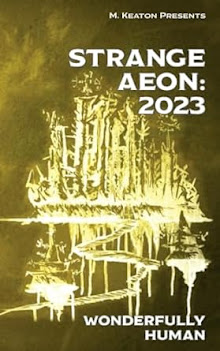


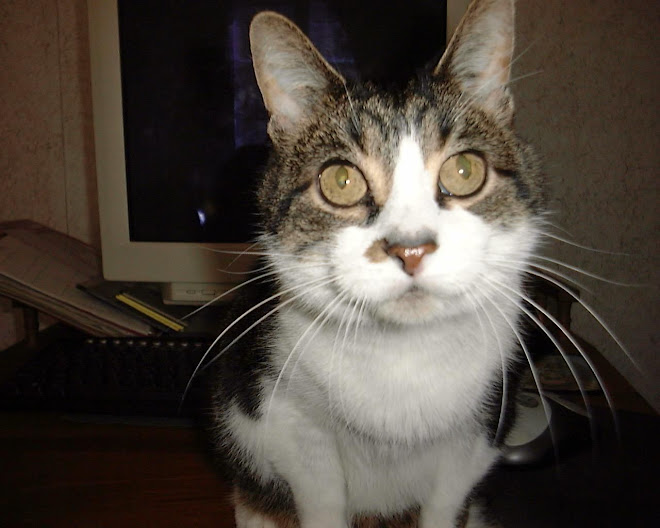

 Posts
Posts

