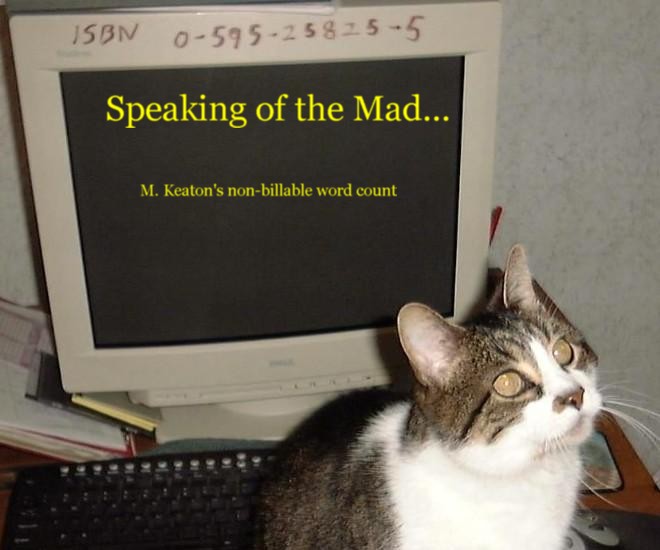
I tried to do this as an update on the last post but the stupid interweb ate it so I'll do it this way. After much lobbying (and not just by me), the Thin Man has relented and allowed the contest deadline to be extended to the 6th of December. Plus, if you don't want to send out your address or email or the like, just post your entry and, after I (randomly) choose a winner, then you can send the necessary information to ship the stuff after you win.
In a slightly unrelated note, the Thin Man has been researching dark matter. (No, I'm not allowed to say why but it's book related.) If there's enough interest, I may press him to see if he'll discuss his rather unorthodox theories here on the blog (but without the math--I can't figure out how to embed all the equation symbols). Trust me, the Thin Man vs. modern cosmology is better than 'rastling on the TV. (And he ain't so thin these days either; the old man's getting a little round...sorta...if you squint just right.)
Monday, December 1, 2008

Friday, November 28, 2008
Last Call for Free Stuff
Until next time, at least. I just wanted to draw attention to the fact that the Christmas Contest is ending in a few days and your chances of winning are REAL good. And remember, if you already have a copy of the latest book, you can always send the Christmas gift pack to someone else (or even have me send it to a military address).
Tuesday, November 25, 2008
The Bards' College
Following up on the last post, I asked the Thin Man what he had as a long term goal, the one great future dream that he'd like to see happen. It seems he's given it a good deal of thought.
"Admittedly, it is an abominably ambitious undertaking for an author who has not published anything of note in several years and is effectively homeless but, better to ask for too much and fail than too little and fail. But...
There currently does not exist a place for authors of one generation to pass down their knowledge to the next in a natural and intuitive context. Writing workshops (such as Clarion) and hosts of ‘formal’ writing teaching are available but these forums are stilted, regimented, and (most importantly) confine themselves to a very narrow portion of the craft while neglecting others. Even writing itself is only a part of the broader experiences and knowledge that are necessary to create a true storyteller. Today’s writers have lost contact with their bardic roots—they no longer venture outside their comfort zone or chosen genre in their reading, they do not value the music of words that was once taught through poetry and song, they lack the sympathetic connection with their listeners that was once indispensable. Instead, they focus on marketing, web-based salesmanship, and the fine art of romancing a publisher. Despite its incredible usefulness as a tool, today’s authors have sacrificed too much to the internet and forget the irreplaceable value of direct human interaction. Conventions approach this memory but they are short in duration and frequently too hectic for real, meaningful progress to be made. In short, the modern author is too isolated, too misunderstood, and too undervalued (considered merely one more ‘entertainer’ in a medium that is dying anyway). They have begun to believe their public perception and grow increasingly ignorant of anything outside of their own small circle and have forfeited their larger role in society.
This all sounds terribly melodramatic and is probably perceived by the average person as a very bad case of “poor me, the misunderstood artist”. This is not the case. My argument is that it is the author who has grown lazy and now, a generation or so removed, no longer even knows where to turn to grow and develop even if he were to perceive a problem (which many do not). The bottom line is that most modern authors are more concerned with marketing and selling their work than telling a good story let alone with being the kind of artist who actually contributes to the field or leaves a legacy behind.
The purpose of a modern bard’s college remains the same as that of the colleges of old, enumerated in the three duties of a bard: to preserve the language, family, and culture.
In its final, envisioned stage the college should fulfill these duties by (in order of importance): 1-Providing a retreat for working authors where they can write in peace and quiet in a natural setting. 2-Provide and promote mentoring of younger authors and the sharing of support, experience, and companionship between authors. 3-Act as a resource to authors by providing access to specifically knowledgeable individuals (through a range of contacts in the college, throughout the community, and across the world from professional archeologists to master bricklayers) and providing, not only dry information, but the opportunity to participate and learn by doing. This is further facilitated by the permanent presence of a select group of teachers/artisans on site (see further). 4-Teach (via apprenticeship) the traditional bardic skills to anyone interested. (Specifically, this would include the making and playing of a range of musical instruments, a basic knowledge of glassblowing and smithing, animal husbandry, along with the more predictable “literary” skills.) 5-Be a resource to the community by making the services and teachings of the college available to the public (including through visits to schools and libraries as well as a “formal” course structure on site). 6-Provide a place of retreat, mentoring, and guidance to the youth of the area via the residents of the college. The populace of the college, both permanent and temporary, should be approachable by and even seek out area youth who are having difficulty and influence them in the right direction. This could range from helping a struggling student understand a difficult subject to encouraging a failing student to remain in school to making the proper contacts to insure that migrant children do not ‘fall through the cracks’ when they are relocated to mentoring troubled children to physically going with a concerned brother to physically drag his sister out of the drug den and giving her a place to stay until she can get cleaned up and into rehabilitation. This may seem like quite a stretch but is actually a logical progression. Authors tend to have diverse backgrounds and have survived through very difficult circumstances. They have a natural empathy and problem solving skills that they themselves rarely realize are present.
Obviously, this will require significant infrastructure: several hundred acres of land, dozens of buildings, and a wide range of sympathetic contacts just to scratch the surface. It was, therefore, my thought to implement the college in stages, a gradual expansion of the structure without any increase or decrease in scope of ambition. This growth cannot be spelled out step-by-step because it is too dependent on external circumstances. It will have to start with spreading the vision of and explaining the need for the college. As the number of sympathetic people grows, attention can then be turned to the physical and it will probably be necessary to change locations, from small to large, several times. The college will exist first as a group of individuals supporting the same goal, expand to some land where at least author’s retreats and physical meetings can take place, and then continue down the best avenues available when it reaches that point. On a personal note, I do not expect to see it move beyond this primitive stage in my lifetime—this is a massive undertaking.
The network of people is the heart of the college idea. Even when the college is a physical entity, it is the people, either by direct experience, word of mouth, or reputation of the college, who provide the real services. This network is not a support group or a writers guild; it is something much more ambitious. It is a collection of people who believe in the college and its goals and who are willing, therefore, to expend their own time and effort to support it. It is the university professor who calls an author to help a student and who, in turn, will help another, different author in the college find research for his book. It is that same student, who happens to know a bit about plumbing, teaching and helping a writer to fix the plumbing in the author’s home and then sending another student to the author for help. And if it is something that author cannot help with, then he can contact someone else in the college who can who will do it because it needs done. The backbone of the bard’s colleges has always been the people who, though not bards themselves, support it—not with lip-service but with deed—because they believe that it is important. It is an intermingled flow of labor and knowledge, a kind of intellectual property barter system that does not keep a ledger.
This element will be the most difficult to achieve. It will be slow to grow and have no immediate gain for the individuals involved. By necessity, even though the idea can be spread by print and electronic media, most ground will be gained by direct personal conversation and explanation (and thereby must rely on a certain degree of “cheerleading” and charisma that the project is currently lacking). To help this, I shall try to assemble most of the key documentation from the original lore of the colleges as well as some tentative outlines of possible courses I can teach. (At this stage, the teaching will have to be by presentations and seminars rather than a permanent classroom.) If these foundational concepts can be articulated clearly, the idea should outlive me even if I should fall ill or otherwise not be able to keep up with it. It may be possible to offer, via a website, a kind of subscription patronage service (donate $20, get a certificate that means nothing but reminds you that you are involved, etc.) or even maintain a listing of contacts. If we are extremely blessed, someone with energy will take up the banner and promote the cause independently. It may also be possible to get libraries and schools, as entities, to sign on to the idea and make their resources available.
For example, a library agrees to support the college. They put promotional material in their flyers, run document/periodical searches for college members for free or at odd hours, etc. In turn the college could offer an infrequent stream of guest authors to sign books, read to kids, and present the occasional class or seminar. A university library could offer the use of its facilities free or at a reduced rate, even from non-students and, in turn, members of the college could speak to various classes or give assorted presentations. The same model could probably be follow for companies. However, let me stress that this cannot be a quid pro quo arrangement—the college functions on a shared belief in the common good in the cause, not as a business or sense of obligations. By necessity, there will be those who give little and get a lot and vice versa. This is more important than it would appear because more writers are loath to give formal commitments but by nature overly generous when asked for a favor."
"Admittedly, it is an abominably ambitious undertaking for an author who has not published anything of note in several years and is effectively homeless but, better to ask for too much and fail than too little and fail. But...
There currently does not exist a place for authors of one generation to pass down their knowledge to the next in a natural and intuitive context. Writing workshops (such as Clarion) and hosts of ‘formal’ writing teaching are available but these forums are stilted, regimented, and (most importantly) confine themselves to a very narrow portion of the craft while neglecting others. Even writing itself is only a part of the broader experiences and knowledge that are necessary to create a true storyteller. Today’s writers have lost contact with their bardic roots—they no longer venture outside their comfort zone or chosen genre in their reading, they do not value the music of words that was once taught through poetry and song, they lack the sympathetic connection with their listeners that was once indispensable. Instead, they focus on marketing, web-based salesmanship, and the fine art of romancing a publisher. Despite its incredible usefulness as a tool, today’s authors have sacrificed too much to the internet and forget the irreplaceable value of direct human interaction. Conventions approach this memory but they are short in duration and frequently too hectic for real, meaningful progress to be made. In short, the modern author is too isolated, too misunderstood, and too undervalued (considered merely one more ‘entertainer’ in a medium that is dying anyway). They have begun to believe their public perception and grow increasingly ignorant of anything outside of their own small circle and have forfeited their larger role in society.
This all sounds terribly melodramatic and is probably perceived by the average person as a very bad case of “poor me, the misunderstood artist”. This is not the case. My argument is that it is the author who has grown lazy and now, a generation or so removed, no longer even knows where to turn to grow and develop even if he were to perceive a problem (which many do not). The bottom line is that most modern authors are more concerned with marketing and selling their work than telling a good story let alone with being the kind of artist who actually contributes to the field or leaves a legacy behind.
The purpose of a modern bard’s college remains the same as that of the colleges of old, enumerated in the three duties of a bard: to preserve the language, family, and culture.
In its final, envisioned stage the college should fulfill these duties by (in order of importance): 1-Providing a retreat for working authors where they can write in peace and quiet in a natural setting. 2-Provide and promote mentoring of younger authors and the sharing of support, experience, and companionship between authors. 3-Act as a resource to authors by providing access to specifically knowledgeable individuals (through a range of contacts in the college, throughout the community, and across the world from professional archeologists to master bricklayers) and providing, not only dry information, but the opportunity to participate and learn by doing. This is further facilitated by the permanent presence of a select group of teachers/artisans on site (see further). 4-Teach (via apprenticeship) the traditional bardic skills to anyone interested. (Specifically, this would include the making and playing of a range of musical instruments, a basic knowledge of glassblowing and smithing, animal husbandry, along with the more predictable “literary” skills.) 5-Be a resource to the community by making the services and teachings of the college available to the public (including through visits to schools and libraries as well as a “formal” course structure on site). 6-Provide a place of retreat, mentoring, and guidance to the youth of the area via the residents of the college. The populace of the college, both permanent and temporary, should be approachable by and even seek out area youth who are having difficulty and influence them in the right direction. This could range from helping a struggling student understand a difficult subject to encouraging a failing student to remain in school to making the proper contacts to insure that migrant children do not ‘fall through the cracks’ when they are relocated to mentoring troubled children to physically going with a concerned brother to physically drag his sister out of the drug den and giving her a place to stay until she can get cleaned up and into rehabilitation. This may seem like quite a stretch but is actually a logical progression. Authors tend to have diverse backgrounds and have survived through very difficult circumstances. They have a natural empathy and problem solving skills that they themselves rarely realize are present.
Obviously, this will require significant infrastructure: several hundred acres of land, dozens of buildings, and a wide range of sympathetic contacts just to scratch the surface. It was, therefore, my thought to implement the college in stages, a gradual expansion of the structure without any increase or decrease in scope of ambition. This growth cannot be spelled out step-by-step because it is too dependent on external circumstances. It will have to start with spreading the vision of and explaining the need for the college. As the number of sympathetic people grows, attention can then be turned to the physical and it will probably be necessary to change locations, from small to large, several times. The college will exist first as a group of individuals supporting the same goal, expand to some land where at least author’s retreats and physical meetings can take place, and then continue down the best avenues available when it reaches that point. On a personal note, I do not expect to see it move beyond this primitive stage in my lifetime—this is a massive undertaking.
The network of people is the heart of the college idea. Even when the college is a physical entity, it is the people, either by direct experience, word of mouth, or reputation of the college, who provide the real services. This network is not a support group or a writers guild; it is something much more ambitious. It is a collection of people who believe in the college and its goals and who are willing, therefore, to expend their own time and effort to support it. It is the university professor who calls an author to help a student and who, in turn, will help another, different author in the college find research for his book. It is that same student, who happens to know a bit about plumbing, teaching and helping a writer to fix the plumbing in the author’s home and then sending another student to the author for help. And if it is something that author cannot help with, then he can contact someone else in the college who can who will do it because it needs done. The backbone of the bard’s colleges has always been the people who, though not bards themselves, support it—not with lip-service but with deed—because they believe that it is important. It is an intermingled flow of labor and knowledge, a kind of intellectual property barter system that does not keep a ledger.
This element will be the most difficult to achieve. It will be slow to grow and have no immediate gain for the individuals involved. By necessity, even though the idea can be spread by print and electronic media, most ground will be gained by direct personal conversation and explanation (and thereby must rely on a certain degree of “cheerleading” and charisma that the project is currently lacking). To help this, I shall try to assemble most of the key documentation from the original lore of the colleges as well as some tentative outlines of possible courses I can teach. (At this stage, the teaching will have to be by presentations and seminars rather than a permanent classroom.) If these foundational concepts can be articulated clearly, the idea should outlive me even if I should fall ill or otherwise not be able to keep up with it. It may be possible to offer, via a website, a kind of subscription patronage service (donate $20, get a certificate that means nothing but reminds you that you are involved, etc.) or even maintain a listing of contacts. If we are extremely blessed, someone with energy will take up the banner and promote the cause independently. It may also be possible to get libraries and schools, as entities, to sign on to the idea and make their resources available.
For example, a library agrees to support the college. They put promotional material in their flyers, run document/periodical searches for college members for free or at odd hours, etc. In turn the college could offer an infrequent stream of guest authors to sign books, read to kids, and present the occasional class or seminar. A university library could offer the use of its facilities free or at a reduced rate, even from non-students and, in turn, members of the college could speak to various classes or give assorted presentations. The same model could probably be follow for companies. However, let me stress that this cannot be a quid pro quo arrangement—the college functions on a shared belief in the common good in the cause, not as a business or sense of obligations. By necessity, there will be those who give little and get a lot and vice versa. This is more important than it would appear because more writers are loath to give formal commitments but by nature overly generous when asked for a favor."
Saturday, November 22, 2008
Questions, always questions
The Thin Man was complaining (again) about the blog so I tried to explain to him that we weren't blogging right. It seems to me that the point of a weblog is to communicate to your readers that you're a real, approachable human being--basically to show that he's a nice guy. The problem is, he ain't. And a blog is supposed to be about opinions and interests outside of just being a writer. Here again, the problem is, he ain't--interested is much outside of writing, that is. Actually, he has numerous other interests (I mean, ever seen his business card? How many wierd jobs can one guy hold? And that's not even counting a decade in the laboratory.) but that, in the end, every one of those interests feeds back into writing. I say "Talk about being a scientist" and he replies, "It helps me write sci-fi better." I say "Talk about farming" and he says, "Helps me remember there's more to a good description than just the visual." And round and round we go. Part of it is his difficult nature but, at the heart of it, it's true. For all practical intents and purposed, the Thin Man exists for the craft.
Well, I'm working on getting more interesting stuff out of him than just lectures and book reviews (and by all means give me ideas and ask questions) but, for now I guess I'll just let him keep on talking about writing. Specifically, I asked him to talk about what it's like to make a living writing. The answer...
But what I want to know is: what are the answers to his questions?
"It is popular to complain about the difficulties of being an
author and of making a living by writing. It is also popular to complain
about the difficulties in getting published and how it is increasingly
difficult to succeed.
Writing is not about doing what is popular.
To write, one must accept that it is a labor, not a hobby, and therefore, as
with all work, there is difficulty. The great "secret" is no more than
that: to write is to labor.
There is nothing new under the sun. The old ways were no
easier.
***
After review by three hundred men, upon the testimony of twelve
true men of country and aristocracy, upon the word of a magistrate-all of
which shall attest on conscience that the aspirant has the qualities and
attainments requisite for the struggle-and after demonstrating proficiency
in the Four and Twenty Games, the aspirant shall be subjected to oral
examination. Should his answers suffice, then the aspirant shall be deemed
worthy to begin his study of the craft. The questions are as follows:
a.. Who existed before darkness or light?
b.. Where are the roots of the world?
c.. On what day was Adam created?
d.. Whence comes night and day? Why is the eagle grey? Night dark?
Linnet green? Why does the sea swell? And, Why is this not known?
e.. What are the three fountains on the mountain of skill?
f.. What is the best deed man has performed?
g.. Who will measure Death? Who can tell the thickness of its veil? The
size of its maw? The value of its stones?
h.. Why do the treetops bend and bow? What were the words before words?
i.. Whence comes darkness when the day ends? Where does it go when day
dawns?
j.. What makes man a slave?
k.. Canst thou guide and judge?
l.. Will you sow and labor?
This shall be the minimum requirement.
(Paraphrased from The Four Welsh Texts)
***
That was then; this is now. The requirements have not,
essentially, changed in two millennia."
Well, I'm working on getting more interesting stuff out of him than just lectures and book reviews (and by all means give me ideas and ask questions) but, for now I guess I'll just let him keep on talking about writing. Specifically, I asked him to talk about what it's like to make a living writing. The answer...
But what I want to know is: what are the answers to his questions?
"It is popular to complain about the difficulties of being an
author and of making a living by writing. It is also popular to complain
about the difficulties in getting published and how it is increasingly
difficult to succeed.
Writing is not about doing what is popular.
To write, one must accept that it is a labor, not a hobby, and therefore, as
with all work, there is difficulty. The great "secret" is no more than
that: to write is to labor.
There is nothing new under the sun. The old ways were no
easier.
***
After review by three hundred men, upon the testimony of twelve
true men of country and aristocracy, upon the word of a magistrate-all of
which shall attest on conscience that the aspirant has the qualities and
attainments requisite for the struggle-and after demonstrating proficiency
in the Four and Twenty Games, the aspirant shall be subjected to oral
examination. Should his answers suffice, then the aspirant shall be deemed
worthy to begin his study of the craft. The questions are as follows:
a.. Who existed before darkness or light?
b.. Where are the roots of the world?
c.. On what day was Adam created?
d.. Whence comes night and day? Why is the eagle grey? Night dark?
Linnet green? Why does the sea swell? And, Why is this not known?
e.. What are the three fountains on the mountain of skill?
f.. What is the best deed man has performed?
g.. Who will measure Death? Who can tell the thickness of its veil? The
size of its maw? The value of its stones?
h.. Why do the treetops bend and bow? What were the words before words?
i.. Whence comes darkness when the day ends? Where does it go when day
dawns?
j.. What makes man a slave?
k.. Canst thou guide and judge?
l.. Will you sow and labor?
This shall be the minimum requirement.
(Paraphrased from The Four Welsh Texts)
***
That was then; this is now. The requirements have not,
essentially, changed in two millennia."
Tuesday, November 18, 2008
Contest News
"Cat," the Thin Man says to me, "Ain't nobody entering your dumb contest."
What can I say? "Maybe it's too hard. I mean, really, who can tell what you'll listen too? You drink Dr. Pepper mixed with grapefruit juice, for crying out loud. Your tastes are strange."
"Eclectic," he corrected. "And don't let the muddy brown color fool you, that's a good drink. Grows hair on your tounge." I'm still shuddering at the image when he adds, "Perhaps you have a point. Let's go with the random entry for the winner option then. But they have to at least guess five or six songs. I'm looking for new music and was hoping to pick up a few suggestions."
So there you have it. Just point the Thin Man at music YOU think would fit and you're in. But hurry, there's just under two weeks left.
What can I say? "Maybe it's too hard. I mean, really, who can tell what you'll listen too? You drink Dr. Pepper mixed with grapefruit juice, for crying out loud. Your tastes are strange."
"Eclectic," he corrected. "And don't let the muddy brown color fool you, that's a good drink. Grows hair on your tounge." I'm still shuddering at the image when he adds, "Perhaps you have a point. Let's go with the random entry for the winner option then. But they have to at least guess five or six songs. I'm looking for new music and was hoping to pick up a few suggestions."
So there you have it. Just point the Thin Man at music YOU think would fit and you're in. But hurry, there's just under two weeks left.
Friday, November 14, 2008
A movie with literary themes
Today, a review, not of a book, but a movie. A good guy movie with strong themes.
Reign of Fire from Spyglass Entertainment
The makers of this film present the plot thusly: “In the year 2024, highly evolved dragons are the dominant species left on the planet. Only a few human beings exist. A brave Englishman, Quinn, and his followers battle for survival against the creatures, taking refuge in an abandoned castle. They unexpectedly encounter American dragon-slayer Van Zan and his rag-tag squad, who are planning a dangerous crusade to post-apocalyptic London to fight the dragons.”
It is a fair description of the movie but, like most of the advertising for the film, sets aside the strengths of the film in favor of concentrating on special effects. That is not to say that the movie does not have a pleasant level of violence and explosions, it does. The dragons are truly frightening and the sets are impressive. What was lost in the hype is that the movie is not primarily about dragon fighting and destruction.
The real theme of the movie is about leadership, strong male leadership. Both men, Quinn and Van Zan, are noble men and responsible leaders, driven by honor and duty. When their two styles of addressing the same problem collide, then the real conflict of the movie comes to the fore. The dragons are the vehicle, not the purpose. The movie is very well written, extremely well acted, and skillfully produced. The special effects are clean and more than sufficiently dramatic.
If you want to see the movie for the big lizards and widespread destruction, you will not be disappointed but if you are looking for a film with real depth and strong masculine themes, then you will find in Reign of Fire a rare treasure.
(This review original written and published in Kilimanjaro magazine, reprinted with permission.)
Reign of Fire from Spyglass Entertainment
The makers of this film present the plot thusly: “In the year 2024, highly evolved dragons are the dominant species left on the planet. Only a few human beings exist. A brave Englishman, Quinn, and his followers battle for survival against the creatures, taking refuge in an abandoned castle. They unexpectedly encounter American dragon-slayer Van Zan and his rag-tag squad, who are planning a dangerous crusade to post-apocalyptic London to fight the dragons.”
It is a fair description of the movie but, like most of the advertising for the film, sets aside the strengths of the film in favor of concentrating on special effects. That is not to say that the movie does not have a pleasant level of violence and explosions, it does. The dragons are truly frightening and the sets are impressive. What was lost in the hype is that the movie is not primarily about dragon fighting and destruction.
The real theme of the movie is about leadership, strong male leadership. Both men, Quinn and Van Zan, are noble men and responsible leaders, driven by honor and duty. When their two styles of addressing the same problem collide, then the real conflict of the movie comes to the fore. The dragons are the vehicle, not the purpose. The movie is very well written, extremely well acted, and skillfully produced. The special effects are clean and more than sufficiently dramatic.
If you want to see the movie for the big lizards and widespread destruction, you will not be disappointed but if you are looking for a film with real depth and strong masculine themes, then you will find in Reign of Fire a rare treasure.
(This review original written and published in Kilimanjaro magazine, reprinted with permission.)
Tuesday, November 11, 2008
Veteran's Day, 2008
How do you say "thank you" for something you can barely even understand? Oh, we think we know, that we understand what it's like to go to war but those who haven't can't, not completely. It's not just the old line of "being willing to die for your country"; it's about being willing to kill for it as well. It's about being scared and cold and hungry and bored and confused...always confused. The fighting is better than the waiting in a lot of ways. Short of quoting Kipling's Snarleyow, what can really be said?
Except:
Thank you.
Thank you to every man that takes up arms to protect our nation. To those who volunteer, to those who join in peacetime and find themselves suddenly at war, to those who were pulled unwillingly by a draft--we don't care why you went. It is enough that you did. Thank you. For those who never fired a shot, whose entire time was spent in "peace", for nevertheless making the sacrifice and facing the risks full on. Thank you. To every husband, wife, child, mother, father, sibling--to everyone who keeps the homefront while the others are away. To every medic, contractor, USO worker, and the million-and-one "civilians" who serve as well. To the children who will never know their grandfathers and fathers who gave sons. To those who keep their experiences secret and refuse to speak of those dark times and to those who speak freely and with pride. To all and every veteran, past, present, and unflinchingly future.
Thank you.
Except:
Thank you.
Thank you to every man that takes up arms to protect our nation. To those who volunteer, to those who join in peacetime and find themselves suddenly at war, to those who were pulled unwillingly by a draft--we don't care why you went. It is enough that you did. Thank you. For those who never fired a shot, whose entire time was spent in "peace", for nevertheless making the sacrifice and facing the risks full on. Thank you. To every husband, wife, child, mother, father, sibling--to everyone who keeps the homefront while the others are away. To every medic, contractor, USO worker, and the million-and-one "civilians" who serve as well. To the children who will never know their grandfathers and fathers who gave sons. To those who keep their experiences secret and refuse to speak of those dark times and to those who speak freely and with pride. To all and every veteran, past, present, and unflinchingly future.
Thank you.
Saturday, November 8, 2008
Just another short post today. If you like contests and free books, we're not the only folks who like to do it. William Jones runs contests and has one going right now. Ann Aguirre runs a bunch of contests, and big ones too, whenever she has a book come out or even when she finds a book she really likes and wants to get more people to read. Follow the links and check them out.
And a quick music note for the contest: a solid dose of international music plus an oblique hint "Ever listen to the music in the background of the American remake of La Femme Nikita?"
And a quick music note for the contest: a solid dose of international music plus an oblique hint "Ever listen to the music in the background of the American remake of La Femme Nikita?"
Wednesday, November 5, 2008
Sneaking and spying, peeking and prying
Today, I thought I'd sneak into the Thin Man's office and scout up some more hints for the Christmas contest. This is what I've got so far:
Lots of 'Best of" and movie soundtrack albums because he's cheap, plus, since he buys most of his music used or out of the bargain bin some of it is pretty obscure. Worse yet, he has albums from about every genre although not very much rap and I didn't see any hip-hop. Lots of classical and heavy metal with a solid dose of folk and western. (He makes a distinction there, insisting that country and western are two different kinds of music and he doesn't like country. I don't know if that's helpful or not.) He also has music by other authors! He doesn't have any singles and doesn't have an mp3 player so he listens to complete albums (although, for some of them, he only really cares about one or two songs).
That's all I could get today without getting caught. Maybe more later and good luck.
Lots of 'Best of" and movie soundtrack albums because he's cheap, plus, since he buys most of his music used or out of the bargain bin some of it is pretty obscure. Worse yet, he has albums from about every genre although not very much rap and I didn't see any hip-hop. Lots of classical and heavy metal with a solid dose of folk and western. (He makes a distinction there, insisting that country and western are two different kinds of music and he doesn't like country. I don't know if that's helpful or not.) He also has music by other authors! He doesn't have any singles and doesn't have an mp3 player so he listens to complete albums (although, for some of them, he only really cares about one or two songs).
That's all I could get today without getting caught. Maybe more later and good luck.
Monday, November 3, 2008
Guys Read the Classics
Education of a Wandering Man, a memoir by Louis L’Amour
If you are a fan of Louis L’Amour, read this book. If you are interested in authors as men as well as the tales they tell, read this book. If you draw breath, read this book.
Education of a Wandering Man is exactly what it calls itself, a memoir. It is Louis L’Amour’s remembrances of his travels, experiences, and ultimately, of how he became to be a self-educated man and how very important self-education is. A tight narrative, it is not. The stories wander and jump from topic to topic but this adds to the overall strength of the work rather than detracts from it. It is personal and conversational. Reading the book is like sharing a cup of coffee with the great western author in a roadside shelter while waiting for a storm to pass—intimate, charming, and deeply insightful. L’Amour tells of crossing the Mojave Desert on foot, working at sea, and serving in World War Two to mention only a fraction of his memories.
Most importantly, throughout his life, L’Amour sought books. Each memory is accompanied with a mention of what he was reading at the time and why. At its heart, everything for L’Amour comes back to reading. From pulp fictions to Greek histories to poetry and more, his life was spent seeking knowledge and finding it in the written word. By the end, almost unintentionally, L’Amour makes an irrefutable case for the importance of literature to being a man and, further, to being a wise one. As a wonderful bonus, the book includes a bibliography, for Louis kept a record of what he read throughout the years and shares this list with the reader. This listing of books, over six solid years of reading, is, alone, worth the cost of the book. In many ways, this book embodies, not just L’Amour, but the quest and love of all literary men. It is a definite must read and must have for every reader.
Related Reading:
The bibliography L’Amour himself lists within his book.
If you are a fan of Louis L’Amour, read this book. If you are interested in authors as men as well as the tales they tell, read this book. If you draw breath, read this book.
Education of a Wandering Man is exactly what it calls itself, a memoir. It is Louis L’Amour’s remembrances of his travels, experiences, and ultimately, of how he became to be a self-educated man and how very important self-education is. A tight narrative, it is not. The stories wander and jump from topic to topic but this adds to the overall strength of the work rather than detracts from it. It is personal and conversational. Reading the book is like sharing a cup of coffee with the great western author in a roadside shelter while waiting for a storm to pass—intimate, charming, and deeply insightful. L’Amour tells of crossing the Mojave Desert on foot, working at sea, and serving in World War Two to mention only a fraction of his memories.
Most importantly, throughout his life, L’Amour sought books. Each memory is accompanied with a mention of what he was reading at the time and why. At its heart, everything for L’Amour comes back to reading. From pulp fictions to Greek histories to poetry and more, his life was spent seeking knowledge and finding it in the written word. By the end, almost unintentionally, L’Amour makes an irrefutable case for the importance of literature to being a man and, further, to being a wise one. As a wonderful bonus, the book includes a bibliography, for Louis kept a record of what he read throughout the years and shares this list with the reader. This listing of books, over six solid years of reading, is, alone, worth the cost of the book. In many ways, this book embodies, not just L’Amour, but the quest and love of all literary men. It is a definite must read and must have for every reader.
Related Reading:
The bibliography L’Amour himself lists within his book.
Thursday, October 30, 2008
NWA Ren. Fest.
"I've been meaning to ask, where'd you go last weekend?"
"NWA Ren. Faire. I work it every year." The Thin Man raised an eyebrow at me. "Did you put it on the weblog?"
"You didn't tell me to."
"It's your blog, cat, not mine."
Well this was going nowhere so I asked, "How was it?"
"Good, except for my part of course. I'm a lousy performer but they keep me around for the novelty. Jingly Bits played both days and, of course, the Ladies of the Salty Kiss were there with their pyritical humor."
"Pyritical?"
"Yea, fools' gold," he said with a grin. "I'm rather fond of that pun."
"Seems like a strange setting for you, a Ren. Faire instead of a SFF convention."
"It's not so different really; it's still all about the stories. And this is the only Faire I do. I'm pretty loyal to it because of the people. I tell you, cat, Raccoon is growing like a weed. Easily six inches taller. Makes me want to sing 'Sunrise, Sunset'."
"Raccoon?"
"I'm not going to put a kid's real name on the web but the relevant people will know who I'm talking about. Anyhow, it's really about the extended family, just like the conventions. By the way, the Kiss has a new book so put them over on the links list and send people there way to take a look at it."
I decided to keep fishing for information as long as he was talking. "You doing National Novel in a Month this year?"
"Yeah, in theory. I'll support the people doing it and play along. I'll shoot for 50K more words on my current projects--won't get there but I'll try. I can't try a true novel in a month like most people do because I can't wait until November to start a new project but I support the idea."
"How come?"
"I support anything that makes people who say they want to write actually write. I'm sick of hearing people say 'I could write a book' like it's some kind of weekend hobby project so I'm in favor of anything that makes 'em put up or shut up. I love my job but it's work, hard work, even if all you're writing is junk. I figure most people don't even know how much labor is involved in just typing that many words."
"Does that mean you're going to start updating your 'work in progress' bars on the blog?"
"It's your web, cat, not mine."
"Well are you going to at least tell me the numbers so that I can put them up?"
"Okay. Current short story: done. How's that?"
"You're a real peach to work for, you know that?"
"I try."
"Can I have a hint for the contest? About the music?"
He shrugged. "No Styx. I have every Styx, DeYoung, and Shaw album they've cut but I don't have any of them on CD, just on cassette, and I only had my CDs while I was working on the book."
"Anything else?"
"Okay, one more. The first chapter, 'Subject Real', wasn't written to any music. I did most of the work on the road and during a convention. That's all you get today."
Well, it's a start.
"NWA Ren. Faire. I work it every year." The Thin Man raised an eyebrow at me. "Did you put it on the weblog?"
"You didn't tell me to."
"It's your blog, cat, not mine."
Well this was going nowhere so I asked, "How was it?"
"Good, except for my part of course. I'm a lousy performer but they keep me around for the novelty. Jingly Bits played both days and, of course, the Ladies of the Salty Kiss were there with their pyritical humor."
"Pyritical?"
"Yea, fools' gold," he said with a grin. "I'm rather fond of that pun."
"Seems like a strange setting for you, a Ren. Faire instead of a SFF convention."
"It's not so different really; it's still all about the stories. And this is the only Faire I do. I'm pretty loyal to it because of the people. I tell you, cat, Raccoon is growing like a weed. Easily six inches taller. Makes me want to sing 'Sunrise, Sunset'."
"Raccoon?"
"I'm not going to put a kid's real name on the web but the relevant people will know who I'm talking about. Anyhow, it's really about the extended family, just like the conventions. By the way, the Kiss has a new book so put them over on the links list and send people there way to take a look at it."
I decided to keep fishing for information as long as he was talking. "You doing National Novel in a Month this year?"
"Yeah, in theory. I'll support the people doing it and play along. I'll shoot for 50K more words on my current projects--won't get there but I'll try. I can't try a true novel in a month like most people do because I can't wait until November to start a new project but I support the idea."
"How come?"
"I support anything that makes people who say they want to write actually write. I'm sick of hearing people say 'I could write a book' like it's some kind of weekend hobby project so I'm in favor of anything that makes 'em put up or shut up. I love my job but it's work, hard work, even if all you're writing is junk. I figure most people don't even know how much labor is involved in just typing that many words."
"Does that mean you're going to start updating your 'work in progress' bars on the blog?"
"It's your web, cat, not mine."
"Well are you going to at least tell me the numbers so that I can put them up?"
"Okay. Current short story: done. How's that?"
"You're a real peach to work for, you know that?"
"I try."
"Can I have a hint for the contest? About the music?"
He shrugged. "No Styx. I have every Styx, DeYoung, and Shaw album they've cut but I don't have any of them on CD, just on cassette, and I only had my CDs while I was working on the book."
"Anything else?"
"Okay, one more. The first chapter, 'Subject Real', wasn't written to any music. I did most of the work on the road and during a convention. That's all you get today."
Well, it's a start.
Monday, October 27, 2008
Halloween Reads
Over on his weblog the other day, William Jones was talking about scary books and movies for Halloween. Me, being the child of a black cat, I'm not so keen on the celebration—too much noise and too many kids—but surprisingly, the Thin Man really enjoys it. So I cried until he came over to read the screen, thinking he'd enjoy the discussion. Instead, he stared at it with that vulture-over-a-crag scowl of his, snorted, and muttered something about Philistines.
"How did this happen?" he grumbled. "I mean, what in the world short circuited in the cultural psyche where people 'don't feel like reading Something Wicked This Ways Comes again?' Blasphemy! It must be a plague born of ignorance; maybe people are too far removed from the work and don't really know what a masterpiece it is."
GB
I suspect this may be another case where he has missed the forest glaring at a tree because the statement in question was a minor segue rather than a main point. "I could put your book review of it up on the blog," I offered. In situations like this, it's best just to humor the crazy person until he calms down.
"No. Save it. Put it up on a nice day when no one is thinking Halloween. The book is too good to be dismissed as mere Halloween fare. Besides, it's not horror. It's dark fantasy and coming-of-age and true art. It's a tale of hope, not fear." He paused, adding, "Come to think of it, the entire concept of a horror novel may be on oxymoron. Most so-called horror books are bloated and drag."
"Henry James, Turn of the Screw," I countered.
"Trust me, cat, that book dragged."
"Shirley Jackson, House on Haunted Hill."
"Disturbing, yes, and scary but not, I think, truly horror, not in the traditional sense. Nice try and a good read but not the same."
I played my trump card. "What about William's book? The horrippilating one."
"The Strange Cases of Rudolf Pearson," he supplied. "Damn fine book that but one that proves my point. It's episodic, interconnected short stories. Cat, I'm not convinced that the best length and form for horror is the novel. It's too long to hold the suspense without a break plus the reader has to put it down. It physically can't be read in one setting and that disrupts the flow. I don't say it can't be done but I do think that it's certainly not optimal. No, the best length for horror is the novella."
"Not short story?"
"Long short stories, yes. Not these little bits of 2000 word fluff that splash some gore around, jerk a few strings, and run away again."
I'll admit, I should know better. I went one question too far. "What about movies?"
Like I said, I should have known better. I had to sit through the two hour lecture about the virtues of the printed word and the dangers of a post-literate society before he wound back to actually answer the question I had asked. He calls it putting things in context; I call it blasted annoying. "There are no horror movies. Maybe Nosferatu," he says at last. "Certainly none made in the last fifty years."
"Alien?"
Have I ever mentioned that the Thin Man has a stare that can knock birds out of the air? "Fine. That's one," he snapped. "Happy? Name me another."
"Blair Witch?"
"Bah. Couldn't watch it. Bunch of snot-nosed kids, literally, running around with really bad camera work. Hurt my head. Still, you might have a point. The 'reality' schtick works until the novelty wears off but I think the general application is limited. I think we're back to the novel discussion; it can work but not best."
At this point, I'm ready for a sunbeam and a nap so I steer the conversation around to a stopping point. He won't stop but maybe I can escape while he's distracted. "So, no movies, but what about reading for Halloween? Leaving Bradbury for a time when it can be better savored, what would you suggest?"
The answer surprised me. I fully expected a lecture on Poe and Lovecraft. Instead, he sprinted from the room, returning a moment later with a book in his hand. "I'd almost forgotten about this little gem," he said, opening the cover. "Let's see...edited by Stephen Jones...2006...Pegasus Books...H. P. Lovecraft's Book of the Supernatural, Classic Tales of the Macabre. It's an anthology, of course, but here's the beauty: it's a guided tour of the old horror writers. Remember Lovecraft's essay on horror in literature? Well, they went back and assembled the anthology from stories Lovecraft reference in that essay. There's another on by Jones and Carson in 1993 called H. P. Lovecraft's Book of Horror as well. Wish I had that one too..." His voice drifted off and the Thin Man sagged into a chair, leafing through the book. When I made good on my escape, he was still reading.
"How did this happen?" he grumbled. "I mean, what in the world short circuited in the cultural psyche where people 'don't feel like reading Something Wicked This Ways Comes again?' Blasphemy! It must be a plague born of ignorance; maybe people are too far removed from the work and don't really know what a masterpiece it is."
GB
I suspect this may be another case where he has missed the forest glaring at a tree because the statement in question was a minor segue rather than a main point. "I could put your book review of it up on the blog," I offered. In situations like this, it's best just to humor the crazy person until he calms down.
"No. Save it. Put it up on a nice day when no one is thinking Halloween. The book is too good to be dismissed as mere Halloween fare. Besides, it's not horror. It's dark fantasy and coming-of-age and true art. It's a tale of hope, not fear." He paused, adding, "Come to think of it, the entire concept of a horror novel may be on oxymoron. Most so-called horror books are bloated and drag."
"Henry James, Turn of the Screw," I countered.
"Trust me, cat, that book dragged."
"Shirley Jackson, House on Haunted Hill."
"Disturbing, yes, and scary but not, I think, truly horror, not in the traditional sense. Nice try and a good read but not the same."
I played my trump card. "What about William's book? The horrippilating one."
"The Strange Cases of Rudolf Pearson," he supplied. "Damn fine book that but one that proves my point. It's episodic, interconnected short stories. Cat, I'm not convinced that the best length and form for horror is the novel. It's too long to hold the suspense without a break plus the reader has to put it down. It physically can't be read in one setting and that disrupts the flow. I don't say it can't be done but I do think that it's certainly not optimal. No, the best length for horror is the novella."
"Not short story?"
"Long short stories, yes. Not these little bits of 2000 word fluff that splash some gore around, jerk a few strings, and run away again."
I'll admit, I should know better. I went one question too far. "What about movies?"
Like I said, I should have known better. I had to sit through the two hour lecture about the virtues of the printed word and the dangers of a post-literate society before he wound back to actually answer the question I had asked. He calls it putting things in context; I call it blasted annoying. "There are no horror movies. Maybe Nosferatu," he says at last. "Certainly none made in the last fifty years."
"Alien?"
Have I ever mentioned that the Thin Man has a stare that can knock birds out of the air? "Fine. That's one," he snapped. "Happy? Name me another."
"Blair Witch?"
"Bah. Couldn't watch it. Bunch of snot-nosed kids, literally, running around with really bad camera work. Hurt my head. Still, you might have a point. The 'reality' schtick works until the novelty wears off but I think the general application is limited. I think we're back to the novel discussion; it can work but not best."
At this point, I'm ready for a sunbeam and a nap so I steer the conversation around to a stopping point. He won't stop but maybe I can escape while he's distracted. "So, no movies, but what about reading for Halloween? Leaving Bradbury for a time when it can be better savored, what would you suggest?"
The answer surprised me. I fully expected a lecture on Poe and Lovecraft. Instead, he sprinted from the room, returning a moment later with a book in his hand. "I'd almost forgotten about this little gem," he said, opening the cover. "Let's see...edited by Stephen Jones...2006...Pegasus Books...H. P. Lovecraft's Book of the Supernatural, Classic Tales of the Macabre. It's an anthology, of course, but here's the beauty: it's a guided tour of the old horror writers. Remember Lovecraft's essay on horror in literature? Well, they went back and assembled the anthology from stories Lovecraft reference in that essay. There's another on by Jones and Carson in 1993 called H. P. Lovecraft's Book of Horror as well. Wish I had that one too..." His voice drifted off and the Thin Man sagged into a chair, leafing through the book. When I made good on my escape, he was still reading.
Thursday, October 23, 2008
Guys Read the Classics
Today, the Thin Man reviews a book stylistically similar to his own Calamity's Child and one of the Thin Man's favorite books of all time.
Ivory by Mike Resnick
For those unfamiliar with Resnick’s significant body of work, you owe it to yourself to become so. He is one of (if not the) most decorated science fiction author of our time, especially in the short form, and these are honors rightly deserved. Resnick, in his own words, tells fables. The tenor of his style harkens back to the larger-than-life folklore of the American west while his familiarity with Africa injects a stern masculine mysticism into his themes. Though technically in a different genre, Resnick writes westerns—strong men, tough tasks, unforgiving settings, and the conquest of a new frontier. The frontier may be that of deep space instead of southwestern desert but Resnick’s name on the cover promises skilled writing, solid plots, intriguing characters, and a healthy dose of action and he consistently delivers.
From such a literary giant, much is to be expected and, in Ivory, much is given. The novel is the story of the history of the tusks of the Kilimanjaro Elephant and the historian seeking them. From the nineteenth century into the far future, the elusive ivory travels the universe in a saga that ends where it began. The section on the Kilimanjaro Elephant, from the elephants point of view, is nothing short of classic.
Ivory stands head and shoulders above Resnick’s already impressive works and is a deeply stirring and rewarding read.
Related Reading:
Mike Resnick, any and all
The Jungle Book (I and II) by Rudyard Kipling
Call of the Wild by Jack London
The Lensman Series by E. E. “Doc” Smith
Calamity's Child by M. Keaton
Six-gun Planet by John Jakes
Their Master’s War by Mick Faren
In Legend Born by Laura Resnick
(This review original written for and published in Kilimanjaro magazine, reprinted with permission.)
Ivory by Mike Resnick
For those unfamiliar with Resnick’s significant body of work, you owe it to yourself to become so. He is one of (if not the) most decorated science fiction author of our time, especially in the short form, and these are honors rightly deserved. Resnick, in his own words, tells fables. The tenor of his style harkens back to the larger-than-life folklore of the American west while his familiarity with Africa injects a stern masculine mysticism into his themes. Though technically in a different genre, Resnick writes westerns—strong men, tough tasks, unforgiving settings, and the conquest of a new frontier. The frontier may be that of deep space instead of southwestern desert but Resnick’s name on the cover promises skilled writing, solid plots, intriguing characters, and a healthy dose of action and he consistently delivers.
From such a literary giant, much is to be expected and, in Ivory, much is given. The novel is the story of the history of the tusks of the Kilimanjaro Elephant and the historian seeking them. From the nineteenth century into the far future, the elusive ivory travels the universe in a saga that ends where it began. The section on the Kilimanjaro Elephant, from the elephants point of view, is nothing short of classic.
Ivory stands head and shoulders above Resnick’s already impressive works and is a deeply stirring and rewarding read.
Related Reading:
Mike Resnick, any and all
The Jungle Book (I and II) by Rudyard Kipling
Call of the Wild by Jack London
The Lensman Series by E. E. “Doc” Smith
Calamity's Child by M. Keaton
Six-gun Planet by John Jakes
Their Master’s War by Mick Faren
In Legend Born by Laura Resnick
(This review original written for and published in Kilimanjaro magazine, reprinted with permission.)
Monday, October 20, 2008
Calamity's Child Christmas Contest
Have a Calamitous Christmas indeed! Yes, it seems rather early to talk of the holidays, but here we are and we're holding our first contest for the new book. That's right. As hard as it is to believe, the Thin Man is actually going to give something away!
What, you may ask, is the contest for? Nothing less than a complete Calamity's Child Christmas Collection: a copy of the novel Calamity's Child signed by both the author and the cover artist, a Calamity's Child bookstore promotional poster, and a lovely blue Calamity's Child t-shirt. We'll also throw in a bookmark and a bag of Catnip! (No catnip. No catnip? Are you sure? No catnip. I'm keeping the Catnip! Merry Christmas to me!)
Is that all? That depends on you. Tell your friends, relatives, neighbors, and strangers on the street and, if there are enough entries, we'll add a second and third prize as well. It's all up to you.
"Golly, cat, what do I have to do to get in on all this Calamitous goodness?" Hold on to your hats, 'cause I'm gonna tell you. You have to guess the soundtrack for the book! What music did the Thin Man listen to as he wrote? What are the key musical numbers for the main characters? For fight scenes? For specific chapters or moods? You tell me. And the person who comes the closest to the Thin Man's actual play list will find themselves the recipient of a big ol' box of Frontier Fun. You can be as specific or as general as you want and, if you're really nice, I'll drop hints here along the way. Email your list along with your snail-mail address (try to put Calamity's Child in the header so the spam filter doesn't eat it). I'll snip off the personal information and paste the list here in the comments. Worried about somebody stealing your ideas? Don't! Think of it as sharing suggestions for good music with other interested readers. Contest ends December 1, 2008, and the winner will be announced sometime that week (provided I don't crash the internet connection or something else weird like that).*
"But, I don't even know the characters?" Fortunately for you, the first four chapters are available free online over at Ray Gun Revival. "Well, if you're going to give hints, why shouldn't I wait until the last minute to enter?" Because you might forget and you can always amend your list at any time before the contest deadline. Just send over an email with your changes on it. What could be simpler?
But wait, there's more! Want to give Calamity's Child as a gift for your favorite active duty military service man or woman? Are you one yourself and feel like giving yourself a gift? Well, as you may already know, any copies of the book ordered directly from the author come signed—but from now until Christmas, either of the Thin Man's books (Calamity's Child or Speakers and Kings) that you order for active duty military (APO/FPO addresses) is only $18—including shipping. Sending as a gift or ordering for yourself, it doesn't matter, just 18 tiny slips of US currency. Or try this on for size: both for $30! Interested? Don't wait because shipping can be slow. Send an email and order today.
Let's recap:
--Email your entry (with the words Calamity's Child in the subject line) along with your address to be entered for the Cacophonous Calamitous Calamity's Child Christmas Contest.
--If there are enough entries, additional prizes may be announced.
--December 1, 2008, contest ends and I ship the winner a Catastrophic Cacophonous Calamitous Calamity's Child Christmas Contest Collection (a.k.a. box of stuff).
--Books for active duty military for Christmas only $18 including shipping (US and APO/FPO only) or two for $30.
Can one cat contrive to communicate more confusion for Christmas? Not with a clear conscience. Enter the clash for the Catastrophic Cacophonous Calamitous Calamity's Child Christmas Contest Collection of Things! (Things? What do you mean 'things,' cat? Sorry, boss, I think I broke the sea-key.)
Enter the Kontest now!
*Legal Minutia:
Okay, this contest is for fun. Void where prohibited. Standard restrictions apply. Email any questions if you need more details. You bring in lawyers and all you're going to get is a bag of cat poop for Christmas. Seriously, the management reserves the right to change the rules, invalidate entries, or even shut down the contest if the privilege is abused. I can't imagine why there would be a problem, but the world is full of strange people.
In case of a tie or barring a clear-cut victory, the winner will be selected at random. Entries will be scored as follows: Correct album, performer, or song to the proper character, chapter, or scene type--one point each. Not each category is relevant to every other category. Author, cat, author's family, and other people who already heard all the banging, thumping noises from the office as the book was written are not eligible.
What, you may ask, is the contest for? Nothing less than a complete Calamity's Child Christmas Collection: a copy of the novel Calamity's Child signed by both the author and the cover artist, a Calamity's Child bookstore promotional poster, and a lovely blue Calamity's Child t-shirt. We'll also throw in a bookmark and a bag of Catnip! (No catnip. No catnip? Are you sure? No catnip. I'm keeping the Catnip! Merry Christmas to me!)
Is that all? That depends on you. Tell your friends, relatives, neighbors, and strangers on the street and, if there are enough entries, we'll add a second and third prize as well. It's all up to you.
"Golly, cat, what do I have to do to get in on all this Calamitous goodness?" Hold on to your hats, 'cause I'm gonna tell you. You have to guess the soundtrack for the book! What music did the Thin Man listen to as he wrote? What are the key musical numbers for the main characters? For fight scenes? For specific chapters or moods? You tell me. And the person who comes the closest to the Thin Man's actual play list will find themselves the recipient of a big ol' box of Frontier Fun. You can be as specific or as general as you want and, if you're really nice, I'll drop hints here along the way. Email your list along with your snail-mail address (try to put Calamity's Child in the header so the spam filter doesn't eat it). I'll snip off the personal information and paste the list here in the comments. Worried about somebody stealing your ideas? Don't! Think of it as sharing suggestions for good music with other interested readers. Contest ends December 1, 2008, and the winner will be announced sometime that week (provided I don't crash the internet connection or something else weird like that).*
"But, I don't even know the characters?" Fortunately for you, the first four chapters are available free online over at Ray Gun Revival. "Well, if you're going to give hints, why shouldn't I wait until the last minute to enter?" Because you might forget and you can always amend your list at any time before the contest deadline. Just send over an email with your changes on it. What could be simpler?
But wait, there's more! Want to give Calamity's Child as a gift for your favorite active duty military service man or woman? Are you one yourself and feel like giving yourself a gift? Well, as you may already know, any copies of the book ordered directly from the author come signed—but from now until Christmas, either of the Thin Man's books (Calamity's Child or Speakers and Kings) that you order for active duty military (APO/FPO addresses) is only $18—including shipping. Sending as a gift or ordering for yourself, it doesn't matter, just 18 tiny slips of US currency. Or try this on for size: both for $30! Interested? Don't wait because shipping can be slow. Send an email and order today.
Let's recap:
--Email your entry (with the words Calamity's Child in the subject line) along with your address to be entered for the Cacophonous Calamitous Calamity's Child Christmas Contest.
--If there are enough entries, additional prizes may be announced.
--December 1, 2008, contest ends and I ship the winner a Catastrophic Cacophonous Calamitous Calamity's Child Christmas Contest Collection (a.k.a. box of stuff).
--Books for active duty military for Christmas only $18 including shipping (US and APO/FPO only) or two for $30.
Can one cat contrive to communicate more confusion for Christmas? Not with a clear conscience. Enter the clash for the Catastrophic Cacophonous Calamitous Calamity's Child Christmas Contest Collection of Things! (Things? What do you mean 'things,' cat? Sorry, boss, I think I broke the sea-key.)
Enter the Kontest now!
*Legal Minutia:
Okay, this contest is for fun. Void where prohibited. Standard restrictions apply. Email any questions if you need more details. You bring in lawyers and all you're going to get is a bag of cat poop for Christmas. Seriously, the management reserves the right to change the rules, invalidate entries, or even shut down the contest if the privilege is abused. I can't imagine why there would be a problem, but the world is full of strange people.
In case of a tie or barring a clear-cut victory, the winner will be selected at random. Entries will be scored as follows: Correct album, performer, or song to the proper character, chapter, or scene type--one point each. Not each category is relevant to every other category. Author, cat, author's family, and other people who already heard all the banging, thumping noises from the office as the book was written are not eligible.
Saturday, October 18, 2008
On Criticism, the giving and taking of
Another reprint from the boss (lesser boss, not SHE WHO MUST NOT BE NAMED) because, as he put it to me earlier, "Once it's said, it shouldn't need resaid if it can be reread. That's the problem with kids today, if a book isn't brand-new, they won't read it. It leaves them stupid. I tell you, cat, no good comes of dealing with human beings."
So, without futher ado:
On Criticism
In the life of a writer, the twin dark arts of receiving and giving criticism are two of the most important to learn.
To accept and apply criticism, the author must first decide what it is that he actually wants from the critique. Is mere "I liked/disliked the piece" cheerleading enough or does the writer need more, and if so, how much more? There is no stock answer to this question; it varies from author to author, work to work, and from critiquer to critiquer. First and foremost, an author must learn to ask the proper questions if he intends to get useful answers. The author must be honest enough with himself to know what he needs, committed to the work enough to know what it needs, and know the critiquer well enough to properly gauge the weight of the criticism offered.
Anyone can give advice. It is the author's responsibility to sift through it to determine what is wheat and what is chaff. A common mistake is to confuse a good writer with a good critiquer, to assume that, because someone has sold a few books or works "in the industry" that they automatically know more about what is good for the story than someone with a less distinguished pedigree or even the author himself. This is not always the case—good critiquers tend to be better authors but the inverse is not always true.
This is part of learning to ask the right questions. A passage that may be clear to someone familiar with a particular genre may be impenetrable to a more generalized reader. Whether this is good or bad depends on who the author envisions as his listeners and what he wants for and from his story. Put another way, a swordfight rife with technical detail that excites a lifelong fantasy reader may not be as good for a given story as a swordfight described more emotively that excites the author's kid sister because she "finally understood what was going on."
Notice that I say the critiquer, not the critic. A critic is someone who loves their own voice and looks for what is wrong with a work. A critiquer is someone committed to making the work the best that it can be; they are, in effect, advocates of story. Separating the critics from the critiquers is the first step to learning to gauge a critique.
So, then, how does one become a good critiquer? Is there a singular formula that can be applied or is it an amorphous skill learned by trial and error? I fear the answer is a bit of both but there are definite steps you can take to give a useful critique. Practice will help you hone your skills, especially if you work with authors who know to ask the right questions.
The key unquantifiable part of giving a writer advice on their work is the art of presentation. The basics of what makes a good story—of clean prose, basic grammar, developed characters, clear settings, and consistent, compelling plots—remain unchanged from author to author and story to story. But there are many ways to say the same thing and a good critiquer should strive to understand the author and present the problems in the manuscript and suggestions for improvement in a manner that the author can accept and use. Some writers need a coach while others need a taskmaster, some a cheerleader, others a brutal bucket of cold water—if you truly want your critique to be useful, you will have to chose the most efficient way to present your observations. Try also to make certain that you are criticizing the work and not the genre.
The nuts and bolts are a bit simpler, read the author's mind. As dramatic as that sounds, it's the core of a useful critique. The author's goal is to tell the story they want to tell in the way they want to tell it. To help them reach it, you need to see that same goal or at least as close to it as possible. Since you cannot actually read minds (I'm assuming), you will have to use the next best alternative. The most useful thing you can do for any author is to tell them their own story. Read their work and then tell them what you saw—this is the plot, these are the characters, this is the setting, this is the effect it had on me. It seems redundant but, trust me, it is not. The author knows their story but they are too close to see objectively if what they wrote is the same as what you read. And, after you do this, if they should begin to explain "what they really meant", look them squarely in the eye and say, "All that stuff you're telling me now should have been in the story instead of the stuff that's there now."
Once this hurdle is overcome, most of your work is done and it is time to look at the technical details. Is the plot interesting? Is the central conflict large enough to support the rest of the story? Is the resolution satisfying? Does the plot carry the theme successfully? If there is a problem with the pacing the weakness is probably here as the author is trying to do too much too fast or stretch too little too long. Look closely at the narrative voice. Is it consistent with the work? Does the point of view help or hinder the plot and theme? Is the setting clear in your mind and is it fully developed? Are the characters deep and real instead of cutouts (this includes secondary characters as well as the main)? Is economy of stage maintained (that is, are the fewest possible characters used)? Characters who exist for no other purpose than to toss in a few lines that could be placed in another characters mouths should be cut and their functions moved. Would anybody care if the main characters fell down a well and drowned? If not, why? If so, why? Does the dialogue ring true? Does each character speak with their own voice or do they all sound like the narrator? Does the prose flow? Read the story aloud to insure there are no clumsy passages. Is the writing style clear and enjoyable to read? Most of all, did you like the work and if so or if not, why?
Sprinkle liberally with commas to make editors happy and you have a decent start. Remember too that critiquing doesn't just benefit the writer being critiqued; it helps the critiquer as well. The best way to learn is to teach and critiquing another writer's work is also learning to critique your own. It brings us full circle; the better you get at answering questions for other writers, the closer you come to learning the right questions to ask yourself.
(Sanctuary Press Writers' Workshop introduction, Penguicon 5)
So, without futher ado:
On Criticism
In the life of a writer, the twin dark arts of receiving and giving criticism are two of the most important to learn.
To accept and apply criticism, the author must first decide what it is that he actually wants from the critique. Is mere "I liked/disliked the piece" cheerleading enough or does the writer need more, and if so, how much more? There is no stock answer to this question; it varies from author to author, work to work, and from critiquer to critiquer. First and foremost, an author must learn to ask the proper questions if he intends to get useful answers. The author must be honest enough with himself to know what he needs, committed to the work enough to know what it needs, and know the critiquer well enough to properly gauge the weight of the criticism offered.
Anyone can give advice. It is the author's responsibility to sift through it to determine what is wheat and what is chaff. A common mistake is to confuse a good writer with a good critiquer, to assume that, because someone has sold a few books or works "in the industry" that they automatically know more about what is good for the story than someone with a less distinguished pedigree or even the author himself. This is not always the case—good critiquers tend to be better authors but the inverse is not always true.
This is part of learning to ask the right questions. A passage that may be clear to someone familiar with a particular genre may be impenetrable to a more generalized reader. Whether this is good or bad depends on who the author envisions as his listeners and what he wants for and from his story. Put another way, a swordfight rife with technical detail that excites a lifelong fantasy reader may not be as good for a given story as a swordfight described more emotively that excites the author's kid sister because she "finally understood what was going on."
Notice that I say the critiquer, not the critic. A critic is someone who loves their own voice and looks for what is wrong with a work. A critiquer is someone committed to making the work the best that it can be; they are, in effect, advocates of story. Separating the critics from the critiquers is the first step to learning to gauge a critique.
So, then, how does one become a good critiquer? Is there a singular formula that can be applied or is it an amorphous skill learned by trial and error? I fear the answer is a bit of both but there are definite steps you can take to give a useful critique. Practice will help you hone your skills, especially if you work with authors who know to ask the right questions.
The key unquantifiable part of giving a writer advice on their work is the art of presentation. The basics of what makes a good story—of clean prose, basic grammar, developed characters, clear settings, and consistent, compelling plots—remain unchanged from author to author and story to story. But there are many ways to say the same thing and a good critiquer should strive to understand the author and present the problems in the manuscript and suggestions for improvement in a manner that the author can accept and use. Some writers need a coach while others need a taskmaster, some a cheerleader, others a brutal bucket of cold water—if you truly want your critique to be useful, you will have to chose the most efficient way to present your observations. Try also to make certain that you are criticizing the work and not the genre.
The nuts and bolts are a bit simpler, read the author's mind. As dramatic as that sounds, it's the core of a useful critique. The author's goal is to tell the story they want to tell in the way they want to tell it. To help them reach it, you need to see that same goal or at least as close to it as possible. Since you cannot actually read minds (I'm assuming), you will have to use the next best alternative. The most useful thing you can do for any author is to tell them their own story. Read their work and then tell them what you saw—this is the plot, these are the characters, this is the setting, this is the effect it had on me. It seems redundant but, trust me, it is not. The author knows their story but they are too close to see objectively if what they wrote is the same as what you read. And, after you do this, if they should begin to explain "what they really meant", look them squarely in the eye and say, "All that stuff you're telling me now should have been in the story instead of the stuff that's there now."
Once this hurdle is overcome, most of your work is done and it is time to look at the technical details. Is the plot interesting? Is the central conflict large enough to support the rest of the story? Is the resolution satisfying? Does the plot carry the theme successfully? If there is a problem with the pacing the weakness is probably here as the author is trying to do too much too fast or stretch too little too long. Look closely at the narrative voice. Is it consistent with the work? Does the point of view help or hinder the plot and theme? Is the setting clear in your mind and is it fully developed? Are the characters deep and real instead of cutouts (this includes secondary characters as well as the main)? Is economy of stage maintained (that is, are the fewest possible characters used)? Characters who exist for no other purpose than to toss in a few lines that could be placed in another characters mouths should be cut and their functions moved. Would anybody care if the main characters fell down a well and drowned? If not, why? If so, why? Does the dialogue ring true? Does each character speak with their own voice or do they all sound like the narrator? Does the prose flow? Read the story aloud to insure there are no clumsy passages. Is the writing style clear and enjoyable to read? Most of all, did you like the work and if so or if not, why?
Sprinkle liberally with commas to make editors happy and you have a decent start. Remember too that critiquing doesn't just benefit the writer being critiqued; it helps the critiquer as well. The best way to learn is to teach and critiquing another writer's work is also learning to critique your own. It brings us full circle; the better you get at answering questions for other writers, the closer you come to learning the right questions to ask yourself.
(Sanctuary Press Writers' Workshop introduction, Penguicon 5)
Wednesday, October 15, 2008
Guys Read the Classics
Today, a book review by the Thin Man:
1984 by George Orwell
Like most folks, I tend to shirk on reading the classics. I read them once long ago as a school assignment, I know all about them, I’ve read what other people say about them—the list of excuses goes on and I skip to the next book in my reading pile. When I finally force myself to return to a classic and actually read it through the eyes of an adult, I am consistently surprised at what I find. George Orwell’s 1984 was no exception.
In popular perception, Orwell’s Big Brother overshadows the real villains, a situation counterproductive to Orwell’s intent. With so much emphasis on governmental surveillance, the underlying menaces—the memory holes, historical revisionism, the dissolution of the family unit, the systematic disassembling of the language—are forgotten, overshadowed by a ‘character’ inflated out of context for its Hollywood appeal. Orwell’s work has been perverted into a political tool to demagogue government while ignoring the societal dangers 1984 was written to warn against. If there is one concept which exemplifies the novel, it is not Big Brother, it is the idea that history is mutable.
This altered emphasis is a disservice to the work and its author. I would urge readers to take the time to revisit the book and read it with an open mind, free of preconceptions, and fresh with the memory of today’s evening news. In a day and age where textbooks are rewritten to match the politically correct flavor of the day and politicians propose the creation of a cabinet level Department of Peace (minipax anyone?), Orwell’s message is more important than the simplicity of Big Brother and much more relevant.
Related Reading:
The Iron Heel by Jack London
Brave New World by Aldous Huxley
We by Zamyatin
Fahrenheit 451 by Ray Bradbury
The Moon is a Harsh Mistress by Robert Heinlein
Stand on Zanzibar by John Brunner
Kirinyaga by Mike Resnick
(This review original written and published in Kilimanjaro magazine, reprinted with permission.)
1984 by George Orwell
Like most folks, I tend to shirk on reading the classics. I read them once long ago as a school assignment, I know all about them, I’ve read what other people say about them—the list of excuses goes on and I skip to the next book in my reading pile. When I finally force myself to return to a classic and actually read it through the eyes of an adult, I am consistently surprised at what I find. George Orwell’s 1984 was no exception.
In popular perception, Orwell’s Big Brother overshadows the real villains, a situation counterproductive to Orwell’s intent. With so much emphasis on governmental surveillance, the underlying menaces—the memory holes, historical revisionism, the dissolution of the family unit, the systematic disassembling of the language—are forgotten, overshadowed by a ‘character’ inflated out of context for its Hollywood appeal. Orwell’s work has been perverted into a political tool to demagogue government while ignoring the societal dangers 1984 was written to warn against. If there is one concept which exemplifies the novel, it is not Big Brother, it is the idea that history is mutable.
This altered emphasis is a disservice to the work and its author. I would urge readers to take the time to revisit the book and read it with an open mind, free of preconceptions, and fresh with the memory of today’s evening news. In a day and age where textbooks are rewritten to match the politically correct flavor of the day and politicians propose the creation of a cabinet level Department of Peace (minipax anyone?), Orwell’s message is more important than the simplicity of Big Brother and much more relevant.
Related Reading:
The Iron Heel by Jack London
Brave New World by Aldous Huxley
We by Zamyatin
Fahrenheit 451 by Ray Bradbury
The Moon is a Harsh Mistress by Robert Heinlein
Stand on Zanzibar by John Brunner
Kirinyaga by Mike Resnick
(This review original written and published in Kilimanjaro magazine, reprinted with permission.)
Sunday, October 12, 2008
And so the argument continues
"Blast it, cat. I could have written an entire short story in the time it took to do this thing!" Yea, well, he's right but that's rather beside the point. If you take everything the Thin Man and I both know about these mechanical geegaws and spit it in a thimble, you can still sew. But he needs a blog for marketing purposes and to host contests for all the nice people— "There ain't no nice people. Not on the interweb." Ahem. For all the nice people so...here we are, still in the middle of the same argument.
"And it's on Google! I hate Google!" Right on that one as well. After Google tried to steal the copyrights on the first book, he's been really touchy about it but, well, business is business.
"Ugly too. I'm going to bed."
For those of you who came in late, you're probably always going to be a little lost unless you go back to the website (archangelpress.net) and read up on our confused operation but I'll try to run you through the basics.
I'm a cat and I work for a grumpy, hate-filled human who has the misfortune of being reasonably skilled at telling stories and worthless for everything else. Technology heads his list of "needless distractions leading the world to heck in a handbasket" and since a cat's got to eat and authors need to be on the web these days to make a living, I end up running the website and, after about a four year argument, the blog. I'm Chaos, he's the Thin Man (also known as M. Keaton on the checks that buy the food), and the real power behind the throne is SHE WHO MUST NOT BE NAMED.
Welcome to the madhouse.
"And it's on Google! I hate Google!" Right on that one as well. After Google tried to steal the copyrights on the first book, he's been really touchy about it but, well, business is business.
"Ugly too. I'm going to bed."
For those of you who came in late, you're probably always going to be a little lost unless you go back to the website (archangelpress.net) and read up on our confused operation but I'll try to run you through the basics.
I'm a cat and I work for a grumpy, hate-filled human who has the misfortune of being reasonably skilled at telling stories and worthless for everything else. Technology heads his list of "needless distractions leading the world to heck in a handbasket" and since a cat's got to eat and authors need to be on the web these days to make a living, I end up running the website and, after about a four year argument, the blog. I'm Chaos, he's the Thin Man (also known as M. Keaton on the checks that buy the food), and the real power behind the throne is SHE WHO MUST NOT BE NAMED.
Welcome to the madhouse.
Subscribe to:
Posts (Atom)


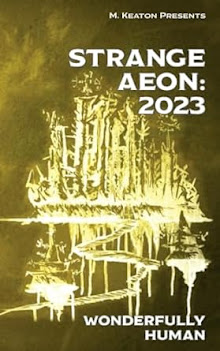


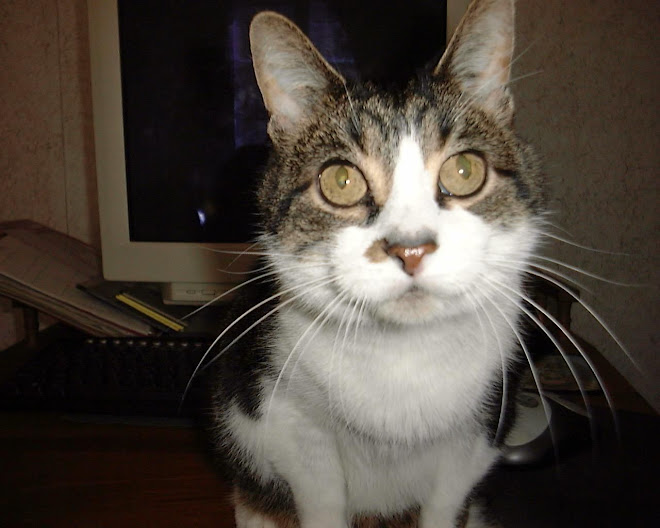

 Posts
Posts

